Showing posts with label avant garde. Show all posts

Monday, 27 July 2020

MIND DE-CODER 96

MIND DE-CODER 96

To listen to the show just scroll to the bottom of the page


The true voyage of discovery is not so much in seeking new landscapes as in having new eyes

                                  Marcel Proust


LA DÜSSELDORF     VÖGEL


Not so much a track as one minute and thirty seconds or so of relaxing birdsong from the album VIVA, released in 1978 by La Düsseldorf, Klaus Dinger’s relatively more successful post-Neu! outfit, on an essential album in your Krautrock circles otherwise characterised by washed-out synthesizers, swirling guitar work and Dinger's trademark motorik rhythms.   


THE KUNDALINI GENIE     MANTRA

The swirling, heavy vibes of the it’s-all-in-the-title Mantra is taken from the album 11:11, the fourth studio album from Glasgow’s experimental psych-rockers The Kundalini Genie, released earlier this year. The album features transcendental sitar, droning hypnotic fuzz rock, 60’s British Invasion inspired melodies, dreamy, spaced-out soundscapes and blissed-out melodies. It’s good – I like it.


THE LEFT BANKE     THERE’S GONNA BE A STORM

      
By the time American baroque-pop band The Left Banke released their second album, their seventeen-year-old wunderkind songwriter and pianist Michael Brown – responsible for the exquisite Pretty Ballerina - had long gone, and taken his producer and arranger dad with him. It turns out that the remaining trio had a few tricks of their own up their sleeve, though, and in 1968 released THE LEFT BANKE TOO, an adventurous and psychedelically informed album which included the intoxicating There’s Gonna Be A Storm. (Two songs on the album feature backing vocals from one Steve Tallarico, who several years later would tie a scarf to his mike stand, change his name to Steven Tyler, and become the lead singer with Aerosmith – fact fans.)


PAPER GARDEN     A DAY

Paper Garden were a New York outfit whose only album, the eponymously titled PAPER GARDEN, released in 1968, was very much influenced by The Beatles’ REVOLVER and The Zombies’ ODESSEY AND ORACLE, with just a touch of SGT PEPPERS’ thrown in for its more out-there embellishments – it is, then, a very fine psychedelic release in its own right, if not entirely original in its scope. The elaborately arranged and entirely tripped-out A Day demonstrates just how ambitious the band were but, despite some good reviews, the album failed to find a home and the band split in 1970.


THE WOLFGANG DAUNER QUINTET     A DAY IN THE LIFE

An absolute bonkers cover of The Beatles’ A Day In The Life (they even miss out Paul's bit) from the Wolfgang Dauner release, THE OIMELS. Wolfgang Dauner, of course, was that rarest of things, an internationally renowned German jazz musician, but he was also freewheelingly experimental and unafraid to branch out into psychedelia and nascent krautrock inventiveness. Alongside his free-jazz explorations, Dauner also composed music for films, radio and television broadcasts, as well as knocking out a children’s opera, but for fans of your psychedelia, it’s his 1969 release with the Wolfgang Dauner Quintet that should really invite your interest.


THE DREAM     THE DOTING KING

The Doting King positively ripples with waves of lysergic ambience. Released in 1968, this was just one of three singles released by The Dream. The little-known Dutch band were forever doomed to be the psychedelic bridesmaid - never the tripped-out bride - opening for the likes of Pink Floyd, The Kinks and even Steppenwolf, but somehow eluding a success of their own.


PINK FLOYD     JULIA DREAM

The almost diaphanously lovely Julia Dream, b-side to the much unloved It Would Be So Nice, released in 1968, and the first track to be sung by Syd’s replacement David Gilmour. It's a haunting song, airy and mysterious, augmented by Rick Wright’s ambient mellotron; but with Syd’s departure, the band had lost its way and was searching for a way forward. This track wasn’t particularly it, but it’s by far one of the loveliest they ever recorded.


THE AVANT-GARDE     YELLOW BEADS

Yellow Beads, released in 1967, was little more than a cynical cash-in on the whole flower children hippie-vibe (à la Scott Mc Kenzie’s rather more famous paean to San Francisco) by the duo Elkin Fowler – who would go onto work with Bob Dylan and Leonard Cohen – and Chuck Woolery – who would go on to find fame as a game-show host. Despite the fact that there’s nothing particularly avant-garde about their sound, and that the duo played little part in the counter-culture they professed to celebrate, the single has enough psychedelic embellishments to make you sit up and take notice, should it ever be playing on a transistor radio near you.


ZWEISTEIN     ORGAN DREAMS (A VERY SIMPLE SONG)

Whereas Zweistein were very much the real deal, and their 1969 album, TRIP, FLIP OUT, MEDITATION is pretty much the holy grail of Krautrock avant-garde releases. In fairness, you’d only ever want to listen to it once, consisting, as it does, of a series of soundscapes created out of collaged sounds, home-built instruments, manipulated noises and organic stylistic hypnotic episodes which essentially escape classification. Spread over a  triple album it’s something of a challenging listen that demonstrates just how far out the counter-culture was actually willing to go in the late 60s. Organ Dreams, which closes side two, is one of the more pleasant tracks on an album of astounding sonic experimentation.


THE ROLLING STONES     SING THIS ALL TOGETHER

Over the years I’ve come to completely re-evaluate THEIR SATANIC MAJESTIES REQUEST and now find it enormously enjoyable. Yes, it’s the band playing at being The Beatles (although never quite reaching Pepperland), and yes, they’d lost their way somewhat, but in the spirit of 1967, and in spite of, or possibly because of, the band’s travails during that momentous year, it remains something of a statement – unfocussed, fey and experimental, but definitely a statement - and, anyway, I’ve always been a fan of psychedelic excess. Sing This All Together probably isn’t as half as playful as they no doubt thought it was, but it always puts a smile on my face. John and Paul sing along too. I suffer from profound anemoia when it comes to 1967 - I suppose it comes from being only two at the time and being brought up on a council estate in Essex where the sixties never happened.  

I follow it with Julius Fučík’s unintentional screamer march Entry Of The Gladiators taken from the soundtrack to the ROLLING STONES ROCK AND ROLL CIRCUS because I’m also a fan of Easter eggs, although I’m not entirely sure that it is an Easter egg if you have to point it out…

KEITH SEATMAN    ON THE PIER AND DOWN TO THE SEA

…but it does lend itself rather nicely to this track by Keith Seatman, whose music is an anachronistically repurposed assemblage of sounds, melodies and technologies plundered from different time zones. His most recent album, TIME TO DREAM BUT NEVER SEEN, released earlier this year, is an evocative sound collage, skillfully assembled to bring sounds from the past into the present, finding a new purpose for them as part of a historical narrative. The woozy, amusement arcade din of On The Pier And Down To The Sea is bad-trip psychedelia shot through with wistful and whimsical melodies, filtered through the crumbling, half-remembered memories of bank holiday day trips to Margate.


PAUL WELLER    FOURTH DIMENSION

Paul Weller is, I presume, rapidly, and, no doubt, reluctantly, turning into a national treasure. So be it. His current release, ON SUNSET, plays with a sonic palette which retains his passion for soulful balladry and pastoral vibes but finds space for disco, field recordings, electronic abstraction, G-Funk, and hauntological experimentation – in the case of Fourth Dimension, more or less all in the same track. Elsewhere, the psychedelic production takes in folk, music hall, baroque pop, and house beats in a way that ought to stir the heart of any fifty-five year- old Jam fan who’s still able to give The Style Council’s difficult fifth album the occasional airing. (That would be me, then.)


HELIOCENTRICS     PEOPLE WAKE UP!

There’s just a touch of the Cinematic Orchestra about this track, but its trip-hop beats are merely part of an epic odyssey that eventually takes in funk, jazz (but not jazz-funk, you’ll be relieved to hear), psychedelia, electronica, and avant-garde noodlings presented with the disorienting asymmetry of Sun Ra, the cinematic scope of Ennio Morricone, the sublime fusion of David Axelrod, Pierre Henry’s turned-on musique concrète, and Can’s beat-heavy Krautrock. Taken from their current release, THE INFINITY OF NOW, album closer People Wake Up! is psychedelia at its most psychedeliadelica-est.


THE BYRDS     MIND GARDEN

David Crosby’s Mind Garden, taken from The Byrds’ 1967 release, YOUNGER THAN YESTERDAY, was much unloved by the rest of the band (and fans alike) but I’ve always had a soft spot for it – it’s a truly psychedelic piece, lacking all rhyme and rhythm (McGuinn’s pet peeve with the piece, truth be told) but featuring, instead, backward guitars, an atonal raga rock ambience and, hey, Crosby’s message of openness in the face of life’s slings and arrows of outrageous fortune. Some people think it betrays a certain drug-addled self-indulgence, but by any standard, and like it or not, this is The Byrds at their most questing and experimental and my love for the band remains unabashed.


FRANK HUNTER AND HIS ORCHESTRA     MIST OF GORONGOZA

An exotic indulgence of my own – the ravishing Mist Of Gorongoza, taken from big-band trombonist Frank Hunter’s only dip into the limpid pool of exotica, 1959’s WHITE GODDESS, is a sultry combination of enchanted jungle exotica and its weirdly attendant sub-genre, space-lounge music. Although never regarded as one of the giants of the genre, Hunter’s sole album, which incorporates the ondioline, wordless vocals, chromatic bongos, Chinese bells and the almost certainly made-up buzzimba, is highly regarded by fans of your exotica and a much-sought-after item by collectors of this sort of thing.

Things begin to get messed up here as I attempt to create a sort of sonic melange of sounds that takes in a number of tracks by several artists associated with your avant-garde circles. These include…

CLAUDIO ROCCHI    IL RAMI E GLI ARMONICE

Quite. You can find Il Rami E Gli Armonice (or The Branches And The Harmonics, Italian translation fans) on the aptly titled 1976 release SUONI DI FRONTIERA (or FRONTIER SOUNDS) by Italian avant-garde composer Claudio Rocchi. It sounds like the sound-track to a psychedelic dream sequence - a collection of electronic sound sketches comprised of pulsing, rhythmic tones, sheets of pure abstraction, fragments of voice and environmental sound, captured and spun wild by tape loops and space-age sounds. Not for the mildly curious, I suspect.


JUSTIN HOPPER     INTERMISSION ANNOUNCEMENT

Anglophile Justin Hopper is an American writer whose work explores the intersection of landscape, memory, and myth through non-fiction, poetry, site-specific writing and audio pieces. He most recently tops and tails the Ghost Box release, INTERMISSION, a digital compilation of entirely new work from regular members of the label’s roster and some special guests. It’s a gentle flow of nostalgic ambient and twee-tronic gestures, comprised of preview tracks from forthcoming releases and material especially recorded for the compilation during the global lockdown. Ghost Box releases never have much to say about quotidian reality but these responses to the situation have seeped through from the universe next door. Hopper’s narration, which appears throughout the album’s tracks, encourages us to string together the gaps or pauses in collective cultural memory and tie them into a meditative narrative for downtimes like the lockdown.

While that was playing I included a few more moments from Zweistein and Claudio Rocchi, as well as Grace Slick’s isolated vocals for Jefferson Airplane’s White Rabbit because it seemed like such a good idea at the time (and still does), and then…

A.R. LUCIANI   BOMBARDMENT

Bombardment is taken from the album ELETTROENCEFALOGRAMMA by obscure Italian composer A.R. Luciani, an artist who operated and, I believe, continues to operate, on the extreme outer limits of musical endeavor. Drawn from original tapes recorded during the 1970s, the album, released last year, spans the heyday of Luciani’s work in which he embraced the possibilities of new music at the dawn of an unprecedented sonic epoch, as it were. It’s something of an acquired taste, then, and not, it turns out, one you’d wish to play at a dinner party, say, unless you were keen to get rid of your guests before the dessert arrives.  


P-FUNK ALL-STARS     LOST DOG (MIX 1)

Outrageously funky and tripped-out vibes from George Clinton’s Parliament-Funkadelic/P-Funk All-Stars which, in this instance, features a collaboration with GIVE OUT BUT DON’T GIVE UP-era Primal Scream - it features the sadly late Denise Johnson on vocals. Lost Dog (Mix 1) is taken from the POLICE DOGGY EP, released 1995, but was only ever made available in Japan. I came across it for the first time last week and can’t keep from playing it. Marvellous.


THE ORB     ITAL ORB (TOO BLESSED TO BE STRESSED MIX)

The Orb’s most recent release, ABOLITION OF THE ROYAL FAMILIA, sees Alex Paterson et al. pay tribute to the golden age of ambient house whilst taking a dig at the royal family’s historical endorsement of the East India Company’s role in the opium trade. It sounds like it shouldn’t work but, as always, their playful use of samples combined with the sort of reggae-influenced ambient-house influences that they more or less invented manages to celebrate the last 30 years of electronic music and remain relevant. Ital Orb (Too Blessed To Be Stressed Mix) begins with a news item about the effect of “killer dope” on a baby squirrel before taking a voyage off into inner space.


P-FUNK ALL-STARS     LOST DOG (MIX 2)

I couldn’t decide which version I liked most, so decided to include both. This version enjoys a dubbed-up quality that sits rather nicely with The Orb.


THE ORB     AFROS, AFGHANS AND ANGELS IN DUB (HOODIE WOOD MIX)

This track is taken from the deluxe version of the album which takes the original mixes and dubs them up even further. Afros, Afghans And Angels In Dub (Hoodie Wood Mix) glides off into the inner realms, a beautiful ambient piece that comes across as equal parts Pink Floyd’s Shine On You Crazy Diamond and Eno’s An Ending (Ascent).


SONORA CASINO     ASTRONAUTAS Y MERCURIO

Released in 1972, Sonora Casino's TROMPETEROS was essentially just the sort of South American easy listening album that traded in the classic tropical sounds of cha cha cha, bolero, guaracha and, on occasions, boogaloo before finding its way to a charity shop near you, but something must have been in the water for the album’s closing track, because the almost magical Astronautas Y Mercurio is a cosmic descarga full of electronic effects, filtered voices, and fierce guitars with wah-wah and raw distortion turned up to 11 that’s closer to the true sound of psychedelia than anything the band had ever attempted before. There’s certainly nothing else like it on the album – in truth, there’s nothing else like it anywhere. Truly mind-blowing.

Facebook


Tuesday, 1 March 2016

MIND DE-CODER 62


To listen to the show just scroll to the bottom of the page

"The function of government is to get everyone high and feeling good."
                                                                                                          Timothy Leary

TIMOTHY LEARY     YOU CAN BE ANYONE THIS TIME AROUND


This is the title track to Leary’s 1970 album, released in a bid to raise funds for his campaign against Ronald Reagan for the governorship of California. I’m assuming he lost. Can you imagine how differently the world might be had he won? It boggles the mind, which is pretty much the effect that he, or his producer Alan Douglas, were aiming for, combining cut ‘n’paste technology with entirely uncredited samples from such luminaries as The Beatles, Ravi Shankar and The Rolling Stones over a stream of consciousness rap from Leary while Jimi Hendrix, Stephen Stills and Buddy Miles jam in the background. Should have been a revolutionary call to arms but everyone got high instead. A mind-expanding eye-opener nevertheless.

PAULINE OLIVEROS     BEAUTIFUL SOOP (excerpt)


I’ve been reading and very much enjoying Rob Chapman’s book PSYCHEDELIA AND OTHER COLOURS recently. In it he notes that avant-garde and psychedelic musicians briefly crossed paths around 1966 but instead of joining creative forces in order to blow people’s minds, they remained merely on nodding terms with each other and more or less went their separate ways – a lost opportunity if there ever was one. So I’ve been reading about musical pioneers in the avant-garde and came across Pauline Oliveros, one of the more important figures and pioneers in the electronic and contemporary music field. She was professor at the University at San Diego for 14 years and is currently Distinguished Research Professor of Music at Rensselaer Polytechnic Institute and Darius Milhaud Composer in Residence at Mills College. She produced Beautiful Soop in 1966 and, like many psychedelic musicians of the day, shared a fascination with childhood and Edwardian nursery tales - and Alice in Wonderland in particular - which she incorporates into the piece with the use of tape-delays, echoes and accumulative modulations, mixed with surrealistic and often humorous electronic sounds - a style, it turns out, she’s specifically known for. It remained unreleased until 1997 when it was included on the album ALIEN BOG/BEAUTIFUL SOOP, a showcase of her work as director of the Tape Music Centre at Mills College in the 60’s, in which also seems to have invented hauntology, or at the very least, the Moon Wiring Club, too (just listen to the Moon Wiring Club later on in the show to see what I mean). Rather than play the whole piece I’ve dipped into it throughout the show, drifting in and out of consciousness like the memory of a lost childhood daydream.

KING GIZZARD AND THE LIZARD WIZARD     WORK THIS TIME


King Gizzard and the Lizard Wizard may have got a lot better than they ever expected to ever so quickly and may, at some point, start to regret the name. Or maybe not. You never can tell, and I certainly can’t. Work This Time is from their 2014 release ODDMENTS, an album on which they retreat from their earlier full-on fuzz wall of sound and begin to realise that there are adventurous diversions to be found in exploring some of the more soulful by-ways of the musical landscape, as it were. Work This Time is particularly lovely, I think, and hints at the sort of sound they’re discovering on their most recent release. Mind you, that being said, they manage to completely change direction with every record they make – making them pretty much my favourite band around at chez Mind De-Coder these days.

FRANK ZAPPA     HAD A DREAM ABOUT THAT


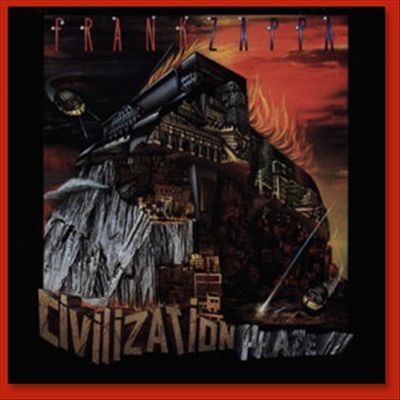
So my own musical explorations into the avant garde made mention of Frank Zappa’s final release CIVILIZATION PHAZE III, released just before his death in 1994. On it Zappa returns to recordings made for earlier musique concrète recordings such as 1968’s LUMPY GRAVY, in which he had studio visitors record snatches of conversation with their heads inside a grand piano (with the sustain pedal depressed, it apparently made quite a resonating sound). This sort of thing happened quite a lot in the Zappa studios, I imagine, but having had a good think about it for a good 30 years or so, he began to compile left-over recordings into some kind of opera/pantomime narrative based upon the themes of personal isolation and nationalism that finally saw release as a double album. The two women discussing dreams in this piece sound like a couple from the groupie supergroup the G.T.O.’s caught in an unguarded moment, as Zappa was wont to do during the recording of their only album. I’ve never been sure about Zappa but in the spirit of the avant-garde use tracks from the album throughout the show.

BALDUIN     PRISMA COLORA


A lovely instrumental piece from effervescent Swiss multi-instrumentalist Balduin who channels the spirit of HORIZONTAL-period Bee Gees albums, Kevin Ayers, Syd Barrett and the Rainbow Ffolly onto his debut album ALL IN A DREAM, released in 2014.

SADDAR BAZAAR     TONES AND WAVES


The spirit of the Spacemen 3 is strong in this one, which comes as something of a surprise because, otherwise, Bristol-based Eastern-psychedelic quartet Saddar Bazaar do a very fine line in your traditional Arabesque music where your more familiar Eastern instruments such as your sitars and tablas sit comfortably alongside the less well-known dholaks, kubings, agouls, and duffs and tablas, which Saddar Bazaar combine with conventional Western instruments to produce a haunting hybrid of transcendental ragas and psyched-out slide guitar. And drones, I guess. Tones and Waves is taken from the group’s 2nd album PATH OF THE ROSE, released in 1999. While that’s playing I include a couple of extra spoken word tracks from Frank Zappa – namely Oh-Umm and Waffenspiel.

SKIP SPENCE     WAR IN PEACE


I’m something of a late-comer to Skip Spence’s only album OAR – I had a friend who tried to introduce me to it some 15 or so years ago (Hi, Phil!) but I didn’t get it at all. Recently, however, I’ve been returning to it more and more. Skip Spence, of course, was Jefferson Airplane’s first drummer before moving onto his own band, Moby Grape. His only solo release in 1969 has an understated ethereal acid folk vibe to it, often beautiful in parts, but most often heralded as a soundtrack to schizophrenia and/or a visionary solo effort. Often described as "one of the most harrowing documents of pain and confusion ever made", the album was recorded after Spence had spent six months in Bellevue Hospital following a delusion-driven attempt to attack Moby Grape bandmates Don Stevenson and Jerry Miller with a fire axe. Now, Moby Grape, there’s a band I still stubbornly refuse to get.

PAULINE OLIVEROS     BEAUTIFUL SOOP (excerpt)

THE THIRD BARDO     RAINBOW LIFE


The Third Bardo existed just long enough to enjoy only the one recording session, which yielded six tracks in all, including one killer single, I’m Five Years Ahead Of My Time, released in 1967, which, with its use of Eastern melody and distorted guitars, bridged the transitional moment between garage rock and psychedelia, and it’s b-side, the swirling Rainbow Life, which took the group even further down the rabbit hole.  Those two tracks and the remaining four were finally released as an EP in 2000 and that was their lot.

THE BEE GEES     EVERY CHRISTIAN LION HEARTED MAN WILL SHOW YOU 

   
Baroque-pop splendour from The Bee Gees, featuring a Gregorian chant backed by a mellotron that places the record somewhere between Strawberry Fields and almost anything The Moody Blues were up to at the same time. This marvellously switched on oddity appears on their 1967 album THE BEE GEES’ 1st, which was, in fact, their third album, but the first to be recorded and released in England.

THE ROLLING STONES     DANDELION


This is the b-side to 1967’S We Love You and shows the Stones tip-toeing around the groovy psychedelic goings on that would become THEIR SATANIC MAJESTIES REQUEST. Like We Love You, it features John and Paul on backing vocals and was one of their few tracks that really flirted with that whole summer of love vibe so prevalent in 1967 (which they more or less missed, what with Mick and Keith being in prison and all). I understand that Keith Richard named his first daughter after the song – although she's since decided to go by her middle name, Angela, instead.

THE JIMI HENDRIX EXPERIENCE     BURNING OF THE MIDNIGHT LAMP


Paisley-coloured pop from Jimi Hendrix who even tries his hand at the harpsichord for this one. Recorded and released in 1967 this was the Jimi Hendrix Experience’s fourth single and the first that includes his use of the wah-wah pedal. I think this was added to ELECTRIC LADYLAND, which came out the following year, but as a single this is the perfect psychedelic pop statement.

THE TELESCOPES   YOU SET MY SOUL


I was always a fan of The Telescopes slightly delirious take on psychedelia so I was delighted when the wonderful Cherry Red label scooped up all the band’s Creation EPs and released them with a handful of bonus tracks and their only Creation album #UNTITLED SECOND (or, THE TELESCOPES if you bought it first time round in 1992) on a double CD compilation called SPLASHDOWN released last year. If the EPs effectively demonstrate exactly how psychedelic music sounds while listened to on LSD and just a soupçon of DMT (listening to All A Dreams from the CELESTE EP, for example, you can almost see the notes shimmer, come apart and disintegrate into a lysergic cluster of sound particles drifting away) then the album starts out as an abstract obsession with warmth and gets stranger from there, introducing a jazz-like, free flowing, incense smudged psychedelia to the mix that, for the most part, enjoys an altogether more reflective feel to it than suggested by the EPs (although they wig out too). Anyway, it’s marvellous, despite the fact that that version of the band split up before the record even reached the shelves. Cherry Red are surely making a name for themselves as one of the finest record labels around with some excellently curated re-releases. Their DUST ON THE NETTLES: AJOURNEY THROUGH THE BRITISH FOLK UNDERGROUND SCENE 1968-1972, was one of my prized Christmas presents from a family that clearly knows what daddy likes.

PAULINE OLIVEROS     BEAUTIFUL SOOP (excerpt)

MOON WIRING CLUB     WARDROBE FOR ALL SEASONS/MUNGO AND SHODDY/
                                                SARTORIAL RE-ANIMATION/CHIFFON AND SINGED HAIR/
         HAYWIRE ASSISTANTS


You can see how far ahead of the game Pauline Oliveros was when you realise you can’t tell when her excerpt ends and the Moon Wiring Club begins. That being said, I’m so taken by PLAYCLOTHES FROM FARAWAY PLACES, the most recent release from Moon Wiring Club I pieced together five tracks in order to recreate the sounds I hear in my head as I nod off to sleep. This is the sound from which dreams are made, especially if you’d happened to have dozed off at a Jacobean catwalk fashion show.

BEAUTIFY JUNKYARDS     PES NA AREIA NA TERRA DO SOL


Acid-folk loveliness from Lisbon’s Beautify Junkyards, who bring a distinctly hauntological feel to the mix. In fact, this track is absolutely spell-binding – an ethereal, magical and transcendent experience that combines the shimmering quirkiness of Os Mutantes with the beautifully bucolic and dreamily spaced out noise-fields made by Broadcast. It’s taken from their 2015 release THE BEAST SHOUTED LOVE. Exquisite.


IN GOWAN RING     JULIA WILLOW


You know where you are in your acid folk circles when you come across a track called Julia Willow – it will doubtless be a sublime thing of pastoral beauty, adorned with reflective, gentle rustic moments and otherwise shimmer with all the tremulous beauty of a misty woodland glade discovered at dawn. And that’s pretty much what you get with this track, taken from album THE SERPENT AND THE DOVE, the first released under the In Gowan Ring banner in 13 years. In Gowan Ring is the name under which the psychedelic troubadour B’ee, better known as B’eirth (or indeed, Bobin John Michael Eirth to his mum), creates his bucolic psych folk releases, and THE SERPENT AND THE DOVE, released last year, is the perfect marriage of psychedelic folk with a sensibility firmly placed in the middle ages.

This is what B’ee himself has to say about it:

The Serpent and the Dove recounts an alchemical journey through a luminous garden around the Living Tree; there is a serpent… and a dove. A candle flame flickers in the night, illuminating the face of a wandering sage sitting by a stream. He sings a story about a cosmic dancer which he’d heard whispered through the reeds: her rainbow eyes, her bowl of tea, and a field of dreams out of which grew the universe and all that we can see… There are willows; there are masks of leaves; there are thousands of bees.
Which pretty much tells you all you need to know, really.

EPIC45     WEATHERING (excerpt)


Epic45 are two childhood school friends who make hazy electro-acoustic evocations of the English pastoral in the manner of Mogwai trying to sound like The Durutti Column by way of Talk Talk, if you know what I mean. Weathering is the title track of their 2011 release, their fifth together, and focuses on the decline of real village life in their region, as former rural communities become dormitories for commuters and struggle to maintain their unique identities. There is a sense of loss and nostalgia throughout the album that has the sepia-tinted wash of hauntology about it with the use of some cleverly applied cassette tape noises managing to make music that sounds like memories.

PAULINE OLIVEROS     BEAUTIFUL SOOP (excerpt)

CAVERN OF ANTI-MATTER     PULSING RIVER VELVET PHASE


Since the demise, or possible hiatus, of his previous group Stereolab, Tim Gane has moved Berlin to focus his attention on Cavern Of Anti-Matter alongside the splendidly named Holger Zapf and former Stereolab drummer Joe Dilworth. Between them they explore the possibilities of aerial ambiance and your motorik kosmiche trajectories. Gane describes the band as confirmed spectrum addicts, setting up tiny rhythmic cells and expanding on them in certain ways, splitting the melody and stretching out time. Pulsing River Velvet Phase, a beautifully evolving melodic piece for guitar and synths, is one of two tracks they recorded especially for Ghost Box record label’s OTHER VOICES series of limited 7 " vinyl releases last year. It’s not actually unlike an early Stereolab single, minus Laetitia Sadier’s understated Gallic vocals, but this is a five minute epic that blossoms organically as it joyfully shifts mood and time signatures.

COUNTRY JOE AND THE FISH     JANIS


It’s a lovely track this, written by Country Joe McDonald to his ex-girlfriend, Janis Joplin. It’s by no means the psychedelic stand-out on their 1967 release FEELS LIKE I’M FIXIN’ TO DIE, but it is the sweetest. Being’s as this is a place I often go to when kaleidoscopically engaged, as it were, I thought it would be nice to include it...

FUSCHIA     ME AND MY KITE


…especially as any conflicting emotions it brings up are resolved so pleasantly in this gorgeously reassuring little track from the short-lived Fuschia. Me And My Kite is taken from the band’s eponymously titled album, released in 1971. At the time nobody quite knew what to make of the folk-prog-pop-ish songs whose progressions were unconventional enough that you never quite knew where they were going. They were let down by advertising (one ad in the Melody Maker) and a manager who failed to organize a tour, so their only album was also their last, but, as is often the case, the album took on a life of its own until finally band leader Andy Durant, now living in Australia, learned of the popularity of the album among collectors of your lost acid folk artefacts, not to mention the number the unlicensed re-pressings of his record that had been made in the meantime. Using his original master tapes he digitally remastered the album which was re-released in 2005 to the sort of reviews that regularly made use of the terms “lost masterpiece of art-rock-folk stylings” in the write-up. I understand that there’s a Fuschia II featuring Andy Durant, still based in Australia, who recently released an album called FROM PSYCHEDELIA…TO A DISTANT PLACE in 2013.

COSMIC NEIGHBOURHOOD     ELF DOOR


Now this is interesting - Cosmic Neighbourhood is the brainchild of Bristol-based illustrator and musician Adam Higton. Elf Door is the opening track from his debut album COLLAGES 1, where each song acts as a response to his fanciful scissor and paper abstractions. Released last year, the album arranges fluttery modular synths, petered drum machine beats, flutes, bells and bizarre samples which document the daily goings-on of 'the forest folk within the realm of the Cosmic Neighbourhood.' Sonically speaking, of course, we’re in hauntological territory, the sounds conjuring up lost images of childhood, before colouring them all with the amber glow of some forgotten, psychedelic kids' TV programme. Higton's benign toots and echoing jingles bring to mind Daphne Oram's early delay experiments or the meandering playfulness of Tom Cameron. Radiophonic and time-worn, it still somehow sounds like the future.

ME AND MY KITES     COMMON LIFE


Sweden’s Me and My Kites are such fans of Fuschia’s album they named themselves after its most whimsical track. On last year’s album IS IT REAL OR IS IT MADE, however, they strip back much of the psychedelia of their debut in favour of a more progressive, indefinable sound which owes more to the prog-folk harmonies of Mellow Candle or the Canterbury sound. There is a recording between the band and Andy Durant on the Fruits De Mer record label that I’m in the process of tracking down, but I really do feel that I’ve found a new favourite band here. Closer, Common Life, is absolutely superb, a wistful 10 minute trip that conjures up pictures of pristine landscapes, church graveyards, water meadows in the mist before dawn and somewhere astral, just on the other side of the Aurora Borealis, perhaps. Marvellous.

And that was Mind De-Coder 62.

Facebook