Tuesday, 26 April 2016

MIND DE-CODER 63

                                                                                                                                                              MIND DE-CODER 63

To listen to the show just scroll to the bottom of the page


“If you want a kinky caper, then suck a blotting paper”
                                                                                    Whispering Jim Narg


ATTICUS ROSS     BLACK HOLE


This opening track is taken from the soundtrack to the movie LOVE AND MERCY: THE LIFE, LOVE AND GENIUS OF BRIAN WILSON, which was released last year to plaudits and acclaim. Ross does something very special with score, creating ambient mash-ups of The Beach Boy’s music that suggest something of the noises in Wilson’s head, waiting to be willed into existence. Given that, to a genius-lacking degree, this is the process by which a Mind De-Coder show is put together, it seemed like an appropriate way to get the show underway.

ACID MOTHERS TEMPLE AND THE COSMIC INFERNO    DANCE WITH SPACE GYPSY QUEEN


For what was possibly their 45th album release, and certainly their third for 2013, Kawabata Makoto’s Acid Mothers Temple have adopted the Cosmic Inferno moniker to denote that the enticingly named DOOBIE WONDERLAND is a hard rock album, although, in this instance, this is hard rock as played by Sunn O))) at a child’s 5th birthday party (with balloons and everything). Coming in a little over 13 minutes, Dance With Space Gypsy Queen, is by no means the shortest track on the album, but it’s the one with a surf rock riff that will take you to the cosmos and leave you there, jamming with Weird and Gilly as they kick back with Hawkwind now that David Bowie has left the arena. In fact, it’s the best child’s birthday party you’ve never been invited to.

MOON WIRING CLUB     WAKE CRITIQUE


More hauntological noodling’s from Ian Hodgson’s Moon Wiring Club, whose latest release, 2015’s PLAYCLOTHES FROM FARAWAY PLACES, is my current repository for all things curious and otherworldly.

THE ROLLING STONES     2000 LIGHT YEARS FROM HOME


I was playing THEIR SATANIC MAJESTIES REQUEST the other day and realised that I still can’t quite decide whether it’s an under-rated psychedelic classic or drug-addled tosh which, at the very least, makes it an exceptional album, if nothing else. I also realised that despite including the very fine 2000 Light years From Home at least twice on the show, it’s always been as part of mash-up affair; so I thought it time to play the track in all its dark glory. This is about as far out as the Stones ever got – in order to come back they had to jettison Brian Jones and, whilst I can imagine that he was difficult, troubled fellow traveller at best of times, he was for me the embodiment of The Rolling Stones, and they were never the same again.


THE CROCHETED DOUGHNUT RING     TWO LITTLE LADIES (AZALEA AND RHODODENDRON)


Some bands only have one single in them – that’s all they need to make good their musical statement to the world – but at one point The Crocheted Doughnut Ring barely had that. Such was the rush to release their debut single, Two Little ladies, in 1967, that they didn’t have time to record a b-side, so producer Peter Eden took the a-side, all tinkering harpsichord, swirling kaleidoscopic effects, tinkling teacups and frequent shifts in tempo - the epitome of that particularly British brand of toy-town psychedelia - and with some deft tape manipulation, phasing, echo and distortion, vaporised the track into pure abstraction and called it Nice. Unsurprisingly, perhaps, this was the side that all the pirate radio stations wanted to play - according to the legend, it was considered too far out for John Peel to play on the newly formed Radio One. At some point or other, the two versions were segued into each other and that’s the version I’m playing here. In actual fact, Crocheted Doughnut Ring had two or three more singles in them but they never troubled the charts in England and they were doomed to become little more than a foot-note in psychedelic history.

STANLEY UNWIN     HI-DE-FIDO


The inimitable Stanley Unwin, from his debut album, ROTATEY DISKERS WITH UNWIN, released 1960, on which the great comedian draws upon his career as a technician for the BBC to ‘de-mystify’ the recording process. I’m so taken with track I return to it throughout the show – unquestionably a bit audibold for the eardrobes.

THE IDLE RACE      WORN RED CARPET


The Idle Race appear to have been the missing link between The Move and ELO, with various band members going on to join either of those bands. They were in fact a critically regarded band in their own right, but unfortunately that never transferred into record sales, and despite famous admirers such as The Beatles and Marc Bolan, the band failed to catch fire with the public. Worn Red Carpet was the b-side to the Jeff Lynne composed single, Days Of The Broken Arrows, which also failed to storm the charts, but stardom beckoned elsewhere.

THE VIRGIN SLEEP     LOVE


A terrific little single from The Virgin Sleep, a short-lived psychedelic rock group (I nearly found myself using the word ‘combo’ there) who were happy to adopt a few Eastern overtones into their sound as the Summer of Love reigned o’er olde London Town. Didn’t do them much good. Their debut single Love, released 1967, was largely unacknowledged by the listening public, and one more single later they were gone – a footnote of a footnote.

THE PRIMITIVES     ALL THE WAY DOWN


This is one of two versions of this track produced by The Primitives between the release of their debut album LOVELY but before the release of their second album PURE in 1989. It was on the b-side to their single Way Behind Me and features guitarist Paul Court on vocals and not the lovely Tracy Tracy, who I think provides tambourine. Oh, well. I like both versions but this version has a post-Velvets squall to it that I find particularly attractive.

PETE COOK AND DUDLEY MOORE     PSYCHEDELIC BABY


Pete and Dud were way ahead of the game – LSD had barely arrived on the scene and was a delight shared by only the most swingingest of the London set, and they were already satirising it on a flexi-disc that came with the December issue of Private Eye in 1966 – possibly the first time that the word LSD or psychedelic appears in English music. It is also noteworthy for being the first to name blotting paper as a useful way of dropping acid. Dudley Moore, by way of a good anecdote, was a patient and friend of John Riley, the society dentist who spiked John Lennon and George Harrison’s drink with LSD at a party and so more or less invented REVOLVER, SGT. PEPPER’S and The Summer of Love the following year. Psychedelic Baby is torturously difficult to obtain – there’s a YouTube clip of some guy singing the song all the way through by way of example before asking for someone to send him a link to the song somewhere, anywhere - but should you be interested, you can find it on an album called THE DEAD PARROT SOCIETY: THE BEST OF BRITISH COMEDY, released in 1993.

THE NICE     THE DIAMOND HARD BLUE APPLES OF THE MOON


The Nice, of course were one of those bands who straddled that whole psychedelic/prog crossover - probably invented it, in fact - and were too clever by half. Keyboardist Keith Emmerson went on to form Emerson, Lake and Palmer, but it was with The Nice that he first tasted commercial success. The Diamond Hard Blue Apples Of The Moon was the b-side to their marvellous take on Leonard Bernstein’s America, released in 1968, to which they added a bit of Dvořák's New World Symphony and renamed America (Second Amendment) – the world’s first instrumental protest record, according to Emerson. The Diamond Hard Blue Apples Of The Moon has a spikey feel to it and in no way points to the pomposity that was to come.

UNKNOWN MORTAL ORCHESTRA     STAGE OR SCREEN


I included this in the show because it sounds messed up, but then, so do many of the tracks on the band’s third album MULTI-LOVE, released in 2015. In true psychedelic fashion, the production is as important as the music, and on this album, singer/songwriter/producer Ruban Nielson features the studio as an extra instrument, corroding and tripping out the sounds. Marvellous.

PRIMAL SCREAM     PRIVATE WARS


Acid-folk loveliness from Primal Scream’s current release, CHAOSMOSIS, released earlier this year. Who’d have thought it? But, in truth, it’s a schizophrenic album that doesn’t quite know whether it’s one thing or another, touching a number of eclectic bases. On the other hand, judging by the gorgeous pastoral vibe thing  going on in Private Wars, psych-folk might be an intriguing way forward for the band so obviously in search of a direction. Can you see Bobby Gillespie putting aside Maggot Brain for The Garden Of Jane Delawney in time for the next album? The very question has quite the appeal to it, don’t you think?


THE SMALL FACES     THE AUTUMN STONE


I mean, I don’t think anyone would mind if Primal Scream sounded like this for a while. The Autumn Stone is the title track from an album released posthumously following the departure of the otherwise chirpy Steve Marriot from the band during the recording of what would have been their 3rd LP. Released in 1969 it serves both as a retrospective of the band’s developing sound and a suggestion of what their future direction might have been. The achingly beautiful title track signposted the way many other rock groups would choose to go.


EERIE WANDA     MIRAGE


Eerie Wanda is the very fine sound of Dutch singer/songwriter Marina Tadic and the rhythm section of Jacco Gardner's backing band coming together to create some woozy, captivating songs that are ever so slightly psychedelic and ever so slightly weird on their debut album, HUM, released earlier this year. It’s as if Courtney Barnett has got this whole Francoise Hardy thing going on with some lovely off-centre experimental flourishes thrown into the mix that’s otherwise shambling and day-dreamy. Really quite lovely.

JIM FASSETT     STRANGE TO YOUR EARS (excerpt)


Jim Fassett was musical director for CBS Radio (not to mention the intermission announcer for the New York Philharmonic) who found himself obsessed with one of those new, fangled gadgets called a ‘tape recorder’ that had been around since the mid-1940s. Fortunately for him, CBS Radio happened to own three of them, allowing Fassett and tape engineer Morty Goldberg, to record and corrupt sounds to their heart’s content. STRANGE TO YOUR EARS, released in 1955, is a beginner’s guide to tape manipulation and musique concrete experimentation, narrated by Fassett with a true amateur’s enthusiasm for speeding things up and then slowing them down again. 

BARNABY RUDGE     JOE, ORGAN AND CO.
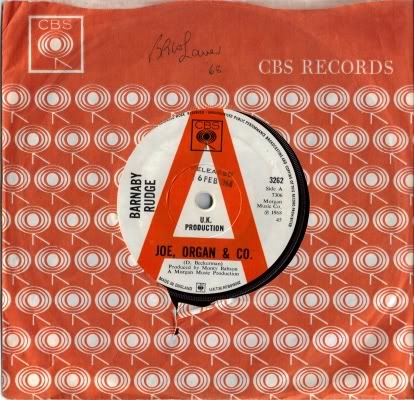

There was no Barnaby Rudge, he was a studio creation, created by studio hand Wil Malone at the Morgan Studios in North London, sounding for all the world like a Deram-era David Bowie single. Joe, Organ & Co is prime example of what author Rob Chapman referred to as the British psychedelic music hall tradition. Focussing on the adventures of the titular organ grinder and his monkey, it is a simple piece punctuated by sound effects and undercut by a slightly downbeat lyric, the entire package reflecting the child-like nature of a lot of psychedelic pop records of the period. As you might imagine, the single, released in 1968 eluded success in the charts although Wil Malone would find greater success in the nineties, working on the string arrangements for Massive Attack and The Verve.

JIM FASSETT     STRANGE TO YOUR EARS (excerpt)


At this point I returned to Jim Fassett and  had the sound drift away into some found sound excerpts from David Toop’s OCEAN OF SOUND, released in 1996 to accompany his book Ocean of Sound: Aether Talk, Ambient Sound and Imaginary Worlds examination of how ambient music taps into the disturbing, chaotic undertow of the environment. What you heard were excerpts from The Music Of Horns And Whistles from the Vancouver soundscape, howler monkeys in their natural habitat and the opening few minutes from a Shunie Omizutori Buddhist Ceremony. This found resolution in…

GAVIN BRIARS     (excerpts from) THE SINKING OF THE TITANIC


This is a fascinating work by British minimalist composer Gavin Bryars. Inspired by the story that the band on the RMS Titanic continued to perform as the ship sank in 1912, it recreates how the music performed by the band would reverberate through the water some time after they ceased performing. Composed between 1969 and 1972 it finally saw release in 1975 on Brian Eno’s Obscure Records, but was subsequently recorded in 1990, which is where these tracks - interlude, hymn iii, opening part ii, titanic lament – come from. According to Bryars, the music goes through a number of different states, reflecting an implied slow descent to the ocean bed which give a range of echo and deflection phenomena, allied to considerable high frequency reduction, but then, that’s exactly the sort of thing you’d expect him to say.


If that wasn’t enough, I also include a few minutes from Dormin Slowly Died With The Radio On, a Scarfolk Records release, no less, recorded in 1974 and otherwise the debut ambient album from the artist known as Ragle, stage name of Eddie Rumpburn who was the manager of Twazzle's Hardware shop on East Twazzle Parade between 1970 and 1978.  The album was called DORMIN DIED SLOWLY WITH THE RADIO ON. PARTS 1-82, but I only play part 71. It won 2nd prize at the Scarfolk harvest festival, having lost out to Gary Butters from Scarfolk primary school, class 5, who came 1st with his song Eagle Eye Action Man.

CHILDREN OF ALICE     HARBINGER OF SPRING


Children Of Alice is project by Broadcast’s James Cargill, ex-Broadcast keyboardist Roj and The Focus Group’s Julian House, whose sound has a hauntological provenance that puts them in the same ballpark, or perhaps that should be potting shed, as the Moon Wiring Club. Wearing those said hauntological credentials proudly, Harbinger Of Spring, released in 2013, forms one side of the DEVON FOLKLORE TAPES VOL. 5 cassette, part of an open-ended research project exploring the vernacular arcana of Great Britain and beyond in which the myths, mysteries, magic and strange phenomena of the old counties are traversed via abstracted musical reinterpretation and experimental visuals. It is, as you can imagine, a project that’s right up my street and Harbinger Of Spring doesn’t disappoint. Throughout its 18-minutes it emphasizes a gentle psychedelic soundworld and mood of pastoral reverie that takes in arcane references to mechanical clock chimes; a cuckoo springing forth with a drawn-out, distorted cry which is multiplied to sound like the plaintive cries of estuarine waders; the sound of giggling children; LP surface hiss and crackle; a hazily impressionistic, Delius-like reverie; wobbly tape effects, with reels sped up or slowed down; the Clangers; a music box stuck on a playing a looped fragment of Someday My Prince Will Come and the anonymous 13th century song Sumer Is Icumen in, familiar to many as the cheerful ditty which the Summer Islanders chant, merrily swaying in time, as they burn poor old Sergeant Howie to death at the end of the Wicker Man - an aural daydream, a mental meander through inner worlds akin to Alice’s journey down the rabbit hole. Quite marvellous, then, but without a unifying tune or melody, so right in the middle of it I play…

SHE DREW THE GUN     IF SHE COULD SEE 


She Drew The Gun, fronted by songwriter Louisa Roach, offer dreamy lyrical psych-pop from the banks of the Mersey. Their debut album, MEMORIES OF THE FUTURE, produced by The Coral’s James Skelly and released later this month, is a dark but dreamlike collection of stories from Roach’s life and imagination caught in a bubble of psych-tinged pop. On If She Could See they appear to be channelling the spirit of Nancy Sinatra at a magic mushroom tea party with Portishead, which means it sits very nicely amidst the pastoral goings on of Children Of Alice, to which we return for the second half of Harbinger Of Spring.

FUSCHIA     ANOTHER NAIL


A marvellous track, this, from Fuschia’s self-titled debut album, released in 1971, a masterpiece of folk-prog stylings from the heady days of the London psychedelic underground that went completely un-noticed at the time of its release. Over the years it picked up cult status, prompting singer-songwriter Tony Durant to follow it up with a sequel some 40 years or so later.


Tuesday, 1 March 2016

MIND DE-CODER 62


To listen to the show just scroll to the bottom of the page

"The function of government is to get everyone high and feeling good."
                                                                                                          Timothy Leary

TIMOTHY LEARY     YOU CAN BE ANYONE THIS TIME AROUND


This is the title track to Leary’s 1970 album, released in a bid to raise funds for his campaign against Ronald Reagan for the governorship of California. I’m assuming he lost. Can you imagine how differently the world might be had he won? It boggles the mind, which is pretty much the effect that he, or his producer Alan Douglas, were aiming for, combining cut ‘n’paste technology with entirely uncredited samples from such luminaries as The Beatles, Ravi Shankar and The Rolling Stones over a stream of consciousness rap from Leary while Jimi Hendrix, Stephen Stills and Buddy Miles jam in the background. Should have been a revolutionary call to arms but everyone got high instead. A mind-expanding eye-opener nevertheless.

PAULINE OLIVEROS     BEAUTIFUL SOOP (excerpt)


I’ve been reading and very much enjoying Rob Chapman’s book PSYCHEDELIA AND OTHER COLOURS recently. In it he notes that avant-garde and psychedelic musicians briefly crossed paths around 1966 but instead of joining creative forces in order to blow people’s minds, they remained merely on nodding terms with each other and more or less went their separate ways – a lost opportunity if there ever was one. So I’ve been reading about musical pioneers in the avant-garde and came across Pauline Oliveros, one of the more important figures and pioneers in the electronic and contemporary music field. She was professor at the University at San Diego for 14 years and is currently Distinguished Research Professor of Music at Rensselaer Polytechnic Institute and Darius Milhaud Composer in Residence at Mills College. She produced Beautiful Soop in 1966 and, like many psychedelic musicians of the day, shared a fascination with childhood and Edwardian nursery tales - and Alice in Wonderland in particular - which she incorporates into the piece with the use of tape-delays, echoes and accumulative modulations, mixed with surrealistic and often humorous electronic sounds - a style, it turns out, she’s specifically known for. It remained unreleased until 1997 when it was included on the album ALIEN BOG/BEAUTIFUL SOOP, a showcase of her work as director of the Tape Music Centre at Mills College in the 60’s, in which also seems to have invented hauntology, or at the very least, the Moon Wiring Club, too (just listen to the Moon Wiring Club later on in the show to see what I mean). Rather than play the whole piece I’ve dipped into it throughout the show, drifting in and out of consciousness like the memory of a lost childhood daydream.

KING GIZZARD AND THE LIZARD WIZARD     WORK THIS TIME


King Gizzard and the Lizard Wizard may have got a lot better than they ever expected to ever so quickly and may, at some point, start to regret the name. Or maybe not. You never can tell, and I certainly can’t. Work This Time is from their 2014 release ODDMENTS, an album on which they retreat from their earlier full-on fuzz wall of sound and begin to realise that there are adventurous diversions to be found in exploring some of the more soulful by-ways of the musical landscape, as it were. Work This Time is particularly lovely, I think, and hints at the sort of sound they’re discovering on their most recent release. Mind you, that being said, they manage to completely change direction with every record they make – making them pretty much my favourite band around at chez Mind De-Coder these days.

FRANK ZAPPA     HAD A DREAM ABOUT THAT


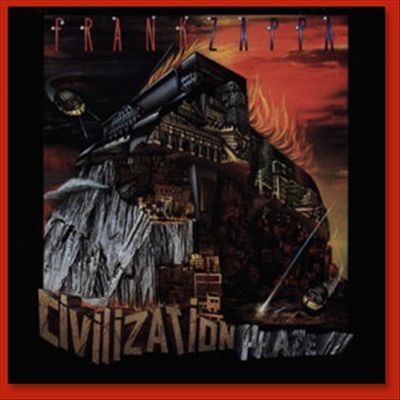
So my own musical explorations into the avant garde made mention of Frank Zappa’s final release CIVILIZATION PHAZE III, released just before his death in 1994. On it Zappa returns to recordings made for earlier musique concrète recordings such as 1968’s LUMPY GRAVY, in which he had studio visitors record snatches of conversation with their heads inside a grand piano (with the sustain pedal depressed, it apparently made quite a resonating sound). This sort of thing happened quite a lot in the Zappa studios, I imagine, but having had a good think about it for a good 30 years or so, he began to compile left-over recordings into some kind of opera/pantomime narrative based upon the themes of personal isolation and nationalism that finally saw release as a double album. The two women discussing dreams in this piece sound like a couple from the groupie supergroup the G.T.O.’s caught in an unguarded moment, as Zappa was wont to do during the recording of their only album. I’ve never been sure about Zappa but in the spirit of the avant-garde use tracks from the album throughout the show.

BALDUIN     PRISMA COLORA


A lovely instrumental piece from effervescent Swiss multi-instrumentalist Balduin who channels the spirit of HORIZONTAL-period Bee Gees albums, Kevin Ayers, Syd Barrett and the Rainbow Ffolly onto his debut album ALL IN A DREAM, released in 2014.

SADDAR BAZAAR     TONES AND WAVES


The spirit of the Spacemen 3 is strong in this one, which comes as something of a surprise because, otherwise, Bristol-based Eastern-psychedelic quartet Saddar Bazaar do a very fine line in your traditional Arabesque music where your more familiar Eastern instruments such as your sitars and tablas sit comfortably alongside the less well-known dholaks, kubings, agouls, and duffs and tablas, which Saddar Bazaar combine with conventional Western instruments to produce a haunting hybrid of transcendental ragas and psyched-out slide guitar. And drones, I guess. Tones and Waves is taken from the group’s 2nd album PATH OF THE ROSE, released in 1999. While that’s playing I include a couple of extra spoken word tracks from Frank Zappa – namely Oh-Umm and Waffenspiel.

SKIP SPENCE     WAR IN PEACE


I’m something of a late-comer to Skip Spence’s only album OAR – I had a friend who tried to introduce me to it some 15 or so years ago (Hi, Phil!) but I didn’t get it at all. Recently, however, I’ve been returning to it more and more. Skip Spence, of course, was Jefferson Airplane’s first drummer before moving onto his own band, Moby Grape. His only solo release in 1969 has an understated ethereal acid folk vibe to it, often beautiful in parts, but most often heralded as a soundtrack to schizophrenia and/or a visionary solo effort. Often described as "one of the most harrowing documents of pain and confusion ever made", the album was recorded after Spence had spent six months in Bellevue Hospital following a delusion-driven attempt to attack Moby Grape bandmates Don Stevenson and Jerry Miller with a fire axe. Now, Moby Grape, there’s a band I still stubbornly refuse to get.

PAULINE OLIVEROS     BEAUTIFUL SOOP (excerpt)

THE THIRD BARDO     RAINBOW LIFE


The Third Bardo existed just long enough to enjoy only the one recording session, which yielded six tracks in all, including one killer single, I’m Five Years Ahead Of My Time, released in 1967, which, with its use of Eastern melody and distorted guitars, bridged the transitional moment between garage rock and psychedelia, and it’s b-side, the swirling Rainbow Life, which took the group even further down the rabbit hole.  Those two tracks and the remaining four were finally released as an EP in 2000 and that was their lot.

THE BEE GEES     EVERY CHRISTIAN LION HEARTED MAN WILL SHOW YOU 

   
Baroque-pop splendour from The Bee Gees, featuring a Gregorian chant backed by a mellotron that places the record somewhere between Strawberry Fields and almost anything The Moody Blues were up to at the same time. This marvellously switched on oddity appears on their 1967 album THE BEE GEES’ 1st, which was, in fact, their third album, but the first to be recorded and released in England.

THE ROLLING STONES     DANDELION


This is the b-side to 1967’S We Love You and shows the Stones tip-toeing around the groovy psychedelic goings on that would become THEIR SATANIC MAJESTIES REQUEST. Like We Love You, it features John and Paul on backing vocals and was one of their few tracks that really flirted with that whole summer of love vibe so prevalent in 1967 (which they more or less missed, what with Mick and Keith being in prison and all). I understand that Keith Richard named his first daughter after the song – although she's since decided to go by her middle name, Angela, instead.

THE JIMI HENDRIX EXPERIENCE     BURNING OF THE MIDNIGHT LAMP


Paisley-coloured pop from Jimi Hendrix who even tries his hand at the harpsichord for this one. Recorded and released in 1967 this was the Jimi Hendrix Experience’s fourth single and the first that includes his use of the wah-wah pedal. I think this was added to ELECTRIC LADYLAND, which came out the following year, but as a single this is the perfect psychedelic pop statement.

THE TELESCOPES   YOU SET MY SOUL


I was always a fan of The Telescopes slightly delirious take on psychedelia so I was delighted when the wonderful Cherry Red label scooped up all the band’s Creation EPs and released them with a handful of bonus tracks and their only Creation album #UNTITLED SECOND (or, THE TELESCOPES if you bought it first time round in 1992) on a double CD compilation called SPLASHDOWN released last year. If the EPs effectively demonstrate exactly how psychedelic music sounds while listened to on LSD and just a soupçon of DMT (listening to All A Dreams from the CELESTE EP, for example, you can almost see the notes shimmer, come apart and disintegrate into a lysergic cluster of sound particles drifting away) then the album starts out as an abstract obsession with warmth and gets stranger from there, introducing a jazz-like, free flowing, incense smudged psychedelia to the mix that, for the most part, enjoys an altogether more reflective feel to it than suggested by the EPs (although they wig out too). Anyway, it’s marvellous, despite the fact that that version of the band split up before the record even reached the shelves. Cherry Red are surely making a name for themselves as one of the finest record labels around with some excellently curated re-releases. Their DUST ON THE NETTLES: AJOURNEY THROUGH THE BRITISH FOLK UNDERGROUND SCENE 1968-1972, was one of my prized Christmas presents from a family that clearly knows what daddy likes.

PAULINE OLIVEROS     BEAUTIFUL SOOP (excerpt)

MOON WIRING CLUB     WARDROBE FOR ALL SEASONS/MUNGO AND SHODDY/
                                                SARTORIAL RE-ANIMATION/CHIFFON AND SINGED HAIR/
         HAYWIRE ASSISTANTS


You can see how far ahead of the game Pauline Oliveros was when you realise you can’t tell when her excerpt ends and the Moon Wiring Club begins. That being said, I’m so taken by PLAYCLOTHES FROM FARAWAY PLACES, the most recent release from Moon Wiring Club I pieced together five tracks in order to recreate the sounds I hear in my head as I nod off to sleep. This is the sound from which dreams are made, especially if you’d happened to have dozed off at a Jacobean catwalk fashion show.

BEAUTIFY JUNKYARDS     PES NA AREIA NA TERRA DO SOL


Acid-folk loveliness from Lisbon’s Beautify Junkyards, who bring a distinctly hauntological feel to the mix. In fact, this track is absolutely spell-binding – an ethereal, magical and transcendent experience that combines the shimmering quirkiness of Os Mutantes with the beautifully bucolic and dreamily spaced out noise-fields made by Broadcast. It’s taken from their 2015 release THE BEAST SHOUTED LOVE. Exquisite.


IN GOWAN RING     JULIA WILLOW


You know where you are in your acid folk circles when you come across a track called Julia Willow – it will doubtless be a sublime thing of pastoral beauty, adorned with reflective, gentle rustic moments and otherwise shimmer with all the tremulous beauty of a misty woodland glade discovered at dawn. And that’s pretty much what you get with this track, taken from album THE SERPENT AND THE DOVE, the first released under the In Gowan Ring banner in 13 years. In Gowan Ring is the name under which the psychedelic troubadour B’ee, better known as B’eirth (or indeed, Bobin John Michael Eirth to his mum), creates his bucolic psych folk releases, and THE SERPENT AND THE DOVE, released last year, is the perfect marriage of psychedelic folk with a sensibility firmly placed in the middle ages.

This is what B’ee himself has to say about it:

The Serpent and the Dove recounts an alchemical journey through a luminous garden around the Living Tree; there is a serpent… and a dove. A candle flame flickers in the night, illuminating the face of a wandering sage sitting by a stream. He sings a story about a cosmic dancer which he’d heard whispered through the reeds: her rainbow eyes, her bowl of tea, and a field of dreams out of which grew the universe and all that we can see… There are willows; there are masks of leaves; there are thousands of bees.
Which pretty much tells you all you need to know, really.

EPIC45     WEATHERING (excerpt)


Epic45 are two childhood school friends who make hazy electro-acoustic evocations of the English pastoral in the manner of Mogwai trying to sound like The Durutti Column by way of Talk Talk, if you know what I mean. Weathering is the title track of their 2011 release, their fifth together, and focuses on the decline of real village life in their region, as former rural communities become dormitories for commuters and struggle to maintain their unique identities. There is a sense of loss and nostalgia throughout the album that has the sepia-tinted wash of hauntology about it with the use of some cleverly applied cassette tape noises managing to make music that sounds like memories.

PAULINE OLIVEROS     BEAUTIFUL SOOP (excerpt)

CAVERN OF ANTI-MATTER     PULSING RIVER VELVET PHASE


Since the demise, or possible hiatus, of his previous group Stereolab, Tim Gane has moved Berlin to focus his attention on Cavern Of Anti-Matter alongside the splendidly named Holger Zapf and former Stereolab drummer Joe Dilworth. Between them they explore the possibilities of aerial ambiance and your motorik kosmiche trajectories. Gane describes the band as confirmed spectrum addicts, setting up tiny rhythmic cells and expanding on them in certain ways, splitting the melody and stretching out time. Pulsing River Velvet Phase, a beautifully evolving melodic piece for guitar and synths, is one of two tracks they recorded especially for Ghost Box record label’s OTHER VOICES series of limited 7 " vinyl releases last year. It’s not actually unlike an early Stereolab single, minus Laetitia Sadier’s understated Gallic vocals, but this is a five minute epic that blossoms organically as it joyfully shifts mood and time signatures.

COUNTRY JOE AND THE FISH     JANIS


It’s a lovely track this, written by Country Joe McDonald to his ex-girlfriend, Janis Joplin. It’s by no means the psychedelic stand-out on their 1967 release FEELS LIKE I’M FIXIN’ TO DIE, but it is the sweetest. Being’s as this is a place I often go to when kaleidoscopically engaged, as it were, I thought it would be nice to include it...

FUSCHIA     ME AND MY KITE


…especially as any conflicting emotions it brings up are resolved so pleasantly in this gorgeously reassuring little track from the short-lived Fuschia. Me And My Kite is taken from the band’s eponymously titled album, released in 1971. At the time nobody quite knew what to make of the folk-prog-pop-ish songs whose progressions were unconventional enough that you never quite knew where they were going. They were let down by advertising (one ad in the Melody Maker) and a manager who failed to organize a tour, so their only album was also their last, but, as is often the case, the album took on a life of its own until finally band leader Andy Durant, now living in Australia, learned of the popularity of the album among collectors of your lost acid folk artefacts, not to mention the number the unlicensed re-pressings of his record that had been made in the meantime. Using his original master tapes he digitally remastered the album which was re-released in 2005 to the sort of reviews that regularly made use of the terms “lost masterpiece of art-rock-folk stylings” in the write-up. I understand that there’s a Fuschia II featuring Andy Durant, still based in Australia, who recently released an album called FROM PSYCHEDELIA…TO A DISTANT PLACE in 2013.

COSMIC NEIGHBOURHOOD     ELF DOOR


Now this is interesting - Cosmic Neighbourhood is the brainchild of Bristol-based illustrator and musician Adam Higton. Elf Door is the opening track from his debut album COLLAGES 1, where each song acts as a response to his fanciful scissor and paper abstractions. Released last year, the album arranges fluttery modular synths, petered drum machine beats, flutes, bells and bizarre samples which document the daily goings-on of 'the forest folk within the realm of the Cosmic Neighbourhood.' Sonically speaking, of course, we’re in hauntological territory, the sounds conjuring up lost images of childhood, before colouring them all with the amber glow of some forgotten, psychedelic kids' TV programme. Higton's benign toots and echoing jingles bring to mind Daphne Oram's early delay experiments or the meandering playfulness of Tom Cameron. Radiophonic and time-worn, it still somehow sounds like the future.

ME AND MY KITES     COMMON LIFE


Sweden’s Me and My Kites are such fans of Fuschia’s album they named themselves after its most whimsical track. On last year’s album IS IT REAL OR IS IT MADE, however, they strip back much of the psychedelia of their debut in favour of a more progressive, indefinable sound which owes more to the prog-folk harmonies of Mellow Candle or the Canterbury sound. There is a recording between the band and Andy Durant on the Fruits De Mer record label that I’m in the process of tracking down, but I really do feel that I’ve found a new favourite band here. Closer, Common Life, is absolutely superb, a wistful 10 minute trip that conjures up pictures of pristine landscapes, church graveyards, water meadows in the mist before dawn and somewhere astral, just on the other side of the Aurora Borealis, perhaps. Marvellous.

And that was Mind De-Coder 62.

Facebook