Showing posts with label Classical psychedelia. Show all posts

Wednesday, 1 July 2015

MIND DE-CODER 57

To listen to the show just scroll to the bottom of the page

In his 1781 page-turner, the Critique of Pure Reason, the German philosopher Immanuel Kant warned that the human brain has to impose an order onto the world that it doesn’t possess purely to make sense of it. Otherwise, as Kant candidly puts it, “all constitution, all relations of objects in space and time, indeed space and time themselves, would disappear.” This is possibly why I’m such a big fan of acid…
                                                                               Ingram Paige

CLAUDE DEBUSSY     PRÉLUDE À L’APRÈS-MIDI D’UN FAUNE


or Prelude To The Afternoon Of A Faun, to give it it’s English title. This evocative and supremely sensual tone poem for orchestra by Claude Debussy is a musical evocation of Stéphane Mallarmé’s poem “Afternoon of a Faun”, in which a faun — a half-man, half-goat creature of ancient Greek legend (think Mr. Tumnus, if you have to) — awakes to revel in sensuous memories of the forest nymphs (or perhaps not). The original orchestral version was completed in 1894, and is generally considered a quintessential example of musical Impressionism, a compositional style popular at the turn of the 20th century, influenced by the artistic school of the same name; a movement whose music focused on suggestion and atmosphere, conveying the moods and emotions aroused by the subject rather than a detailed tone‐picture, as it were. Turns out I’m quite the fan of this sort of thing. David Toop, in his impressive book Oceans of Sound, and its sequel, Exotica, argues that Debussy’s impressionistic soundscapes were the direct precursor of what we’ve come to call ambient music, as music sought to make sense of the sound of the 20th century, a position I’ve become fascinated with myself here on Mind De-Coder. It’s not about escapism; it’s about the sound of yourself listening.

EDWARD MACDOWELL     TO A WILD ROSE


This lovely piano piece lasts a mere minute and a half, but despite its brevity and modest character, it has become one of the most popular piano works by the American composer. This is taken from one of his most famous suites called WOODLAND SKETCHES FOR PIANO, OP. 51, written in 1896, as a collection of mood pieces for piano.  To A Wild Rose has a beautiful, gentle simplicity to it that captures the serene woodland setting of his family home in New Hampshire.

JOHANN PACHELBEL     CANON AND GIGUE, FOR 3 VIOLINS AND BASSO CONTINUO IN D MAJOR


or the Canon in D major as it’s more popularly known – a canon, in this case, being a contrapuntal compositional technique that employs a melody with one or more imitations of the melody played after a given duration, or what we call a polyphonic device in which several voices play the same music, entering in sequence (but then, I expect you already knew that). Originally composed 1694, it was apparently lost for some time before being rediscovered in the early 20th century. Since then, of course, it’s become a popular addition to many a fairly posh wedding or classical music compilation, but that was never going to be a barrier to its inclusion in the show. After listening to a great deal of classical music recently I‘ve come to the conclusion that, rather like the ‘best of’ Simon and Garfunkel compilation that every home has (bear with me on this one), the reason that the same popular classical hits keep appearing on those popular classical compilation albums is because they really are the best pieces of classical music ever – the rest is either too histrionic or just goes on a bit. It’s the same with Simon and Garfunkel – as a fan of their ‘best of’ album for years, I eventually decided to buy all of their albums proper, curious as to what hidden treasures might be hidden away on them. Turns out that the reason that all those songs on their ‘best of’ album were actually chosen is because they were literally the ‘best of Simon and Garfunkel’ – the rest aren’t any good at all; no hidden treasures, no undiscovered gems; no reason to own them at all really. Stick with the 'best of', that's what I say, and it's never done me any harm with Leonard Cohen, either. There’s a reason some things are popular – it’s because they’re the good ones. As it happens, I’m something of a fan of this actual piece and was hard pressed to know what version to use from the many I possess, when none of them are quite as good as the memory I have of the first version I ever heard on one of those Soothing Instrumental Sounds From The Scottish Chamber Orchestra type albums that you used to be able to buy in Woolworths for ₤1.25 up until about 1984 (although, in this instance, it really was by the Scottish Chamber Orchestra and if anyone can forward me a link to that particular version you will not find me ungrateful). I don’t know what a gigue is, or a basso continuo, and I can’t quite be bothered to Google either of them, wishing for some small element of mystery to remain in my life, but I defy anyone to not like this piece of music in whatever interpretation it arrives. It is both musically satisfying and very hummable whilst out a-ambling late one morning in Spring, perhaps; but did you know that the piece's chordal progression has been appropriated in numerous commercial pop hits too, with such hits as the Pet Shop Boys cover of Go West, Coolio's C U When U Get There and Green Day's Basket Case all owing a little something to it? Pop music producer Pete Waterman, who now, in the age of Simon Cowell seems to have been quite harmless after all, described Canon in D as almost “the godfather of pop music because we've all used that in our own ways for the past 30 years". He also said that Kylie Minogue's 1988 UK Number One hit single I Should Be So Lucky, which he co-wrote and co-produced, was based on Canon in D, which just goes to show.

BRIAN ENO     FULLNESS OF THE WIND


Brian Eno was a fan, too. In fact, so intrigued was he by Pachelbel’s skillful weaving of a strict polyphonic form (the canon) with a variation form (the chaconne, which itself is a mixture of ground bass composition and variations) that he recorded it three times with the Cockpit Ensemble, collectively titled Three Variations On The Canon In D Major By Johann Pachelbel, for side 2 of his 1975 release, DISCREET MUSIC. Eno selected short excerpts from the Canon with instructions to the musicians on how often to repeat said sections and when to alter those sections by changing the tempo or other elements. The elements change over time by having the parts slow at differing intervals or using different lengths of the musical score resulting in a work of, what can only be called, placid beauty.

OTTO LUENING     MOONFLIGHT


Otto Luening was an American-German composer who, in the 1950’s, with fellow composer Vladimir Ussachevsky helped to establish the Columbia-Princeton Electronic Music Center, where they created a landmark series of collaborative compositions for magnetic tape and synthesizer, as well as pioneering works for acoustic instruments in combination with electronic sounds. This track is taken from one of their major works, TAPE MUSIC AN HISTORIC CONCERT, recorded live at New York’s Museum of Modern Art in 1952, but not actually released until 1968, by which time the term was well-deserved, by having radically changed the face of contemporary musical composition. Moonflight is a dreamy and mysterious piece created by the layering of flute sounds on top of a base folksong-like melody, developed through diminution, retrogradation, augmentation, and distortion to create a complex pattern that is only possible by making use of the tape recorder, which also just goes to show, too.

GYÖRGY LIGETI     ATMOSPHÈRES


Atmosphères is a piece for full orchestra, composed by György Ligeti in 1961 with the South West German Radio Orchestra, and then snapped up by Stanley Kubrick for the intro to his 2001: A Space Odyssey, which is where you’ve probably heard it before. It is noted for eschewing conventional melody and metre in favour of dense sound textures, or what Ligeti himself referred to as micropolyphonic texture, or the sort of music you slip onto the stereo when your guests have over-stayed their welcome. It exemplifies Ligeti's notion of static, self-contained music without either development or traditional rhythmic configurations, which evokes a sense of timelessness in which the listener is lost in a web of texture and tonality. Very effectively, I might add.

GABRIEL FAURÉ     PIE JESU, AGNUS DEI


Faure’s sublime lullaby to death, REQUIEM IN D MINOR, Op. 48, composed 1890-ish, is one of those rare works that can cause even the most cynical of us to seek comfort in music that seeks to expand our perception of the numinous. Sadly I couldn’t play it all, but this particular version, performed by Coro e Orchestra dell'Accademia Nazionale di Santa Cecilia in 1999, features an achingly beautiful rendition of Pie Jesu by Cecilia Bartoli that is pretty much transcendental in its loveliness. I follow it with Agnus Dei simply to give you time to draw breath again.

SAMUEL BARBER     ADAGIO FOR STRINGS


This lovely piece, written by Barker in 1936 as part of his larger STRING QUARTET, OP. 11, is also regarded, in some circles, as one of the saddest pieces of music ever, more so even than Gloomy Sunday, say, the semi-infamous Hungarian Suicide Song written by Rezső Seress and immortalised by Billie Holiday. Others have found it imbued with pathos and cathartic passion (that would be the loud bit), but I find it nothing less than delightful, myself.

JOHANN SEBASTIAN BACH     PRELUDE AND FUGUE NO. 22 IN B FLAT MINOR


Bach’s WELL–TEMPERED CLAVIER, dated 1742, a collection of solo keyboard music, from which this piece is taken, is generally considered as being among the most influential works in the history of Western classical music. A bit of research reveals that a clavier refers to any keyboard instrument; especially baroque-era instruments such as the harpsichord, the clavichord or, indeed, the fortepiano. Scholars, though, have been heatedly debating for years over what Bach actually meant by ‘well-tempered’ - did he mean circular temperament, equal temperament or meantone temperament, all of which goes straight over my head as I revel in the simple loveliness of the music itself.

FRÉDÉRIC CHOPIN     NOCTURNE IN B FLAT MINOR, OP. 9 No. 1


I don’t know much about classical music but I know what I like, and what I’m a particular fan of is your nocturnes, those delightful, slightly melancholic piano pieces inspired by, and reflective of, the twilight and early evening (entirely incidentally, I’m a fan of the Soft Hearted Scientists for much the same reason). The most famous exponent of the form, of course, was Frédéric Chopin, who wrote 21 of them between 1827 and 1846. Nocturnes are generally thought of as being tranquil, often expressive and lyrical, and sometimes rather gloomy, but I understand some of them can get quite frisky at times; for myself, I prefer the ones that capture that moment of the evening just before you need to turn the lights on, but just after your first glass of wine.

VAUGHAN WILLIAMS     FANTASIA ON A THEME BY THOMAS TALLIS/THE LARK ASCENDING (excerpt)


You see, I absolutely had to play The Lark Ascending, but having heard Fantasia On A Theme By Thomas Tallis for the first time last week I realised I had to play that too, so I reached a compromise where I played both but only give you the bit you really know from Lark Ascending. Fantasia On A Theme By Thomas Tallis is everything I was looking for when I began wondering if there was such a as psychedelic classical music; its complex weave of folksong, hymnal and mystic atmosphere is nothing short of visionary, and it blew me away when I first heard it. It was written by Vaughan in 1910, and as it turns out it’s quite popular amongst those who are familiar with classical music – last year listeners to Classic FM voted it into third place on the station’s Hall of Fame. Which just goes to show. I wonder how many of them would feel upon hearing Venus In Furs for the first time? The Lark Ascending, of course, it right up there (that wasn’t necessarily a pun) at the top of favourite English classical recordings and deservedly so – it’s slice of pastoral whimsy served up with cream teas, cricket on the village green and church fayres that just dreams itself along. Written in 1914 while Britain prepared itself for war, it has about it an air of eulogy as well as a celebration of a glorious English summer morn, but I still only played the first part. Was that a mistake?

THE BEACH BOYS     WIND CHIMES


Don’t ask me how the Beach Boys turned up in a classical set, but I was listening to their previously unloved album SMILEY SMILE the other day, the one cobbled together from pieces of the aborted Smile sessions in 1967, when I began to appreciate that I was really enjoying it; that it was, in fact, pretty far out in its own right, and that Wind Chimes in particular had a devotional quality to it that was almost transcendental. After realising all this, of course, I included it in the show.

GREGORIO ALEGRI     MISERE MEI, DEUS


When it comes to music of a devotional nature, however, Alegri’s Misere Mei, Deus does kind of win the prize for the most transcendentalist-ist-est. You might say that it almost wrote the book, except, of course, that it didn’t; because at some point in history it became forbidden to transcribe it. This is the piece of music that the 14 year old Mozart famously wrote down entirely from memory after hearing it once performed in the Sistine Chapel. Based upon Psalm 51, Misere Mei, Deus (Have Mercy On Me, O God) is now one of the most popular a cappella works now performed. Its ethereal qualities cause goosebumps every time I hear it.

ERIK SATIE     GNOSSIENES NO. 1


…and so to ERIK SATIE who, as an early 20th-century French composer, used Dadaist-inspired explorations to create an early form of ambient music that he labelled furniture music (your musique d'ameublement, to be precise). This he described as being the sort of music that could be played during a dinner to create a background atmosphere for that activity, rather than serving as the focus of attention – the likes of Brian Eno and The Orb knew exactly what he was getting at. It was too obvious to play out with a gymnopédies, so I chose, instead, a gnossienes, a musical form invented by Satie lacking time signatures or bar divisions and highly experimental with form, rhythm and chordal structure. Written down it looks like it should be a mess but it is, in fact, quite lovely. Gnossienes No.1 was composed around 1890 as part of the TROIS GNOSSIENES, which were published in 1893; like everything else I’ve played this evening, it has a appeared on a number of film soundtracks (no music snob, me – give ‘em what they know, that’s my motto here on Mind De-Coder; well, one of them, anyway) which is where you’ve probably heard it before. To my untutored ear it reminds me of what I look for in one of Chopin’s Nocturnes, which seems as good a place to leave the show as any.

Facebook


Wednesday, 18 June 2014

MIND DE-CODER 48


To listen to the show just scroll to the bottom of the page

MIND DE-CODER 48
‘Turn on, tune in, folk out’

DELIA DERBYSHIRE AND BRIAN HODGSON     JOHN PEEL’S VOICE


This curious track comes from the same BBC Radiophonic Workshop team that brought you the Doctor Who theme (and, indeed the sound of the Tardis – created by Hodgson by running the back door key to his mother's house along a bass string of a gutted piano, then electronically treating the recording, trivia fans!). I’m a big fan of Delia Derbyshire and thought I’d more or less collected everything she’s recorded, so I was delighted to come across this track on the suitably obscure album JOHN PEEL PRESENTS TOP GEAR, released in 1969, which features a compilation of performances from various artists broadcast by Peel on his influential radio show Top Gear at the BBC. It’s a strange album, presenting an uncomfortable mix of the avowedly avant-garde with a bit of folk and some prog rock thrown in for good measure – pretty much the template for any show hosted by Peel really. The how’s and wherefores of this track remain a mystery but it’s exactly this sort of playfulness that made me a fan in the first place (of both her and Peel). 

ALAN BLACK     THE OLD PAPER CUP


Sound sculptor Alan Black has had a busy year; on the back of six mash-up albums inspired by the sea, he’s created a number of albums influenced by his own work. The Old Paper Cup comes from his recent release THE SEA: ALAN WATTS, in which he takes the words of Zen philosopher Alan Watts and mixes them with tracks from his own Sea Cycle. The track consists of Beck’s 000.000 (not one of his better known tracks – you can find it on the b-side to Devil’s Haircut, but don’t ask me how to pronounce it) and the lama karta Call To Lama From Afar, with Alan waxing lyrical on Nature of Consciousness. The whole album is this good and is available as a free download from Alan Black’s site here 

ALAN BLACK     OZYMANDIAS


I’ve been so taken with Alan Black’s work recently that I felt that a track from another of his Sea Cycle albums wouldn’t go amiss, so this is a reading of Ozymandias, Percy Bysshe Shelley’s famous sonnet to the inevitable decline of all leaders and of the empires they build, read over a bit of Peter Gabriel’s Bassbowl with accompaniment from various Tibetan monks with added singing bowls, cymbals and ghanta to marvellous effect. This is from the album THE SEA – VERSE, in which he takes poems by the likes of Walt Whitman, Coleridge, Yeats, Poe and Shakespeare and creates whole worlds for them to inhabit. Available for a free download here and check out the rest of his albums here.

SPROATLY SMITH     FLOWERS MADE OF WINTER/SPRING STRATHSPEY


The two opening tracks from Sproatly Smith’s 2010 release PIXIELED, an absolutely enchanting vision of psychedelic folk that combines ethereal melodies with lysergic pagan charm. Spring Strathspey, originally recorded by Gwydion Pendderwen (from MD 45), is simply one of the loveliest songs I’ve ever heard; Sproatly Smiths’ interpretation brings a tripped out bucolic vibe to the affair that makes me want to go skipping through meadows at dawn.

HAPSASH AND THE COLOURED COAT     A MIND BLOWN IS A MIND SHOWN


Hapsash and the Coloured Coat were the psychedelic design duo Michael English and Nigel Waymouth who, in the 60’s, were responsible all those fantastically tripped-out posters advertising underground happenings, clubs and concerts that so brilliantly captured the London scene’s buoyant, mind-expanding vibe, and feature some of the psychedelic era’s most arresting imagery. In 1967 they released HAPSASH AND THE COLOURED COAT FEATURING HUMAN HOST AND THE HEAVY METAL KIDS, an extremely psychedelic album that, in its own way, also went on the influence the krautrock scene (particularly Amon Düül in their early communal days before they got rid of the ones who couldn’t actually play anything). It’s an album that could only have released in 1967 featuring pounding drums and bongos, bells and tambourines, plastic flutes, rolling pianos, whispered vocals, free-wheeling communal chants and chunky guitar parts that occupy the same sort of sonic territory the Velvet Underground were at home to. The Rolling Stones seem to have taken the album, and this track in particular, as the template for Their Satanic Majesties Request and got it almost entirely wrong.

ARROWWOOD     BEAUTIFUL GRAVE


This diaphanous affair is the title track from 2013 release by Chelsea Robb, otherwise known as Arrowwood, an album of luminous elemental beauty, in which Robb’s mystifyingly lovely voice floats within and without the enchanted acoustic landscape she creates that’s not, you’d think, dissimilar to fairy land. Lovely.

TWINK AND THE TECHNICOLOUR DREAM     INSIDE THE OLD ONES


Twink, of course, or Mohammed Abdullah as he apparently prefers these day, was the semi-legendary drummer in Tomorrow, The Pretty Things (in their SF Sorrow period) and psychedelic proto-punks The Pink Fairies. Most recently he released an album called YOU REACHED FOR THE STARS in 2013 on which he collaborated with highly-regarded Italian psychedelic outfit the Technicolour Dream. Recorded in Rome and mastered at Abbey Road it’s about as far out as his 1970 solo album THINK PINK, a big favourite of ours here at Mind De-Coder mansions. You can imagine my delight, then, when I learnt that there’s a THINK PINK 2 on the way featuring more tracks recorded with the Technicolour Dream.

SKY PICNIC     MOONS OF JUPITER


I think you know where you are with a track called Moons Of Jupiter from an outfit called Sky Picnic, but just to make it even clearer, you may be unsurprised to learn that this track is taken from an album called SYNETHESIA, released in 2009. The band do a very specific take on the retro psychedelic garage-punk thing and with Moons Of Jupiter pretty much hit the nail on the lysergic head on this, their debut release.

DODSON AND FOGG     THE WORLD GOES BY


Dodson and Fogg is an psychedelic folk project led by writer and musician Chris Wade that includes collaborations with the likes of Hawkwind’s Nik Turner, Celia Humphris from Trees, Judy Dyble, from the original Fairport Convention line-up and one part of the the semi-legendary Trader Horne, who on their second album DERRING-DO, released 2013, from which this track is taken, even features a contribution from Mellow Candle’s Alison O’Donnell; so this is a band that comes with an impressive pedigree. As you can imagine, this results in a sound that owes something to Nick Drake, Forest and a floating-down-a-river-to-an-empty-churchyard-ness of a MORE-era Pink Floyd, and, if you’re a fan of vintage acid-folk, is as lovely as you would think.  

HELENA ESPVALL     MULTIPLICATION BROKEN AND RESTORED II


Helena Espvall is possibly best known for her work with the sublime psych-folk band Espers, where her cello work added a beautiful layer to their delicate, intricate sounds. She’s also known for her collaborations with Vashti Bunyan, Marissa Nadler and Bert Jansch amongst others, but on her first solo album, NIMIS AND ARX, released 2006, she’s defiantly avant-garde, exploring challenging new tonal interactions on the cello combined with layers of more sound explorations and harmonies, produced by manipulated sounds (from the cello mostly) and tiny bits of electronica. It’s not an entirely easy listen, and was limited to a release of 500 copies (probably for the best, what with one thing or another) but this piece, Multiplication Broken And Restored II, fits in with the show perfectly, don’t you think?

THE DEVIANTS     DEVIATION STREET


There’s a good argument to be made that The Deviants were Britain’s first punk group, releasing their debut album PTOOFF! At the height of the Summer of Love in 1967, some nine years before Johnny Rotten walked into Malcolm McClaren’s Sex boutique sporting a ‘I hate’ Pink Floyd tee-shirt. The Deviants, led by journalist and cultural agent-provocateur Mick Farren were the real deal, taking shots at the establishment and flower power wielding hippies, both of whom he regarded as equally dangerous to the counter-culture. PTOOFF! Is an incendiary mix of garage punk, agitprop poetry, comic book cosmology and avant-garde tape loops (with one very lovely nod to acid folk) all of which feature in the album’s closing track Deviation Street (minus the loveliness of the acid folk track which I played last week). Psychedelic whimsy and addled introspection this is not, but it is, nevertheless, a crucial artefact from London’s freak underground and nowadays considered something of a flawed underground masterpiece.

SYD ARTHUR     SECRETS OF THE PLANET SOUL


Syd Arthur – don’t you just love that name, drawing in inferences from Pink Floyd, The Kinks and, of course, Herman Hesse’s classic allegory to spiritual enlightenment, Siddhartha? It’s a name to live up to, and fortunately they do, although their sound owes less the dreamy water meadows of Cambridge, and the semi-mythical village greens of North London and more to the idyllic environs of the Canterbury scene, where they create a psychedelic, improvisational vibe with touches of folk, jazz, and world music thrown into the pot like their Canterbury based predecessors The Soft Machine, Caravan and Gong (there must be something in the water there, or, as is more likely, growing in the fields). Secrets Of The Planet Soul seems to include a bit of everything with even a touch of funk thrown into the mix along with the psychedelic kitchen sink and just sounds enormous. It’s taken from their debut EP KINGDOMS OF EXPERIENCE, released in 2008, but there’s been two albums since then, the first as nearly deranged as this track suggests – expect to hear more from them on the show shortly.

THE CHAMBERS BROTHERS     TIME HAS COME TODAY


This 11minute masterpiece of psychedelic soul was recorded in 1966 and was a hit when released in a heavily abbreviated form in 1967. It’s actually more rock than soul from a group who were originally a folk group singing back-up for Bob Dylan. Taken from their 1968 album of the same name this is the sound of an acid-laced odyssey complete with the little known use of psychedelic cow bells. 

THE CHAIRMAN OF THE BOARD     MORNING GLORY/LIFE AND DEATH PT. 1/
     WHITE ROSE (FREEDOM FLOWER)/LIFE AND DEATH PT.2


An absolutely stunning suite of songs from Chairman of the Board whose 1974 album THE SKIN I’M IN was more or less hijacked by their producer, who brought in Funkadelic as the backing band and layered the finished result with funky synthesisers, electronic hooks, Radiophonic Workshop-style bloops and symphonic flourishes to produce an album of far-out, heavily psychedelicised soul. Primal Scream, in their Screamadelica period, were said to be big fans, but the band themselves were outraged, calling the album a trampled flower. Little did they know it, they were 20 years ahead of their time.

UNDISPUTED TRUTH     BALL OF CONFUSION (THAT’S WHAT THE WORLD IS TODAY)


A mind-bending cover of The Temptations’ Ball Of Confusion by the Undisputed Truth, a Motown act assembled by in-house producer Norman Whitfield to allow him to experiment more fully with his psychedelic soul production techniques. The result is a mind-expanding classic, taking the psychedelic soul into another dimension.


ARVO PÄRT     SPIEGEL IM SPIEGEL FOR CELLO AND PIANO 


I came to this magical piece of music fairly recently and was quite captured by its yearning delicacy, but according to a review of the piece I just read, I may have been the only person left in the world who hadn’t actually heard it (apparently it features in just about every film made in the last 10 years or so). Composed by the Estonian composer Arvo Pärt in 1978, Spiegel Im Spiegel (or ‘mirror in the mirror’) is written in a tintinnabular style, a compositional style invented by Pärt, in which the music is characterized by two types of voices, the first of which (dubbed the tintinnabular voice) arpeggiates the tonic triad, and the second of which moves diatonically in stepwise motion, but I expect you already knew that. It has a sacred quality to it that I find very affecting. This particular version was recorded in 1995 with the participation of Pärt himself and is almost unbearably lovely. 


PINK FLOYD     QUICKSILVER


A little avant-garde instrumental piece from Pink Floyd’s third album MORE, released in 1969 as the soundtrack to the seldom seen continental hippie movie of the same name. It’s actually one of my favourite Pink Floyd albums featuring some lovely dreamlike folk ballads as well as some of the aforementioned avant-garde noodlings (not to mention two of their heaviest recordings which I tend to skip when I’m looking for something a little more contemplative).


ACID MOTHERS TEMPLE AND THE MELTING PARAISO U.F.O.     BOIS-TU DE LA BIÈRE?


Bois-Tu De La Bière is the gentle acid-folky bonus track from the bands’ 2001 release, La Nòvia, an album otherwise characterised by two long tracks that, whilst enjoying extended forays into deep space, also bludgeon the listener with what can only be described as a trainwreck of mind-bending heavy riffage.


WOODBINES AND SPIDERS     GASP!


This was a pleasant surprise (as opposed to the other kind which, in my experience, often involve a crowd of people unexpectedly calling to each other: “There he is! Quick, get him - before he gets away!”, whilst you’re walking in what you’d otherwise call a blissfully unaware, some might even say dreamlike, manner to the shops, say, that time). Ian Hodgson’s Moon Wiring Club and Jon Brooks’ The Advisory Circle have teamed up as Woodbines and Spiders to produce an album that may be low on tunes but is immersed in hauntological going’s-on. It’s a rather bleak affair of spectral ambient suites, pulsing slow techno arpeggios found sound and snatches of dialogue. This track appears to be a taster for the album but doesn't actually appear on it. I found it on You Tube whilst dawdling my way through an empty hour.

AMORPHOUS ANDROGYNOUS     WATERY GRAVE 
(CRANIUM PIE’S BAKING RESEARCH REMIX OF ‘REGRETS LAST RESPECT’)


Last year Amorphous Androgynous released a two volume affair called THE CARTEL, an album that set about re-creating the sound of psychesploitation wherein psychedelia meets those blaxploitation soundtracks by the likes of Lalo Schifrin and then set about drawing a line from there through to David Holmes’ soundtrack to Oceans 11, taking in Quincy Jones, Curtis Mayfield, John Barry and Ennio Morricone along the way. For this year’s Record Store day they released a third volume of remixes featuring, amongst others, three tracks by Baking Research Station, Mind De-Coder favourite Cranium Pie’s deranged side project. Cosmic. 

Facebook


Monday, 10 March 2014

MIND DE-CODER 31

To listen to the show scroll to the bottom of the page

MIND DE-CODER 31

"I was wide awake...in a dream"

SYD MATTERS     AUTOMATIC


Syd Matters, otherwise known as French musician Jonathon Morali, released the debut album, A WHISPER AND A SIGH, from which this track is taken, in 2002. On it he creates elegiac, finger picked folk over etherial electronic rhythms that place him somewhere between Nick Drake and Radiohead. It provides the perfect introduction to this evening's show, an altogether more gentle soundtrack to come down to.

THE PRETTY THINGS     BRACELETS OF FINGERS


The Pretty Things' album SF SORROW, recorded in 1967, has the dubious distinction of being considered the world's first 'Rock Opera', pre-dating The Beatles and The Small Faces by a year. In it, we follow the story of Sebastian F. Sorrow, from birth, through love, war, tragedy, madness and the disillusionment of old age. (It's a comedy). It's widely regarded as something of a psychedelic classic, and was recorded in the same EMI studios that Pink Floyd and The Beatles were using to create their own psychedelic classics, PIPER AT THE GATES OF DAWN and SGT. PEPPERS. For one reason or another it failed to create the same impact as either of those two albums, and became one of the great lost albums of the sixties, which is where I found it. Bracelets Of Fingers seems to be about our hero's job at The Misery Factory. Do you know, I think its narrative may have had something to do with that whole business concerning its popularity.

PAUL WELLER     111


A bit of electronic noodling from Weller’s 2008 release, 22 DREAMS, the album that saw his renaissance from trad-dad rockist to an artist suddenly alive to all music’s possibilities; embracing electronica, krautrock, classical, folk and psychedelia in a late career arc that’s seen him through two albums since then, each a giddy musical call to arms. 111 is a chaotic mix of Moog, mellotron and free-jazz experimentation that takes the listener to a lovely little place and drops them off right here…

JEFFERSON AIRPLANE     A SMALL PACKAGE OF VALUE WILL COME TO YOU, SHORTLY


For Many, it's SURREALISTIC PILLOW, for others, it's AFTER BATHING AT BAXTERS. I'm an  BAXTERS man, myself. Granted SURREALISTIC PILLOW has got Somebody To Love and White Rabbit on it, as well as the lovely acoustic ballad Comin' Back To Me, but AFTER BATHING AT BAXTERS, recorded and released in 1967, the same year as SURREALISTIC PILLOW, is literally a trip. Released at the height of the west coast hippy vibe, this is an album soaked in LSD use, offering up a unique, experimental sound of the sixties waiting to implode; but for now, everyone is clearly having a whale of a time as is in evidence on this particular track. There'll be a better one later on in the show.

WOLF PEOPLE     SEASONS PT. 1


The opening track from Wolf People’s debut album, TIDINGS, released 2010, in which they pretty lay out the blue print for the rest of their album – a messed-up bluesy guitar riff of the Steppenwolf variety, followed by an excursion into Faust-like noodlings – and very fine it is too. For their second album, STEEPLE, released later that same year, they chose to go with the Steppenwolf riffs, but I’m hoping for their third album they might explore their more expansive ideas (but that might just be me).

CRANIUM PIE     THIS WAS NOW - RELEASE THE BIRDS


The opening track from Cranium Pie’s debut album, MECHANISMS PT. 1, released 2011, in which they pretty much lay out the blue-print for the rest of their album – a kind of hypnotic ethereal flair coupled with krautrock leanings and a touch of OBSCURED BY CLOUDS-period Pink Floyd. Music from the 11th-dimension – marvellous. It's almost certainly a concept album about lobsters.

COLLEEN     THE GOLDEN MORNING BREAKS


Colleen creates simple, fragile and instrumental tunes of child-like, folk-speckled psychedelic bliss (in a fuzzy-hearted, etherial sort of way, that you may or may not find captivating). THE GOLDEN MORNING BREAKS, released in 2005 and from which this track is taken, spins music as delicate as an early-morning dew-kissed web, and is as diaphanous and lovely. 

BRUNNEN     COVER ME


Dutch musician, the marvellously named Freek Kinkelaar, has enjoyed a long career that didn’t reach me at all, until he released THE BEE KEEPER’S DREAM in 2006 that compiled 13 recordings from the 13 years he’s recorded under that particular moniker. On the whole it’s an understated affair with sparse arrangements that create a subdued atmosphere perfect for rainy Suday mornings - Cover Me enjoys a low-key psychedelic chamber arrangement that recalls prime Scott Walker but with electronic flourishes burbling around the edges, but the whole album is never less than lovely. 

ISOBEL CAMPBELL      HORI HORO


Isobel Campbell, of course, used to be in Belle And Sebastian, where she was often accused of adding a certain twee-ness to the band's proceedings. She put paid to that kind of criticism with her work with gravel-voiced bluesman Mark Lanegan and THE BALLAD OF THE BROKEN SEAS, which I never really cared for, myself, because I really can't be doing with gravelly-voices bluesmen at all. On this album, however, MILK WHITE SHEETS, released in 2006, Campbell's voice is almost weightless in its delicacy, which puts me in mind of Vashti Bunyan’s JUST ANOTHER DIAMOND DAY, although Campbell herself reckons she owes more to Shirley Collins who covered the track on her album Folk Roots, New Routes with Davy Graham in 1964. I have it on (fairly good) authority that the words Hori Horo are used by Scots to indicate sorrow.

DELIBES      THE FLOWER SONG


DELIBES      THE FLOWER DUET
From the opera Lakmé, by Léo Delibes, of course, first performed in 1883 and, until recently at least, very popular amongst advertisers, which kind of put me off it for a while. I first heard it in the film THE HUNGER, Tony Scott's seductive 1983 vampire movie, featuring David Bowie and that legendary erotic scene between Catherine Deneuve and Susan Sarandon for which it served as a very erotique accompaniment. Despite the fact you can hear it everywhere these days, from shopping malls to elevators, to British Airways adverts, to cellphone ringtones, The Flower Duet (or Sous le dôme épais, to give it its proper title) still remains one of the sexiest, most exotic and, indeed, exotique (given the vogue back then for musical pieces capturing the ambience of the orient) pieces of music you are ever likely to hear. It certainly had an effect on me, I can tell you. I don't know who is responsible for this particularly ravishing recording - but you can find it on THE HUNGER soundtrack. 


ERIK SATIE      GYMNOPÈDIES #2 


I’m obviously on some kind of French expressionistic trip so here’s Satie’s Gymnopèdies #2, first performed in 1888 as part of the Gymnopèdies series, which are generally considered an important influence on modern ambient music. It's the least well known of the series, but contains within its mild dissonance a hypnotic like quality that can lead to an almost out of body experience, if listened to properly. Which is perfect because it allows the next track to arrive almost unnoticed...

SPACEMEN 3      ECSTASY SYMPHONY/TRANSPARENT RADIATION (FLASHBACK) 


The numbed-out, narcotic bliss from Spacemen 3's key recording, THE TRANSPARENT RADIATION EP, released in 1987 in which they take the original recording by The Red Krayola to some place so far out that you may not get back again. This record blew my mind the first time I heard it, and even now I still get a shiver when I hear vocalist Sonic Boom utter, "I was wide awake in a dream..." only to follow it some 7 minutes later with the immortal, "You know? It sounds like...ecstasy".  Yes, yes it does.

JULY      HELLO WHO'S THERE?


And back to earth with a bang. Returning to England in 1968 from a stint in Spain and just in time to catch the tail end of the psychedelic craze, The Tomcats hastily renamed themselves July and got out a quick album, called JULY, which has since become a much sought after psychedelic artefact. They were never as good as Pink Floyd, say, but the album does hold two genuinely weird psychedelic classics - Dandelion Seeds and My Clown. It also has this track, Hello Who's There, a kind of chirpy cockney knees up in Small Faces stylee which I included because it makes me laugh, of course. Mind you, I edited about three verses out of it because it does get a bit much, and then I had it disappear into a bit of Faust I had left over from last week.

JEFFERSON AIRPLANE      WATCH HER RIDE


The second single that was released from AFTER BATHING AT BAXTERS and one on which Grace Slick's vocal just soars in a way that always makes me soar too.
I have it disappear into a rather fine radio ad they seem to have made for Levi Jeans round about the same time as the album release in 1967; the thing is, is it possible for a counter-cultural group to make a commercial, no matter how ironic or trippy, without shredding what remains of their artistic dignity? However, I happen to own a collection of psychedelic promos and radio spots from the sixties (every home should own one) and they all appear to be at it, so who am I to judge? And it is a very good promo, though.

MY BLOODY VALENTINE      SWALLOW


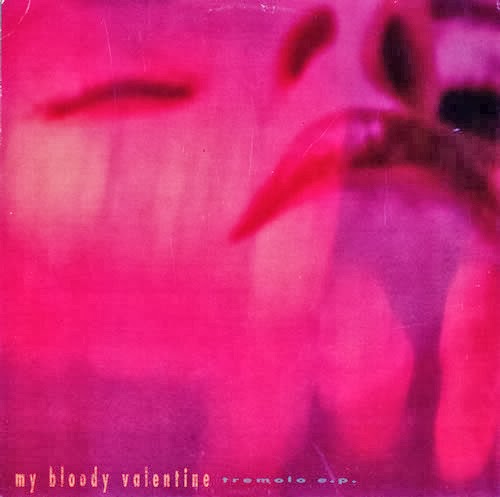
Having played a track from MBV last week, I thought I’d include a track from the TREMOLO EP, released in 1991 as an accompaniment for the LOVELESS LP, to remind everyone what all the fuss was about in the first place. It's a lovely tune, for a start, a strange collage of faintly Middle Eastern noise over which vocalist Bilinda Butcher's voice floats like a giddy swoon. It still gives me goosebumps.

BOO RADLEYS     SPUN AROUND


And so to the Boo Radleys, rather ungenerously referred to as the My Bloody Valentine that Creation Records could afford, who, in 1993 took everyone by surprise with their album, the appropriately titled GIANT STEPS, a record of unbridled kaleidoscopic psychedelia taking in brass, dub, psych-pop, white noise, jazzy segues (it was named after John Coltrane’s album), Wilson-esque harmonies and soaring pop blasts that blew everything else away. Trying to seperate one track from the melange of sound was always going to be difficult as the album works best when experienced in one sitting, but Spun Around gives a small indication of how far out the Boo Radleys were at this point. Sadly they could never be this good again – nobody could ever be this good again.

FAUST     CHÈRE CHAMBRE


The closing track from Mind De-Coder favourite THE FAUST TAPES (1973), the almost unbearably lovely Chère Chambre, sung by Jean-Hervé Péron  that concludes an album of otherwise arch avant garde experimentation with something that’s simply magical.

JOHN MARTYN     BLACK MAN AT YOUR SHOULDER (ALTERNATE TAKE #2)


John Martyn was a mercurial figure to say the least but capable of flights of genius. Primarily know as a folk singer, this previously unreleased version of Black Man At Your Shoulder, an out-take from his classic ONE WORLD album, released in 1977, shows he was open to, and possibly a conduit for, all forms as he plays around with dub production techniques and free-jazz odysseys. You can find this track on the recently released 18-disc  box set celebrating his 20 years with Island Records, the aptly named THE ISLAND YEARS BOX SET. Fans will find much to enjoy.  

THE BEATLES      REVOLUTION 20 (TAKE  2)


In the meantime, The Beatles were working on their own avant garde piece, the semi-legendary Revolution 20 (Take 2), that appeared on the internet for about 5 minutes a few years ago before getting taken down by the powers of darkness. Fortunately, I just happened to be on line at the time. So here you are, a genuine curio for your listening pleasure...

PAUL WELLER      NIGHT FLIGHT


From 22 DREAMS, again; Paul Weller with more acid-folk charm. And that would be Terrence McKenna positing the theory that you and I might actually be the centre of the mandala. Or something.


And that was Mind De-Coder 31
I thank you.