Showing posts with label Dub. Show all posts

Tuesday, 12 November 2013

MIND DE-CODER 19

To listen to the show scroll to the bottom of the page


MIND DE-CODER 19

“Freak out, baby…the Bee is coming”


JUNIOR PARKER    TOMORROW NEVER KNOWS


A soulful, chilled-out little version of the Beatles’ classic by Junior Parker, blues singer, and musician, who sadly died shortly after making his second album, the marvelously titled LOVE AIN’T NOTHIN’ BUT A BUSINESS GOIN’ ON, released in 1971. There are two other tracks by the Beatles on an album characterized by Parker’s sweetly soulful voice, honeyed and velvet smooth, which pretty much cost him his blues fans. Back in the day, he wrote and recorded Mystery Train, later covered by Elvis. If there is more to know, I never learned it.


PINK FLOYD     ATOM HEART MOTHER SUITE (excerpts)


The Atom Heart Mother Suite from side 1 of Pink Floyd’s much unloved ATOM HEART MOTHER. Not the full 23-minute epic, mind. Fans of the album, of which I’m one (despite what the band thinks of it), will know that the Suite is divided into six parts, including voiceless vocals, full orchestra, choir and brass section. I’ve used three or four segments and left out some bits that the less committed listener may have found trying.


THE TIME AND SPACE MACHINE     ODYSSEY


Some cosmodelic vibes from The Time And Space Machine, taken from the third in a series of edits and remixes of Krautrock rarities by Richard Norris. Now, as fans of mind De-Coder will know, Krautrock rarities are not unknown to the show, but I’m blessed if I know what this once was before he got his hands on it. You, however, can find this track, Odyssey, on the album VOLUME 3, released in 2010.


PETER COOK AND DUDLEY MOORE     THE L. S. BUMBLE BEE


While the world was freaking out over LSD, Peter Cook and Dudley Moore offered them an alternative: LSB, a psychedelic pastiche which, with its distant shimmering pianos, screaming babies, and seagull-like guitar effects, outshone much of the music it was satirizing. At the time (1967) it was mistaken as an unreleased Beatles' track, or else an advance from their forthcoming and highly anticipated SGT. PEPPER’s album, although Dudley Moore has since claimed that it was, in fact, PET SOUNDS-era Beach Boys he was parodying, rather than paisley-decked, acid-steeped swinging London. Surprisingly, or perhaps not, it failed to chart.


ESQUIVEL     CHUBASCO/WALK TO THE BULL RING


Juan Carlos Esquivel was the king of space-age bachelor pad cool but was also a highly experimental composer, and in many ways, SEE IT IN SOUND, recorded in 1960, is his own PET SOUNDS. It was an album that expanded the idea of what an album could be – combining off-kilter music with real-world ambient sounds, and in many places is like a soundtrack to an imaginary film. It was so out there that the record company refused to release it at the time, and for years it became one of the great ‘lost albums’ until it finally saw the light of day in 1999, 39 years after it was recorded. It’s one of the coolest albums I own.


H.P. LOVECRAFT     IT’S ABOUT TIME


I think I read somewhere once that H.P. Lovecraft’s second album, H.P. LOVECRAFT II, released in 1968, was one of the greatest psychedelic albums ever made, which must have been why I bought it. It clearly isn’t, but there’s a rumour attached to it that it was the first major label release to have been recorded by musicians who were all tripping on LSD at the time, a very commendable effort, I’m sure you’ll agree, given that I’m barely able to make a cup of tea under similar circumstances. Originally from Chicago, they relocated to San Francisco where they fitted in very nicely, but much of the band's music was possessed of a haunting, eerie ambiance, and consisted of material that was inspired by the macabre writings of the author whose name they had adopted which, in the case of some of their songs, makes it something of a bad trip album as far as I’m concerned. It’s About Time works for me, though.


FLAMING GNOMES     CARE OF CELL 44


The Flaming Gnomes seem to have come together solely to enter a competition hosted by Dave Gilmour in 2007 to see who could record the best version of Pink Floyd’s Arnold Layne, to celebrate the 30th anniversary of the single. They didn’t win the competition, but somehow their version was heard by Keith Jones of the very fine Fruits De Mer record label who specializes in psychedelia, prog rock, krautrock, acid-folk, and space-rock (I’m quite the fan) who approached the band and asked them if they’d like to release something for them. In 2009 the band produced two tracks, Love Song With Flute by Caravan, and Care Of Cell 44, from The Zombies’ classic album ODYSSEY AND ORACLE, and there their story seems to end. I dare say you’ll be hearing more from them on forthcoming shows.


FOXYGEN     SAN FRANCISCO


A lovely track from Foxygen, all glockenspiels and flowers, recorded the year Scott McKenzie shuffled off this mortal coil, is from their catchy-as-hell second album WE ARE THE 21ST CENTURY AMBASSADORS OF PEACE AND MAGIC, (released 2013). The album comes on like a cross between The Kinks and MGMT but manages to transcend those two influences by also taking in everything else that’s happened in between. A band, as they say, to watch.


PRIMAL SCREAM     GIVE OUT BUT DON’T GIVE UP (PORTISHEAD REMIX)


A mind-blowing remix by Portishead of the title track from the much unloved follow up to SCREAMEDLICA, released in 1994 as one of the bonus tracks on the Cry Myself Blind EP. If only they’d taken this direction and got Portishead in to produce the whole album they would have blown their detractors away. In fact, while the album itself was something of a disappointment for everyone who was expecting SCREAMADELICA 2, all of the remixes I heard at the time were excellent, which makes you wonder what they were playing at, although I suspect that the band’s drug of choice round about this time, namely heroin, didn’t help much. Still, this remix pretty much has a quality about it not dissimilar to synaesthesia – this is more or less what music sounds like on acid, kids.


AUGUSTUS PABLO     KING TUBBY MEETS ROCKERS UPTOWN


This was originally recorded by Jacob Miller and Augustus Pablo as Baby I Love You So on the album WHO SAY JAH NO DREAD in 1975. This version, however, as dubbed and spacey as you could possibly want, is from the album KING TUBBYS MEETS ROCKERS UPTOWN, released in 1976, featuring a collaboration between Pablo and King Tubby. It is, in essence, the definitive dub album, and the single more or less single-handedly defined dub for non-Jamaican audiences when it was released as a single in 1975, with Baby I love You so as the B-side.


THE JESUS AND MARY CHAIN     UPSIDE DOWN


Even if they’d never released another record, this single would have cemented The Jesus and Mary Chain’s place in history. Released in 1984, pretty much when Spandau Ballet ruled the charts, this was a euphoric, exhilarating rush of white noise and feedback combined with the crystal pop beauty of The Shangri-La’s and somehow it made sense. I’ve included it here because I was just really interested in how noise like this sounds under the influence of LSD. In truth, I don’t have the words for it, but it’s not dissimilar to experiencing a spaceship taking off whilst having a transistor radio taped to each ear broadcasting nothing but white noise, so I have it disappear into…


ALAN BLACK     EARTHBOUND


Taken from Alan Black’s excellent THE OPTICAL album, a soulful and celestial mash-up album that takes the listener far away on a voyage through outer and inner space, or as he says on his website – deep sounds for deep space. You can find this album here.


BILL HOLT     PROGRAM 10


Just an excerpt from this remarkable album by Bill Holt who, back in the early 70s, and in his late 20s, quit his comfortable but uninspiring job, holed himself up with recently found and purchased musical gear and set out to realize his dream of becoming a musician. The result was the 1973 album DREAMIES, a groundbreaking album that picked up where the Beatles’ Revolution 9 left off. Inspired by the tumultuous times of the ’60s in America, the Vietnam War, the youth culture revolution, and other current events, Bill Holt created a landscape of sound bytes from the news arranged in an expansive collage, layered with his strumming acoustic guitar and experimental electronic sounds. It was an astonishing achievement, but, not unlike many Mind de-Coder favourites, failed to find an audience at the time. 


DJ FOOD      OUTERMISSION – SHEER FICTION


A small track from the kaleidoscopic album THE SEARCH ENGINE, released 2012, in which astronauts and robots float and bleep their way across a psychedelic rock album made with samplers.  


ALAN BLACK     APPROACH


Also to be found on the wonderful THE ORTICA album.


PRINCE FAR I      LONG LIFE


British dub master Adrian Sherwood collaborated with iconic Jamaican toaster Prince Far I for the first time on this powerful slice of version reggae, CRY TUFF DUB ENCOUNTERS CHAPTER 1, released 1976, and while Prince Far I's vocals are not to be heard on these sessions, the shamanistic power of these dub mixes speaks to the soul as much as the eardrum, and the results are a landmark of the form.


BEAUTIFY JUNKYARDS     PARALLELOGRAMS


Beautify Junkyards are a Portuguese acid-folk band who are happy to share their influences on their  wonderful debut album, the eponymous BEAUTIFY JUNKYARDS, released in 2013. The album is entirely dedicated to some of the band's major musical influences, taking in 60s and 70s psych folk from the likes of Vashti Bunyan, Nick Drake, Heron, Bridget St. John; some tropicalia from Os Mutantes and they even have a go at Kraftwerk’s Radioactivity, Mind De-Coder favourites all. On this track they produce a sublime adaptation of Linda Perhacs diaphanously lovely Parallelograms, a song so radiantly lovely it would be a brave artist who seeks to take it on – that they nearly succeed in capturing its beautiful and bewitching essence is testament to how good they are. Quite breath-taking.


GREEN MISTLETOE     SKYBEAR


You’d be forgiven for thinking that Green Mistletoe’s Brian Waters was born and raised in the deepest, darkest and dampest of Welsh woodlands when, in fact, he’s an American from Washington state, where, in fairness, they do have a lot of trees and, no doubt, a fair amount of rain too – but with song titles that celebrate stone circles in open glades, it’s an easy mistake to make. Skybear, in which frogs sing along while a distant flute whistles, is the opening track from his 2007 album FOREST DWELLER, a Druidic folk album inspired by mythologies and folklore of a decidedly pagan nature.


FAIRPORT CONVENTION     FOTHERINGAY


The lovely Fotheringay, a haunting portrait of Mary Queen of Scots in her fortress prison, appears on the band’s second album, WHAT WE DID ON OUR HOLIDAYS, released early 1969, and the first to feature Sandy Denny’s ethereal vocals, as the band moved on from their embryonic American-rock sound (they wanted to be The Byrds) to the more British folk-rock sound instigated by Denny’s arrival. When she eventually moved on from Fairport, following the release of the semi-legendary LIEGE LIEF, she took the name Fotheringay with her for her new band name.


HAKOBUNE     LIGHTS THAT GRADUALLY FADE AWAY


Ambient soundscaping from Hakobune (Takahiro Yorifuji to his mama-san), a Japanese musician who uses guitar drone and a few field recordings to create extremely beautiful noises on his album SENSE OF PLACE, released in 2007, that create 'compelling dream music that seeps into your psychic cisterns' (© J. Cope) and otherwise irrigates the outermost reaches of your most unloved spots. 


ATLAS SOUND      QUICK CANALS 
a

Atlas Sound is the solo project for DEERHUNTER’s Bradford Cox. On Quick Canals, from the album LOGOS, released in 2009, he is joined by STEREOLABS’s Lætitia Sadier, who wrote the lyrics and sings lead on a song that opens with some gorgeously textured organ chords which sound like the feeling you get when you wake up from a particularly nice dream that you can lie in bed and think about for ages before you actually have to get up. It enjoys the kind of relaxed-but-propulsive neo-krautrock sound that Stereolab perfected very early on with Cox playing the part of the late Mary Hansen, adding 'la-di-da' trills behind Sadier as she intones phrases in her unfailingly lovely voice. He even throws in a Jenny Ondioline-style rupture about halfway through, sending the track into a breathtaking shoegaze section for its final four minutes, wherein it floats magisterially on a pillow of shifting guitar feedback. Quick Canal is almost nine minutes long and it doesn't waste a second.


ISLA CAMERON     ONCE I HAD A TRUE LOVE


This lovely song is taken from the album STILL I LOVE HIM, an album of traditional love songs, released in 1960 by Isla Cameron and Ewan MacColl, right at the beginning of the British folk revival. On the cover notes, Cameron claims this was a song that she learned from ‘some girl in Paris’, despite it being something of an English traditional. It was, of course, covered by Pentangle on their BASKET OF LIFE album, but Cameron’s version has a brittle authenticity to it that suggests that she did, in fact, once have a true love.

JULIAN COPE     LAND OF FEAR


The mighty Julian Cope and the final track on his epic 20 MOTHERS LP, released in 1995, a moogtastic version of a song that he’d tried his hand at least two times before. Presumably, this is the definitive version, because he’s not returned to it since – and a song that I take great comfort from in moments of darkness, possibly in the same way that your Christians take comfort in the 23rd psalm. This is your psychedelically informed version of that verse, and a very fine ending to Mind De-Coder 19.

I thank you.


Wednesday, 6 November 2013

MIND DE-CODER 18

MIND DE-CODER 18

To listen to the show just scroll to the bottom of the page

If there is a Universal Mind, must it be sane?
                                                                        Charles Fort


BEVIS AND TWINK     SONG REMEMBERED


Twink, of course, is something of a legend in the English counter-culture, having played with Tomorrow, The Pretty Things and The Pink Fairies. Bevis is Nick Saloman of The Bevis Frond, who has managed to produce some 23 albums or so of a decidedly English psychedelic nature, none of which I’ve managed to like very much, much to my surprise. Bevis and Twink released the THE MAGIC EYE album in 1990, an album that neither of them particularly need to jump up and down about – Twink can certainly do better, but Bevis is usually very good with his intro tracks and I think Song Remembered is a very good intro track indeed. I wouldn’t concern myself with the rest of the album if I were you.


PRIMAL SCREAM     BURNING WHEEL


Another band very good with opening tracks, Burning Wheel is the opener from VANISHING POINT, of course, released in 1997, and featuring Mani, fresh from the Stone Roses débâcle on bass (more recently replaced by MBV’s Bilinda Butcher now that the Roses have reformed for a bit). Burning Wheel delivers everything Primal Scream promised -  a genuinely disorientating psychedelic mix of heavily-echoed drum machines, sampled sitars and warped guitars anchored by a trip hop beat and a random layering of sounds. Absolutely mesmerizing; VANISHING POINT remains my favourite album by Primal Scream.


POSITION NORMAL      CANISTEN


Position Normal is the work of the slightly eccentric ex-art students Chris Baillif and John Cushway, whose debut album was a hauntological assemblage of sampled children’s records, lo-fi guitars and random car boot artifacts that, at the time of its release in 1998, managed to sound like nothing heard before.  Their second album, GOODLY TIME, was commissioned by artist Eli Kishimoto IN 1999 to be used for sale alongside his screen-print work, and features a haunting, endearing and nostalgic section of half-songs that will remind you of a childhood you almost probably never had.


THE YARDBIRDS     HAPPENINGS TEN YEARS TIME AGO


Happenings Ten Years Time Ago, released 1966, was the first single by The Yardbirds to feature Jimmy Page in the band, and indeed John Paul Jones on bass, and is proper 60’s artifact for that alone. It has the dizzying feel of a miniature rock opera with searing guitar riffs (courtesy of Page), cockney voices and explosions crammed into its two minutes and fifty five seconds - it didn’t exactly soar to the top of the charts, but is rightly regarded as one of the top  psychedelic records of all time.


RAMASES AND SELKET     MIND’S EYE


Martin Raphael was Sheffield’s answer to Sun Ra. A former PT instructor for the British army turned central heating salesman, Martin claimed to be in contact with the Egyptian god Rameses, who informed him that it was his mission to teach the world the truth about the universe. Martin duly changed his name to Ramases and searched for a record deal, as obviously releasing a whacked-out psychedelic single was the best way to achieve this. In My Mind’s Eye is the B-side to his 1968 debut single Crazy One, recorded with his wife, Dorothy Frost, as Rameses and Selket. It’s orchestrated, wonky exotica, with Ram’s dulcet tones somehow reminding me of Genesis P.Orridge. 


WAX AUDIO     BENARES


A fabulous bit of filler from mash-up artist Wax Audio (Tom Compagnoni to his mum) with a track called Benares from his incredible sound-collage album 9 COUNTRIES, released in 2009, but five years in the making, as Tom traveled the world recording anything that sounded interesting – temple bells, chanting monks, the beating of drums of festival processions, insect, bird and animal noises, traffic noises and random conversations with people on the streets. Benares is the sound of the Ganges river festivities in Varanasi, India, and then the same river recorded at Rishikesh. A small Sony condenser microphone – never leave home without one.


THE HUMAN BEAST     MAYBE SOMEDAY


The Human Beast were a short-lived Scottish psychedelic outfit whose heavy sound was described in 1969 as ‘electro-flagellation’ in an attempt to describe the band’s Eastern-inflected guitar stylings, pounding bass and pounding percussion. In fact, Maybe Someday has more of an acoustic feel which is perhaps untypical of the band’s only album, VOLUME ONE, taped in a single 12 hour stint and released in 1970, but its appeal lies in its hypnotic melody and its gentle eastern influences. One for the collectors, I think.


SOFT HEARTED SCIENTISTS     THE YONGY BONGY BO


Lovely pastoral whimsy from the Soft Hearted Scientists with the heart-breaking tale of The Yongy Bongy Bo and his doomed love for the Lady Jingly Jones as told on their album UNCANNY TALES FROM THE EVERYDAY UNDERGROWTH, released in 2005 – always brings a lump to my throat.


MOON WIRING CLUB     TRACK 7


Another hauntological wossname from Ian Hodgson’s 2011 bonus disc CLUTCH IT LIKE A GONK (GONK EDITION).


JOHN McLAUGHLIN     DON’T LET THE DRAGON EAT YOUR MOTHER


In the early 1970’s John McLaughlin was widely regarded as the figure who invented the jazz-rock-Indian fusion that was so popular back then (presumably) with his band The Mahavishnu Orchestra. Before that, he’d spent some time working with Miles Davies, playing guitar on his landmark electric jazz fusion albums such as Bitches Brew, so he’s generally thought of as something of a world class guitar player. In 1970, after leaving Miles Davies, but before forming The Mahavishnu  Orchestra, he recorded DEVOTION, a psychedelic acid–jazz–rock fusion album (he was a fan of your fusions) which, despite featuring tracks as good as Don’t Let The Dragon Eat Your Mother, he professes to dislike because the mix, which was put together in his absence, was all wrong.


EXTRADITION     SONG FOR SUNRISE


Extradition were the real deal, an Australian folk outfit that channeled the spirit of The Incredible String Band, Shirley Collins, crazy experimental field recordings, oriental acoustic instruments and droney analogue sounds into an album that was less a folk album and more a celebration of the very earth itself – speaking, screaming and singing herself into creation. The band only released the one album, HUSH, released in 1971, but when you’ve created something as complete, out-there and shamanic as this, then your work is done. 


COLLEEN     THE HEART HARMONICOM


Colleen is the name under which composer Cècile Schott crafts abstract, elegant, barely-there compositions from bells, proto-cellos, cathedral ambiences and 19th century glass glockenspiels – you’ve really never heard anything like it. The secret-garden chime of The Heart Harmonicom can be found her 2005 album THE GOLDEN MORNING BREAKS, an album of beautiful pure-sound formlessness.


GREEN MISTLETOE     INVOCATION TO GREEN ELOHIM


Beautiful forest folk from Brian Waters, an American bard whose album FOREST DWELLER, released in 2007, perfectly captures the spirit of folklore, nature mysticism and heathen/Christian thematics – it probably kills him that he’s not Welsh. Played on acoustic guitars, percussion, lap harps, flutes and zithers, it never really rocks out, but Invocation To Green Elohim pretty much does what it says on the label.


JULIAN COPE     HEY, HIGH CLASS BUTCHER


Julian Cope at his most Syd Barrett-est, falling apart-est, fragile, broken and holding it together-est, making these weird little tunes on his own following the demise of The Teardrop Explodes. This is from the B-side to his return to the world, THE SUNSHINE PLAYROOM EP, which he released about a week after I left home and moved into my first bed-sit, in 1983. I can’t quite tell you what sort of affect it had on me, but in its own way, it led to Mind De-Coder. Mind you, everything that happened in 1983 led to Mind De-Coder…


ASWAD     ROCKER’S DELIGHT


Yes, I know; but I was curious to see what it would sound like under the influence, as it were. Created by Aswad before their pop-reggae era, this is the sound of Aswad following a meeting with legendary producer Jah Shaka in his Addis Ababa Studio in London (and not Addis Ababa, Ethiopia, say), in which the band play a series of instrumentals composed, produced and mixed by Jah Shaka. Released in 1984, long after reggae had become digital, JAH SHAKA MEETS ASWAD IN ADDIS ABABA STUDIO, is a roots piece, much loved by fans of dub and roots reggae. Rocker’s Delight is one of my favouritest pieces of music ever. Is it dub enough for you?


SAM GOPAL     YESTERLOVE


Possibly the most interesting thing about Sam Gopal and his band is that it featured Ian Willis, former Jimi Hendrix roadie, fuzz guitarist and future Hawkwind bass guitarist, Lemmy. He was singer-guitarist with Sam Gopal in 1968, a late-period psychedelic blues act with a fine line in Eastern-tinged stoned mysticism, courtesy of Gopal, an accomplished Malaysian tabla player. Yesterlove, written by Lemmy, is by far the loveliest track on the band’s 1968 ESCALATOR EP, a record otherwise characterized by heavy guitars and dark blues influences. Despite this, it’s possibly the poppiest album Motorhead never made. 


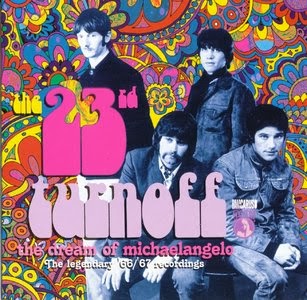
23rd TURNOFF      MICHAEL ANGELO


Liverpool’s 23rd Turnoff must have spent a bit of time in their tour bus, as their name comes from the 23rd turnoff on the M6, the junction leading to their hometown of Liverpool. This charmed, waltz-time, psychedelic folk epic, released in 1967, is a pop-psyche classic, beautifully covered recently by Johnny, the duo consisting of Euros Childs (of Gorky’s Zygotic Mynci) and Norman Blake (of Teenage Fanclub). This was the band’s only single, the group hampered by their refusal to move to London, where the swinging psychedelic scene was centered. In many ways, Jimmy Campbell, the band’s singer-songwriter, was one of the period’s great lost figures, whose songs were covered by Billy Fury, Cliff Richard, the Swinging Blue Jeans and even Rolf Harris. As is usual with many of the tracks I play on Mind De-Coder, Michael Angelo is now considered one of the greatest psychedelic records of the time.


THE DENTISTS     STRAWBERRIES ARE GROWING IN MY GARDEN 
(AND IT'S WINTERTIME)


The very week of Live Aid, English teen (and yet somehow crucial) pop magazine Smash Hits voted The Dentists’ Strawberries Are Growing In My Garden (And It’s Wintertime) runner-up Single of the Week in its fortnightly review pages (I don’t recall what it’s coveted Single of the Week was). In the mild hysteria surrounding that giddy week people forgot to buy the single and it became lost in the mists of time – until I discovered that very copy of Smash Hits while rummaging around in the loft of my wife’s parents recently and suddenly remembered how much I liked it. They were meant to be the sound of young Medway (a sort of nice place to live in Kent, England - better than Grays in Essex, say - although this will mean nothing to anyone on Waiheke Island), but nothing very much came of that scene, despite The Dentist’s album SOME PEOPLE ARE ON THE PITCH, THEY THINK IT’S ALL OVER, IT IS NOW. Strawberries… was their debut single, released in 1986 but sadly, despite a career spanning some 11 years no one really took to them – Strawberries… was, however, covered by Lida Husik on her album Joyride (as heard on Mind De-Coder 7). I’ve always liked it, me. 


SYD BARRETT     BOB DYLAN BLUES (PSYCHEDELIC MIX #1)


Bob Dylan Blues was always the great unreleased track by Syd Barrett, recorded during the Barrett sessions in 1970, and not heard until Dave Gilmour discovered the tape in his personal collection and included it on the album THE BEST OF SYD BARRETT – WOULDN’T YOU MISS ME, released in 2001. I found this version on the internet by someone who clearly wished to remain anonymous but who had otherwise pulled it apart and put it back together again in a pleasingly psychedelic manner. Whoever you are – I really like what you did with it – call me. 


THE INCREDIBLE STRING BAND     PAINTING BOX


I really don’t get The Incredible String Band. I can’t tell you how much I really want to like A Very cellular Song and play it on Mind De-coder, or, indeed, anything on THE HANGMAN'S BEAUTIFUL DAUGHTER, but sadly, what others hear as unique, exotic, multi-dimensional creative openness and unrestrained hippie-folk creativity, I just hear as a tuneless racket. Painting Box, however, can be found on their second album THE 5000 SPIRITS OR LAYERS OF THE ONION, released in 1967, and Paul McCartney’s album of the year. It’s the only song on it I like, though.  


GRYPHON     ESTAMPIE


On this track you can more or less hear the exact moment that acid folk turned its head towards that short-lived genre classical prog medievalism – is that Somewhere Over The Rainbow mixed in there, or the Chatanooga Choo Choo played in a medieval stylee? I believe it is. Gryphon grew from the meeting of two fellows from the Royal College of Music in the early 70’s who began the group as an all-acoustic ensemble that mixed traditional English folk music with medieval and Renaissance influences. With their velvet capes, their mighty krumhorns and insane medieval wig-outs they produced three highly regarded albums that sounded as much like rural English folk or renaissance chansons as it did rock. Estampie is taken from their debut album, GRYPHON, released in 1973, in which the band come on like Santana’s percussion section whisked back to the Middle Ages with a group of merry woodfolk.  


CLARK HUTCHINSON     FREE TO BE STONED


Outrageously heavy acid-blues from Clark Hutchinson, who produced four semi-legendary LPs  between 1969 and 1971. Mick Hutchinson learnt his guitar skills playing with Sam Gopal while Andy Clark was a shockingly talented multi-instrumentalist and vocalist – it is his crazed voice declaring “I just want to be stoned for the rest of my natural life”, like a mantra. Free To Be Stoned is from their third album RETRIBUTION, released 1970. This song has been described as emphasizing an IQ-reducing bluntage of blues guitar destruction. Enjoy.


COSMIC TRIP MACHINE     LORD SPACE DEVIL


You know where you are with a band that call themselves Cosmic Trip Machine; no messing about – you’re going to get an experimental psychedelic folk album with songs that release themselves from any constraints and explore differing sonic boundaries. Their debut album, LORD SPACE DEVIL, released in 2008, contains odd instruments, studio effects, rock passages inspired by Indian music and B-movies, an orgy of lysergic guitar, backwards tapes and percussion. Marvelous.


RUTH WHITE     EVENING HARMONY


Avant-garde electronics from self-taught synth pioneer Ruth White, whose album, THE FLOWERS OF EVIL, released in 1969, is an eerie recording of Baudelaire’s volume of poetry Les Fleur Du Mal over White’s ‘electroacoustic’ music which, at times, is nightmarishly disassociatative in the noises she produces. Evening Harmony is probably the lightest track from an album that also has a lot of darkness.  


THE CARETAKER     LIBET’S DELAY


Inspired by a report that states Alzheimer patients have an easier time remembering information when it is placed in the context of music, The Caretaker is a musical project by hauntologist James Kirby, who, on his album AN EMPTY BLISS BEYOND THIS WORLD, released in 2011, has taken a collection of pre-war parlour room 78’s and albums and edited them together in a style that mimics the fragmented and inconclusive ways our memories work. Several of the tracks here take pretty, anodyne phrases and loop them mindlessly; several stop in what feels like mid-thought; several reach back and then jump forward; the hiss, crackles and jumps from the needle in the groove are palpable. They never feel filled-in from start to finish, and they tend to linger on moments that feel especially comforting or conclusive: the last flourishes of a song, maybe, the pat on the shoulder, the part when we're assured everything is drawing to a close. It’s an eerie yet beautiful album, but also strangely comforting, that the music locked away inside our heads will remain with us forever.

And on that note, that was Mind De-Coder 18.