Tuesday, 15 July 2014

MIND DE-CODER 49

To listen to the show just scroll to the bottom of the page

MIND DE-CODER 49

“My soul has become psychedelicised!”
                                                      The Chambers Brothers


CURTIS MAYFIELD     (DON’T WORRY) IF THERE’S A HELL BELOW, WE’RE ALL GOING TO GO


This fairly incendiary track was the single taken from Curtis Mayfield’s debut solo album following his break with The Impressions. CURTIS, released in 1970, was produced by Mayfield himself and represents one of the most dynamic, progressive soul albums of its time, pulling together a rich musical canvas of r’n’b, psychedelia and dance floor grooves (this is the album that also included Move On Up, a track which, rather embarrassingly as I approach 50, seldom fails to get me on to the dance floor whenever I feel the need to shake what remains of my tail feather - of course, this often results in broken items of furniture and solicitous friends helping me to my feet, followed by a good lie down, so it doesn't happen very often). I think at some point after this release he may have become a spokesperson for his generation, which must have been tiresome.


NEW ROTARY CONNECTION     I AM THE BLACK GOLD OF THE SUN


The Rotary Connection were an experimental psychedelic soul band who, almost semi-famously, included one-time record label receptionist Minnie Riperton sharing the vocals. The gorgeous I Am The Black Gold Of The Sun, is the out-standing centre piece of their final album HEY, LOVE, released 1971 as the New Rotary Connection, an album in which they introduce a jazz fusion vibe to the mix to produce something of a funky-assed classic. It’s often over-looked in favour of their debut album, but any album that contains a track like I Am The Black Gold Of The Sun is an unearthed gem that deserves some time on your record player.


MINNIE RIPERTON     LES FLEURS


Even before the demise of the Rotary Connection singer Minnie Riperton had already released a stone-cold classic solo album in 1970’s COME TO MY GARDEN. It’s a beautifully orchestrated affair, full of elegant arrangements and sensuous grooves that might best be described as chamber soul (should you want to). Riperton, of course, is best known for the glass shattering Lovin’ You, but Come To My Garden is by turns lush, intimate, unpredictable and almost criminally ignored at the time of its release.


RARE EARTH     GET READY


Lasting a full 21 minutes, Rare Earth’s cover of The Temptations Get Ready takes up all of the side 2 of their album GET READY, and in doing so more or less became the precursor to the 12” single. Despite being billed as an all-white blues rock band, the album was released on Motown in 1969, and features something of a 10 minute drum solo and a sinuous sax improv, neither of which, surprisingly, does the track any harm at all. Although Get Ready was used to close their live sets, there is some debate amongst critics as to whether this particular version of the track was actually recorded at a live performance at all, as the audience’s cheers sound a bit canned, and I read somewhere that the track is otherwise of further interest to music historians as the source of the riff to the Rolling Stones' track Bitch which appeared on their 1971 album Sticky Fingers, but I wouldn’t know about that sort of thing.  A heavily edited 3 minute version of the track was released as a single in 1970 and was a big hit for the band.


THE GRODECK WHIPPERJENNY     EVIDENCE FOR THE EXISTENCE OF THE UNCONSCIOUS


“…and we shall call the band The Grodeck Whipperjenny”, and had I been at that particular meeting, I’d have no doubt been, like: “Eh?”, but I wasn’t, not least because I would have been five at the time and growing up on a council estate in Essex and not Cincinnati, say, but, really, The Grodeck Whipperjenny? That being said, and despite the band name, they were, in fact, a rather tight jazz band who on this, their only album, display a fine aptitude for Funkadelic-style psychedelic soul and soulful prog rock, particularly on the trippy Evidence For The Existence Of The Unconscious, which is a fine name for a song. “Now, then, what shall we call the album?”, “How about, and I’m just throwing this out there, THE GRODECK WHIPPERJENNY?”


FUNKADELIC     WHAT IS SOUL?


Heavily lysergic funk vibes from George Clinton’s Funkadelic thang – possibly alien in nature, but, on the whole, largely harmless, apparently. Combining wah-wah guitars with crooning soul and mind-bending jams, Clinton takes the listener to the heart of the p-funk groove. "What is Soul?” he asks. “Soul is a joint rolled in toilet paper". So now you know.


THE TEMPTATIONS     TAKE A STROLL THRU YOUR MIND


By 1970, The Temptations, or at least Norman Whitfield, their lyricist, producer and composer, had almost entirely embraced psychedelia, much to the consternation of the group themselves. Stylistically, the group sound had abandoned the traditional Motown sound and were adopting hard rock guitars, Synthesiser sound-effects, multi-tracked drums,sampling, and stereo-shifting vocals into the mix to, it must be said (regardless of the groups own misgivings), outstanding effect. Take a Stroll Thru Your Mind is a totally tripped out eight minute ode to marijuana usage taken from the tellingly titled PSYCHEDELIC SHACK – My Girl it ain’t, but the band sure do sound like they be having sunshine on a rainy day.

CYMANDE     DOVE


Cymande, of course, is the calypso word for dove (he notes, authoritatively) so straight away you can see where the band are coming from. Cymande were (or possibly are, because a version of the band seems to have recently reformed) a British funk group (inasmuch that a group that includes members from Guyana, Jamaica and Saint Vincent can be said to be British) who played complex, invigorating head music in a deep funk stylee, influenced by calypso rhythms, jazz, African music and American soul

By this point I was beginning to wonder about the difference between funk and soul (no doubt you were, too) and after a little research I came to the following conclusion - Funk is inclusive; it takes on the blues, and jazz, and rock ‘n’ roll and soul  (and is not above stealin' a little latin, reggae and gospel when it needs to) and mixes them all up in an outward, loud, unbridled expression of freedom, possibly beginning with James Brown’s Outta Sight and then taken up by more or less anything released by Sly And The Family Stone, but that was just something I read somewhere. Soul, on the other hand, has more of an inward, quiet, passive desire for freedom with more focus on the lyrics. Psychedelic soul, therefore, seems to have occupied the unspoken transitory period between the two, soul and funk, that happened at some point between 1968 and 1972, more or less, but, admittedly, I’m no authority. What I am pretty sure about is that Dove is taken from their self-titled debut album, CYMANDE, released in 1972 and woefully over-looked at the time, although several of their tracks have since been sampled by the likes of De La Soul, The Fugees and DJ Kool Herc and Grandmaster Flash and has become something of a lost classic.


 BABY HUEY      A CHANGE IS GONNA COME


An absolutely spell-binding classic from Baby Huey (James Ramsey to his mum) whose only album, THE BABY HUEY STORY: THE LIVING LEGEND, released posthumously in 1971 following his death from a drug-related heart attack at the age of twenty-six in a Chicago motel room, is mostly comprised of a few tracks that had been already been recorded and a few instrumental tracks gathered up by his manager and Curtis Mayfield. Sounds unpromising, I know, but his cover of Sam Cooke’s A Change Is Gonna Come – on which Huey recalls his introduction to the demon weed amongst other things - is a masterpiece that manages to be both bonkers and jaw-droppingly epic at the same; possibly the greatest cover version of all time.


BOOTSY’S RUBBER BAND     MUNCHIES FOR YOUR LOVE


 Mind-blowingly funky grooves from Bootsy Collins, who’s Munchies For Your Love pretty much steals the show in terms of tripped-out lysergic starchild vibes. Produced by Collins and George Clinton, with most of the Parliament line-up on board, Bootsy’s 1977 album AAH…THE NAME IS BOOTSY, BABY is a sublime listen; stone-cold expansiveness raised to the level of p-funk cosmic consciousness. Absolutely essential.


ISAAC HAYES     IKE’S MOOD


I’ve cheated here – Ike’s Mood, from Hayes’ 1971 release …TO BE CONTINUED, segues beautifully into the album’s highlight, a gorgeous cover of the Righteous Brothers’ You’ve Lost That Lovin’ Feelin’ which, whilst being the apex of the album and absolutely deserving of your time, isn’t, in the context of the show, in any way psychedelic, so I allow the track to drift off into the conclusion of Richard Pryor’s riff on acid. What you do get instead is a quintessential Hayes track with upfront horns, piano and soulful orchestration that definitely has some goings on going on. This, presumably was long before his scientology days, because I understand that they can’t be doing with goings on at all.


THE SUPREMES     BRIDGE OVER TROUBLED WATER


I’ve never been a fan of Simon and Garfunkel’s Bridge Over Troubled Water – it always sounded a bit too bombastic and full of its own self-importance for my delicate tastes – but, quite simply, this version by The Supremes sounds as if it was arranged and produced by the Spacemen 3 with some of Spiritualized’s gospel inflections thrown in for good measure. NEW WAYS BUT LOVE STAYS was one of three albums the Supremes released in 1970 following the departure of superstar diva Ms Ross, an unprecedented response that saw them move on from the Holland-Dozier-Holland song book into experimental, uncharted waters. Also on the album is perhaps one of their greatest releases, Stoned Love, not to mention one of the most far-out covers of The Beatle’s Come Together I’ve ever heard, which may well make it on to next week’s show. However, I thought this show needed to finish on a note, bombastic or otherwise, so here it is, complete with sound effects, foghorn blasts, a crash of thunder, great reverbed guitar licks and a cathartic third verse that is very nearly transcendent. Epic, but in a good way.


Wednesday, 18 June 2014

MIND DE-CODER 48


To listen to the show just scroll to the bottom of the page

MIND DE-CODER 48
‘Turn on, tune in, folk out’

DELIA DERBYSHIRE AND BRIAN HODGSON     JOHN PEEL’S VOICE


This curious track comes from the same BBC Radiophonic Workshop team that brought you the Doctor Who theme (and, indeed the sound of the Tardis – created by Hodgson by running the back door key to his mother's house along a bass string of a gutted piano, then electronically treating the recording, trivia fans!). I’m a big fan of Delia Derbyshire and thought I’d more or less collected everything she’s recorded, so I was delighted to come across this track on the suitably obscure album JOHN PEEL PRESENTS TOP GEAR, released in 1969, which features a compilation of performances from various artists broadcast by Peel on his influential radio show Top Gear at the BBC. It’s a strange album, presenting an uncomfortable mix of the avowedly avant-garde with a bit of folk and some prog rock thrown in for good measure – pretty much the template for any show hosted by Peel really. The how’s and wherefores of this track remain a mystery but it’s exactly this sort of playfulness that made me a fan in the first place (of both her and Peel). 

ALAN BLACK     THE OLD PAPER CUP


Sound sculptor Alan Black has had a busy year; on the back of six mash-up albums inspired by the sea, he’s created a number of albums influenced by his own work. The Old Paper Cup comes from his recent release THE SEA: ALAN WATTS, in which he takes the words of Zen philosopher Alan Watts and mixes them with tracks from his own Sea Cycle. The track consists of Beck’s 000.000 (not one of his better known tracks – you can find it on the b-side to Devil’s Haircut, but don’t ask me how to pronounce it) and the lama karta Call To Lama From Afar, with Alan waxing lyrical on Nature of Consciousness. The whole album is this good and is available as a free download from Alan Black’s site here 

ALAN BLACK     OZYMANDIAS


I’ve been so taken with Alan Black’s work recently that I felt that a track from another of his Sea Cycle albums wouldn’t go amiss, so this is a reading of Ozymandias, Percy Bysshe Shelley’s famous sonnet to the inevitable decline of all leaders and of the empires they build, read over a bit of Peter Gabriel’s Bassbowl with accompaniment from various Tibetan monks with added singing bowls, cymbals and ghanta to marvellous effect. This is from the album THE SEA – VERSE, in which he takes poems by the likes of Walt Whitman, Coleridge, Yeats, Poe and Shakespeare and creates whole worlds for them to inhabit. Available for a free download here and check out the rest of his albums here.

SPROATLY SMITH     FLOWERS MADE OF WINTER/SPRING STRATHSPEY


The two opening tracks from Sproatly Smith’s 2010 release PIXIELED, an absolutely enchanting vision of psychedelic folk that combines ethereal melodies with lysergic pagan charm. Spring Strathspey, originally recorded by Gwydion Pendderwen (from MD 45), is simply one of the loveliest songs I’ve ever heard; Sproatly Smiths’ interpretation brings a tripped out bucolic vibe to the affair that makes me want to go skipping through meadows at dawn.

HAPSASH AND THE COLOURED COAT     A MIND BLOWN IS A MIND SHOWN


Hapsash and the Coloured Coat were the psychedelic design duo Michael English and Nigel Waymouth who, in the 60’s, were responsible all those fantastically tripped-out posters advertising underground happenings, clubs and concerts that so brilliantly captured the London scene’s buoyant, mind-expanding vibe, and feature some of the psychedelic era’s most arresting imagery. In 1967 they released HAPSASH AND THE COLOURED COAT FEATURING HUMAN HOST AND THE HEAVY METAL KIDS, an extremely psychedelic album that, in its own way, also went on the influence the krautrock scene (particularly Amon Düül in their early communal days before they got rid of the ones who couldn’t actually play anything). It’s an album that could only have released in 1967 featuring pounding drums and bongos, bells and tambourines, plastic flutes, rolling pianos, whispered vocals, free-wheeling communal chants and chunky guitar parts that occupy the same sort of sonic territory the Velvet Underground were at home to. The Rolling Stones seem to have taken the album, and this track in particular, as the template for Their Satanic Majesties Request and got it almost entirely wrong.

ARROWWOOD     BEAUTIFUL GRAVE


This diaphanous affair is the title track from 2013 release by Chelsea Robb, otherwise known as Arrowwood, an album of luminous elemental beauty, in which Robb’s mystifyingly lovely voice floats within and without the enchanted acoustic landscape she creates that’s not, you’d think, dissimilar to fairy land. Lovely.

TWINK AND THE TECHNICOLOUR DREAM     INSIDE THE OLD ONES


Twink, of course, or Mohammed Abdullah as he apparently prefers these day, was the semi-legendary drummer in Tomorrow, The Pretty Things (in their SF Sorrow period) and psychedelic proto-punks The Pink Fairies. Most recently he released an album called YOU REACHED FOR THE STARS in 2013 on which he collaborated with highly-regarded Italian psychedelic outfit the Technicolour Dream. Recorded in Rome and mastered at Abbey Road it’s about as far out as his 1970 solo album THINK PINK, a big favourite of ours here at Mind De-Coder mansions. You can imagine my delight, then, when I learnt that there’s a THINK PINK 2 on the way featuring more tracks recorded with the Technicolour Dream.

SKY PICNIC     MOONS OF JUPITER


I think you know where you are with a track called Moons Of Jupiter from an outfit called Sky Picnic, but just to make it even clearer, you may be unsurprised to learn that this track is taken from an album called SYNETHESIA, released in 2009. The band do a very specific take on the retro psychedelic garage-punk thing and with Moons Of Jupiter pretty much hit the nail on the lysergic head on this, their debut release.

DODSON AND FOGG     THE WORLD GOES BY


Dodson and Fogg is an psychedelic folk project led by writer and musician Chris Wade that includes collaborations with the likes of Hawkwind’s Nik Turner, Celia Humphris from Trees, Judy Dyble, from the original Fairport Convention line-up and one part of the the semi-legendary Trader Horne, who on their second album DERRING-DO, released 2013, from which this track is taken, even features a contribution from Mellow Candle’s Alison O’Donnell; so this is a band that comes with an impressive pedigree. As you can imagine, this results in a sound that owes something to Nick Drake, Forest and a floating-down-a-river-to-an-empty-churchyard-ness of a MORE-era Pink Floyd, and, if you’re a fan of vintage acid-folk, is as lovely as you would think.  

HELENA ESPVALL     MULTIPLICATION BROKEN AND RESTORED II


Helena Espvall is possibly best known for her work with the sublime psych-folk band Espers, where her cello work added a beautiful layer to their delicate, intricate sounds. She’s also known for her collaborations with Vashti Bunyan, Marissa Nadler and Bert Jansch amongst others, but on her first solo album, NIMIS AND ARX, released 2006, she’s defiantly avant-garde, exploring challenging new tonal interactions on the cello combined with layers of more sound explorations and harmonies, produced by manipulated sounds (from the cello mostly) and tiny bits of electronica. It’s not an entirely easy listen, and was limited to a release of 500 copies (probably for the best, what with one thing or another) but this piece, Multiplication Broken And Restored II, fits in with the show perfectly, don’t you think?

THE DEVIANTS     DEVIATION STREET


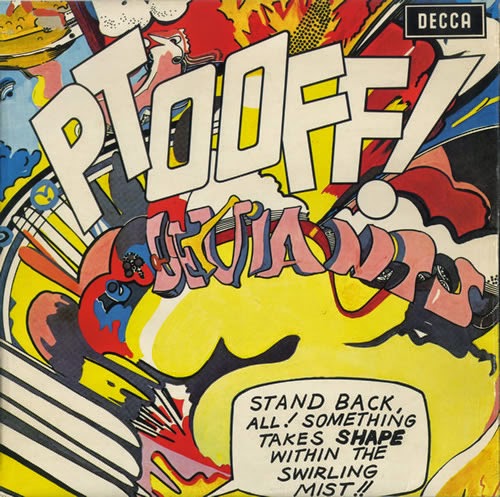
There’s a good argument to be made that The Deviants were Britain’s first punk group, releasing their debut album PTOOFF! At the height of the Summer of Love in 1967, some nine years before Johnny Rotten walked into Malcolm McClaren’s Sex boutique sporting a ‘I hate’ Pink Floyd tee-shirt. The Deviants, led by journalist and cultural agent-provocateur Mick Farren were the real deal, taking shots at the establishment and flower power wielding hippies, both of whom he regarded as equally dangerous to the counter-culture. PTOOFF! Is an incendiary mix of garage punk, agitprop poetry, comic book cosmology and avant-garde tape loops (with one very lovely nod to acid folk) all of which feature in the album’s closing track Deviation Street (minus the loveliness of the acid folk track which I played last week). Psychedelic whimsy and addled introspection this is not, but it is, nevertheless, a crucial artefact from London’s freak underground and nowadays considered something of a flawed underground masterpiece.

SYD ARTHUR     SECRETS OF THE PLANET SOUL


Syd Arthur – don’t you just love that name, drawing in inferences from Pink Floyd, The Kinks and, of course, Herman Hesse’s classic allegory to spiritual enlightenment, Siddhartha? It’s a name to live up to, and fortunately they do, although their sound owes less the dreamy water meadows of Cambridge, and the semi-mythical village greens of North London and more to the idyllic environs of the Canterbury scene, where they create a psychedelic, improvisational vibe with touches of folk, jazz, and world music thrown into the pot like their Canterbury based predecessors The Soft Machine, Caravan and Gong (there must be something in the water there, or, as is more likely, growing in the fields). Secrets Of The Planet Soul seems to include a bit of everything with even a touch of funk thrown into the mix along with the psychedelic kitchen sink and just sounds enormous. It’s taken from their debut EP KINGDOMS OF EXPERIENCE, released in 2008, but there’s been two albums since then, the first as nearly deranged as this track suggests – expect to hear more from them on the show shortly.

THE CHAMBERS BROTHERS     TIME HAS COME TODAY


This 11minute masterpiece of psychedelic soul was recorded in 1966 and was a hit when released in a heavily abbreviated form in 1967. It’s actually more rock than soul from a group who were originally a folk group singing back-up for Bob Dylan. Taken from their 1968 album of the same name this is the sound of an acid-laced odyssey complete with the little known use of psychedelic cow bells. 

THE CHAIRMAN OF THE BOARD     MORNING GLORY/LIFE AND DEATH PT. 1/
     WHITE ROSE (FREEDOM FLOWER)/LIFE AND DEATH PT.2


An absolutely stunning suite of songs from Chairman of the Board whose 1974 album THE SKIN I’M IN was more or less hijacked by their producer, who brought in Funkadelic as the backing band and layered the finished result with funky synthesisers, electronic hooks, Radiophonic Workshop-style bloops and symphonic flourishes to produce an album of far-out, heavily psychedelicised soul. Primal Scream, in their Screamadelica period, were said to be big fans, but the band themselves were outraged, calling the album a trampled flower. Little did they know it, they were 20 years ahead of their time.

UNDISPUTED TRUTH     BALL OF CONFUSION (THAT’S WHAT THE WORLD IS TODAY)


A mind-bending cover of The Temptations’ Ball Of Confusion by the Undisputed Truth, a Motown act assembled by in-house producer Norman Whitfield to allow him to experiment more fully with his psychedelic soul production techniques. The result is a mind-expanding classic, taking the psychedelic soul into another dimension.


ARVO PÄRT     SPIEGEL IM SPIEGEL FOR CELLO AND PIANO 


I came to this magical piece of music fairly recently and was quite captured by its yearning delicacy, but according to a review of the piece I just read, I may have been the only person left in the world who hadn’t actually heard it (apparently it features in just about every film made in the last 10 years or so). Composed by the Estonian composer Arvo Pärt in 1978, Spiegel Im Spiegel (or ‘mirror in the mirror’) is written in a tintinnabular style, a compositional style invented by Pärt, in which the music is characterized by two types of voices, the first of which (dubbed the tintinnabular voice) arpeggiates the tonic triad, and the second of which moves diatonically in stepwise motion, but I expect you already knew that. It has a sacred quality to it that I find very affecting. This particular version was recorded in 1995 with the participation of Pärt himself and is almost unbearably lovely. 


PINK FLOYD     QUICKSILVER


A little avant-garde instrumental piece from Pink Floyd’s third album MORE, released in 1969 as the soundtrack to the seldom seen continental hippie movie of the same name. It’s actually one of my favourite Pink Floyd albums featuring some lovely dreamlike folk ballads as well as some of the aforementioned avant-garde noodlings (not to mention two of their heaviest recordings which I tend to skip when I’m looking for something a little more contemplative).


ACID MOTHERS TEMPLE AND THE MELTING PARAISO U.F.O.     BOIS-TU DE LA BIÈRE?


Bois-Tu De La Bière is the gentle acid-folky bonus track from the bands’ 2001 release, La Nòvia, an album otherwise characterised by two long tracks that, whilst enjoying extended forays into deep space, also bludgeon the listener with what can only be described as a trainwreck of mind-bending heavy riffage.


WOODBINES AND SPIDERS     GASP!


This was a pleasant surprise (as opposed to the other kind which, in my experience, often involve a crowd of people unexpectedly calling to each other: “There he is! Quick, get him - before he gets away!”, whilst you’re walking in what you’d otherwise call a blissfully unaware, some might even say dreamlike, manner to the shops, say, that time). Ian Hodgson’s Moon Wiring Club and Jon Brooks’ The Advisory Circle have teamed up as Woodbines and Spiders to produce an album that may be low on tunes but is immersed in hauntological going’s-on. It’s a rather bleak affair of spectral ambient suites, pulsing slow techno arpeggios found sound and snatches of dialogue. This track appears to be a taster for the album but doesn't actually appear on it. I found it on You Tube whilst dawdling my way through an empty hour.

AMORPHOUS ANDROGYNOUS     WATERY GRAVE 
(CRANIUM PIE’S BAKING RESEARCH REMIX OF ‘REGRETS LAST RESPECT’)


Last year Amorphous Androgynous released a two volume affair called THE CARTEL, an album that set about re-creating the sound of psychesploitation wherein psychedelia meets those blaxploitation soundtracks by the likes of Lalo Schifrin and then set about drawing a line from there through to David Holmes’ soundtrack to Oceans 11, taking in Quincy Jones, Curtis Mayfield, John Barry and Ennio Morricone along the way. For this year’s Record Store day they released a third volume of remixes featuring, amongst others, three tracks by Baking Research Station, Mind De-Coder favourite Cranium Pie’s deranged side project. Cosmic. 

Facebook


Tuesday, 27 May 2014

MIND DE-CODER 47


To download the show just scroll to the bottom of the page

MIND DE-CODER 47

"When the mode of the music changes, the walls of the city shake!!"
                                                                                             Plato’s Republic


ARROWWOOD     UNDER A ROOT A WINDING STAIR


Ethereal loveliness from Chelsea Robb, who releases beautiful albums of atmospheric pagan charm under the name Arrowwood. Under A Root A Winding Stair is the opening track from a her third album BEAUTIFUL GRAVE, released 2013, and an album of serene, simple charm. Robb only uses acoustic instruments to complement her vocals – the reed organ, flute, various string instruments and even a hurdy gurdy add rich layers to her hauntingly alluring songs. It’s really quite lovely.

THE ADULT NET     INCENSE AND PEPPERMINTS


This track – a gorgeous cover of the Strawberry Alarmclock’s 1967 debut single – swept me off my feet when I first heard it, and in some ways I’m still waiting to touch the ground again. The Adult Net were Brix Smith’s side project from The Fall, although the version of the band that recorded this, their debut single, back in 1985 were essentially the entire Fall line-up without Mark E. Smith, to whom she was married at the time. Co-incidentally, this 1985 version of The Fall were pretty much my favourite line-up of the band – their release for this year, THS NATION'S SAVING GRACE, my favourite of the 100 or so albums they seem to have released since 1979. Despite releasing a glossy sugar-kissed album of her own in 1989 featuring just about every psychedelic embellishment ever invented The Adult Net never really caught on, but it’s one of those albums I dust off the start of every summer. I was quite the fan, me.

DEEP FEELING     PRETTY COLOURS


Deep Feeling remain something of a foot-note to musical history, existing just long enough to act as a kind of proto-group for other more popular bands. Singer Jim Capaldi left to join Traffic; Luther Grosvenor went off to join Art, Spooky Tooth, Stealer’s Wheel and Mott The Hoople; Poli Palmer went to Blossom Toes, Eclection and Family, and Gordon Jackson recorded a pleasant enough solo album that wasn’t without it’s pleasures. Deep Feeling managed to record a few records which enjoyed an exotic pre-psychedelic sound – they even supported Hendrix’s first tour - but nothing was released. Pretty Colours, recorded in 1966, with vibes, flute, Middle Eastern guitar and distorted vocals, would have made for a terrific single, but only saw the light of day as a bonus track on Grosvenor’s 2001 re-release of his 1996 FLOODGATES album, which is, I suspect, just a little too much information. As is usual in these cases, someone has anthologised what little they recorded and an album, PRETTY COLOURS is now available.

THE ALAN BOWN!     STORY BOOK


The Alan Bown Set started life as a soul/r ‘n’ b outfit who embraced the summer of love in 1967, changed their name and released one album in 1968, OUTWARD BOWN, generally regarded as something of a lost classic amongst your aficionados of the psychedelic. The fact you've never heard of them wasn’t particularly their fault  – the album is a colourful stroll through some quintessential psychedelic sounds, taking in proto-hard rock with an electric cover of Dylan’s All Along The Watch Tower that got Hendrix all excited, mod soul, and that peculiarly English variety of toy town psychedelia of which I’m so enamoured, represented here by Story Book. Their problem seemed to be that their record company crashed about a week after its initial release and then the same thing happened again following a late 90’s re-release on CD. Nowadays, the very fine Cherry Red label seem to have got their hands on it and have released a definitive version of the album including both mono and stereo mixes, so all’s well that ends well. I think that at some point, a young Robert Palmer (of Addicted To Love fame) was in the band, but that may have been after this record; once again – too much information.

THE CORTINAS     PHOEBE’S FLOWER SHOP


Another slice of toy town pop, this time from The Cortinas, who managed to release just the one single, 1967’s Phoebe’s Flower Shop, before changing their name to Octopus and getting up to whatever Octopus got up to. Once Octopus split half the group went on to Mungo Jerry and two members went on to join Split Enz, which must be of some interest to someone out there. 

THE PICADILLY LINE     ROSEMARY’S BLUEBELL DAY


And in a show seemingly dominated by dainty toy town tunes and whimsical psychedelic pop, here’s The Picadilly Line, essentially a duo led by Rod Edwards and Roger Hand, backed, on their only album, THE HUGE WORLD OF EMILY SMALL, released in 1968, by the cream of British session musicians, including such luminaries as Herbie Flowers; Pentangle’s Danny Thompson; Alan Hawkshaw (he went on to compose, amongst other things, the Grange Hill theme, the Cadbury’s Milk Tray theme and the countdown chimes used on Countdown, and so remains a pivotal figure in the childhood of anyone my age), and Harold McNair (who played flute on the soundtrack to ken Loach’s 1969 drama 'Kes'), and those are just four I recognise from a list of 15 or so, so this is not an album without some artistic chops. What do you get for your money, then (well, my money, anyway)? It has a certain playful feyness to it, filled with an evocative whimsicality with lyrics populated with very British observations about everyday life that places it squarely at the centre of Swinging London, post-Sgt. Peppers. Nobody bought it, of course. This is not so much a lost classic as an album that slipped under the radar on its way back to faerie land. A pity, really, because I think Rosemary’s Bluebell Day is terrific. Edward’s and Roger’s later found some success as Edward’s Hand – George Martin, who produced them, was a big fan.

SROATLY SMITH     WREATHE THE BOWL


I only discovered Sproatly Smith recently but I seem to have been searching for them all my life. Their gorgeous blend of psychedelic folk with touches of early Pink Floyd’s pastoral side (I’m thinking Cirrus Minor from their MORE period here, as much as anything inspired by Syd Barrett) have captured a sound that is at once quintessentially British, yet psychedelic also, immersed in nature, tuneful and evocative of Britain's pagan tradition – I love it. Wreathe The Bowl is taken from their second album, released in 2009 called THE YEW AND THE HARE.

TICKAWINDA     ROSEMARY LANE


This is a ravishing cover of the folk traditional Rosemary Lane by late 70’s folk band Tickawinda, house band for the Rose and Crown folk club and winners of the North West heats of the 'Search for The Stars of the '80's' competition held at the Poynton Folk Centre in a performance described as 'Tickawonderful' in the Manchester Evening News. Sounds unpromising, I know, but their only album, ROSEMARY LANE, released in 1979, despite being neither psychedelic or progressive, is packed full of wonderful tunes, mostly covers by the likes of Pentangle and Steely Dan, that are simply outstanding in their delivery; absolutely gorgeous. The album was limited to 300 copies and for years was considered the holy grail of folk collections.  The nice thing is, when it finally got a CD release in 2001 and people got to hear it for the first time, instead of hear about it, nobody was disappointed. 

YELLOW AUTUMN     THE DRUID


Another folk rarity, the word bucolic almost seems invented for Yellow Autumn, so you can imagine my surprise to discover they weren’t living in a yurt on the banks of some hidden away loch in northern Westeros, but were, in fact, from California. Their only album, CHILDREN OF THE MIST, released in 1977, is steeped in the psych-folk tradition - acoustic guitars, flutes, dulcimers, tambourines, violins, pianos, vibe and bongos abound – and the songs are sung with a rustic lustiness that puts one in mind of stone circles in the mist and picking magic mushrooms at dawn. The Druid actually seems to be a re-working of the traditional folk song Let No Man Steal Your Thyme and is a thing of quiet wonder.

NEON PEARL     JUST ANOTHER DAY


I think this track is marvelous, a stand-out track on this posthumous release by little known psychedelic outfit Neon Pearl, whose only album is as fine an example of experimental British psychedelia, hazy riffs, mild guitar distortions and vocal harmonies as your likely to hear. That being said nobody would touch them with a recording contract at the time, so what few tracks they managed to record in 1967, mostly unreleased demos, never saw the light of day until 2001 when they were given the anthology treatment with an album simply called the 1967 RECORDINGS. All of which sounds a bit underwhelming, but Just Another Day has lovely feel to it that somehow transcends 1967 altogether. Another lost gem.

TEMPLES     SAND DANCE


"We want this to be the one that sounds like Kashmir", they said, "but without that song’s crushing sense of self importance". And that's what they got. From their 2014 release, the very fine SUN STRUCTURES. Hopefully they’re already back in the studio working on the follow up.

I have this track drift off into a little something by Faust from their 1973 release FAUST IV that is probably the (Starts Like That) extended part of Just A Second that found its way onto the CD release, but given that the CD version of the album appears to have been mis-titled, I guess we’ll never know. I have that drift off into very affecting Betty Et Zorg Au Piano bit from Jean-Jacque Beineix’s Betty Blue; still my favourite film ever, still can’t watch it again, still can’t talk about it (but I suspect there’s a lot of people my age who may feel that way about it).


THE DEVIANTS     CHILD OF THE SKY


A bit of pastoral loveliness from The Deviant’s 1967 debut release PTOOFF!, an album otherwise characterised by some pretty far-out, but decidedly ugly and un-groovy psychedelia (which I’ll be bringing your way soon, Mind De-Coder fans!) from the mind of Mick Farren, International Times contributor and vocalist who raged with a punk like intensity at both the straight society he’d dropped out from, but also London’s underground hippy royalty whom he considered sell-outs. The Deviants, based in London’s underground Ladbroke Grove community, were unlike any other psychedelic band around, playing a fuck-you barrage of teeth-grinding psychedelic rock, positioned somewhere between The Stooges and The Mothers of Invention – somewhere within that assault they planted Child Of The Sky as their sole concession to Barrettesque/Ayers type whimsy, and very nice it is, too. The cover came in a 6-panel foldout with extensive notes, including a review by John Peel that reads: "There is little that is not good, much that is excellent and the occasional flash of brilliance", which sums it up quite nicely. I’ve taken one of the quotations found on the cover at the top of this track-listing. 

ARROWWOOD     GOBLIN’S MARKET


More weird going’s on with Chelsea Robb’s Arrowwood, with the hauntologically-inspired Goblin’s Market from BEAUTIFUL GRAVE.

JIM WILLIAMS with RICHARD GLOVER     BALOO MY BOY


The hauntingly lovely Baloo My Boy as sung by Richard Glover in the film A FIELD IN ENGLAND. There is something entirely captivating about this rendition; Glovers voice both emotionally charged and vulnerable at the same time - stops me dead every time I hear it.

FAUST     JENNIFER


The sublime Jennifer from FAUST IV, one of Faust’s loveliest recordings; inspired by a country girl who would sneak in and out of the grounds of Manor Studio in Oxfordshire where the band were recording in 1973, apparently. She was red-haired with an aura that glowed golden:

Jennifer, your red hair's burning
Yellow jokes come out of your mind


TEETH OF THE SEA     WHILE WE LIVE IN FEAR OF HELL


Teeth Of The Sea perfectly capture the ambiance of Ben Wheatley’s hallucinogenic metaphysical horror movie A Field In England with the mesmerising Whilst We Live In Fear of Hell, a sprawling epic that weaves in and around Jim William’s original score like a miscast spell. A FIELD IN ENGLAND: RE-IMAGINED, the band’s 2014 Record Store Day release, features three tracks inspired by the original film score and takes them to the no less weird field next door.

PSYCHIC TV     GODSTAR


I distinctly remember watching breakfast telly one morning in 1985, around 8 o’clock I expect, tucking in to my cornflakes and listening to Genesis P-Orridge, Psychic TV and former Throbbing Gristle frontman, tell the hapless presenter that he, P-Orridge, was the re-incarnation of Brian Jones (the one in the Rolling Stones). He said that he’d always found the Rolling Stones to be less interesting after they’d kicked Jones out the band (actually, I agree with him there, although I’ve read that he was impossible to be around by then), and that following Jones’ death in 1969 he’d clearly felt the departed spirit reincarnate inside him, although I don’t remember him adding what happened to his own spirit, now that there appeared to be two of them sharing him. Since then, and with the invention of the internet, I’ve looked it up and discovered that P-Orridge would have been 19 at the time and I wondered: does it work like that, re-incarnation? They allowed to do that, are they, your discombobulated spirits? Only I always thought you had to be born after someone died, not before, in order for them to reincarnate inside you, or did I read that bit wrong? Of course breakfast telly was worth getting up for in the old days. This version of Godstar is the original 7” vinyl version, with a bit of Thee Brian Meets Bryin remix tacked onto the end.


PSYCHIC TV     ABSTRACT REALITY


In fact, so enamoured was P-Orridge of Jones, that he’s been trying to make a film about Brian Jones ever since. Sadly, he’s never been quite able to pull it off, but in 2004 he released GODSTAR: THEE DIRECTOR’S CUT, which claimed to be the definitive soundtrack of the film, made up of tracks originally recorded in 1986 when the project seemed likely to happen, in the order they would have been played in the movie. It is, he notes, a hyperdelic pop experience. He also adds, in the accompanying booklet, that he’s still keen to get GODSTAR: THE MOVIE made, just in case anyone out there fancied financing it; another quick check of thee internet (he likes his ‘thee’s’ and ‘ov’s’, does Genesis) reveals that he’s still waiting. Abstract Reality is one of the avant-garde pieces on the album.


BILL NELSON     END OF THE SEASONS


Bill Nelson’s debut album, NORTHERN DREAM, released in 1971, was originally limited to 250 individually-numbered copies sold from a record shop in Wakefield. It was, as you can imagine, a very low-key affair featuring none of the intricate guitar work that he would go onto to display with his later band Be-Bop Deluxe, but it does enjoy a dreamy, rustic, acid-folk charm all of its own. Once signed to a major label with some cash behind them he was encouraged to re-record it on better equipment, but by then he’d moved on and the album, now available on CD, is what it is. I think End Of Seasons is terrific.


MOON WIRING CLUB     A FONDNESS FOR FANCY HATS (SOFT CONFUSION) (excerpt)


To accompany the release of A FONDNESS FOR FANCY HATS in 2013, the Moon Wiring Club’s Ian Hodgson, created a 45 minute sibling called SOFT CONFUSION, a tape cassette limited to 150 copies that acts as a sort of lower resolution fancy dress box version of the CD. I was tempted to play all of it but with too many other tracks I wanted to include in the show, I limited myself to the closing 8 minutes or so of Side 2. There’s a part of me that will always wonder whether this was something of a missed opportunity, though.


THE VAN ALLEN BELT     DINNER INSIDE


I don’t quite know how to describe what The Van Allen Belt do – although, essentially they inhabit the kind of world where Burt Bacharach and Phil Spector rub shoulders with ‘Cornelius’s early ensemble Flipper’s Guitar as fronted by Dorothy Moskvitch, chanteuse with Joseph Byrd’s the United States of America’ (© J. Cope) and create pop magic. Dinner Inside is the closing track from their 2010 release SUPERPOWERFRAGILIS (OR HOW I LEARNED TO STOP CARING AND LOVE THE DRUG) and seemed the perfect place to end the show.