Tuesday, 23 October 2018

MIND DE-CODER HALLOWEEN SPECIAL 2018


MIND DE-CODER HALLOWEEN SPECIAL
To listen to the show just scroll to the bottom of the page


“Satan is his father – and his name is Adrian!”
                                                                        (from ‘Rosemanry’s Baby’)


THE CREED TAYLOR ORCHESTRA     HEARTBEAT


A deceptively restrained start to the show featuring the music of Creed Taylor from his debut album SHOCK, released in 1958. Creed, of course (he writes, authoritatively) was a legendary jazz producer who signed John Coltrane, a move which resulted in some of not only Trane's greatest work but some of the finest jazz to be laid down on wax in the 1960's. SHOCK was put together as part of a series of albums that used music and effects to tell a story. Using studio musicians and old tape loops to create a spooky brilliant mental thing, SHOCK is a truly groundbreaking album and rightly considered a total classic in the Space Age Bachelor / Exotica canon, if there is indeed such a thing.

KRZYZTOF KOMEDA     ROSEMARY’S LULLABY


Polanski’s 1968 masterpiece ‘Rosemary’s Baby’ features a young Mia Farrow battling creeping paranoia and satanic witch cults in modern day New York. It’s a brooding, creepy film, filled with unbearable unease. The equally unsettling Rosemary’s Lullaby features Mia Farrow’s wordless vocals and a simple, wistful melody – something soft, absent-minded, contented – that Polish composer, Krzyztof Komeda (Chris to his friends, I expect), returns to several times throughout the film, each time layering another layer of dread to the rising tension at the heart of the film.
In a weird coda to the overall spookiness of the film, shortly after it was finished, Komeda was pushed off a rocky escarpment by Polish writer Marek Hlasko under circumstances still considered ‘uncertain’ following a drinking party in Los Angeles. He never recovered from the resulting cerebral haemorrhage, and died in Warsaw a few months later.

MAGPAHI     CORPSE


Sound artist Alison Cooper brings a similar feeling of unease to the otherworldly prettiness of her contribution to the Folklore Tapes release DEVON FOLKLORE TAPES IV: RITUALS AND PRACTICES, made available as a tape cassette in 2012. The record label and research projects’ fascination with the ancient arcana and cultural mysticism of the British Isles is reflected in the fairytale folk of Magpahi, whose whimsical acoustics and sepia stories chart Britain’s hidden histories. Magpahi weaves together a rich tapestry encompassing six different forms of ritual from the West Country, largely informed by the work of the late folklorist Theo Brown. The beguilingly lovely Corpse, as the title suggests, focusses on the salting down of a corpse at an isolated Dartmoor inn; elsewhere her songs explore the plaiting of corn dollies in the field, tied from standing sheaves; the dangers of picking the white flowers of stitchwort (which may result in being spirit-led away by malignant pixie folk); and the work of witches and charmers in Devon, including their use of snakeskin for curses.

 PSYCHIC MARKERS     CREEPIN’


The aptly titled Creepin’ is the opening track to the Psychic Markers second album, HARDLY STRANGERS, and it kicks this second outing off in ghoulish, gothic fashion. Psychic Markers appear to be a band that, in a suitably Frankenstein fashion, seems to be made up of the various bits and pieces of other bands, resulting in weird and wonderful pop songs built on layers of ambient texture and rhythmic patterns.

JANIE JONES     WITCH IN WHITE


Janie Jones is a living legend - she first achieved notoriety in August 1964, when she attended the film premiere of the British documentary about London nightlife ‘London In The Raw’, wearing a topless dress; she had a hit single with the cackling novelty record Witches Brew 1966; worked with performers as diverse as Marc Bolan and Jimmy Webb whilst rubbing shoulders with Cliff Richard, Paul and Barry Ryan, Dusty Springfield, Ken Dodd, Tom Jones and Lulu; hosted notorious Kensington sex parties in the early seventies that saw her get sent down for seven years in prison for controlling prostitutes (she served three) where she befriended Moors murderer Myra Hindley and made numerous television appearances on her behalf insisting that Hindley was a reformed woman and should be considered for release (in fairness to Jones, she completely changed her mind about that in 1986 when Hindley finally confessed to her crimes); had The Clash write a song about her on their 1977 debut album (and later appeared in the video to Babyshambles 2006 cover); had a comeback single produced by Joe Strummer in 1983 with a band that featured both members of The Clash and The Blockheads called Janie Jones and The Lash; and published her memoirs, “The Devil and Miss Jones’, in 1993 – so, a life well-lived, then, and as far as I know, she’s not gone yet. The late sixties heavy rocker Witch In White was never released at the time, but appears on the compilation album WE’RE IN LOVE WITH THE WORLD OF JONIE JONES, a round-up of all five of her 1965-70 singles, as well as the 1983 comeback single House of the Ju-Ju Queen and it’s b-side, Sex machine, and a bunch of demos, outtakes and alternates. I feel a biopic is in order.

THE KNACK      THE SPELL


The Knack (not the band that recorded the 5 million seller My Sharona, sadly) were an American garage rock/psychedelic rock band from Los Angeles who were active in the 1960s. The Spell is the b-side to a 1967 release Softly, Softly (which featured Frank Zappa on piano, fact fans). They were creative and clever, had a way with a tune, experimented with exotic instrumentation but, despite being touted by their manager as ‘being better than The Beatles’, they weren’t and, having released four singles, split in 1969.

MARK FRY     THE WITCH


Mark Fry’s debut, DREAMING WITH ALICE, released in 1972, is one of the greatest English acid folk albums of all, and for much of its existence, also one of the rarest – possibly because, at the time, it was never actually released in England. Recorded by a 19 year old Fry for an Italian sub label of RCA, it presented a beautifully naive kind of psychedelic folk featuring mostly acoustic instrumentation augmented by flanged vocals; trimmings of flute, sitar and bongos; extended jams pushing a couple of songs past the 6 and 8 minute mark; dubby reverb effects; backward tapes; abrupt editing; and of course there is the Lewis Carroll connotation of the title - a touchstone of all psychedelia. The album enchants listeners with dreamy vocal melodies of utter beauty and picturesque tunes which take you onto a trip out to the English countryside on a gentle and warm spring morning and into a fairytale world – a world, in the case of this particularly bewitching track, that takes a slightly darker turn, but which remains gloriously trippy throughout.

KILL THE HIPPIES      BURIED ALIVE (JUST DAYS BEFORE RETIRING)


This is a genuinely unsettling track from Cleveland punk trio Kill The Hippies. Normally they’re more at home to Devo but in 2015 they went in to the studio and recorded an album of Halloween sound effects, fittingly titled SPECTACULAR HALLOWEEN SOUND EFFECTS VOL. 1, for their sixth album, and it pretty much does what it says on the label. Chilling, and not in a good way.

JOHN MARTYN     I’D RATHER BE THE DEVIL


This radical re-working of American delta blues singer Skip James’ I’d Rather Be The Devil is taken from Martyn’s stone-cold classic SOLID AIR, released in 1973 and one of the greatest folk albums ever recorded, although to call it a straight folk album is to ignore the complexity of its arrangements, which owed as much to the smoky world of jazz, blues and spacerock  as it does the folk club background from which Martyn came. In fact, this track has an otherworldly, avant garde vibe to it, underscored by Martyn’s use of the Echoplex tape delay machine which gives the track a fuzzy, hypnotic tone that, under enhanced circumstances, say, is almost entirely captivating.

PINK FLOYD     CAREFUL WITH THAT AXE EUGENE
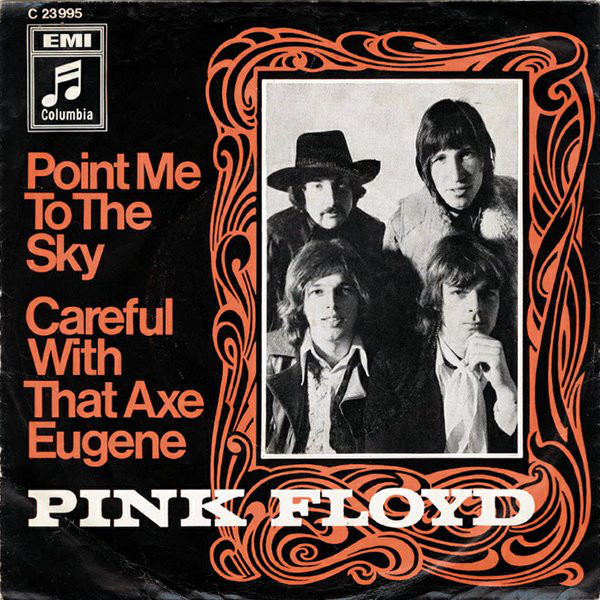

I may have been stretching a point in order to include this track – I’m reasonably certain that the ‘axe’ in question may be the popular rock idiom for a ‘guitar’, and that at some point Pink Floyd may have employed the services of a roadie called Eugene – but let’s not get too hung up on pedantry. This is the version of the track that appeared on the b-side to their post-Syd 1968 single Point Me At The Sky, and not the live version that appears on UMMAGUMMA, but both have something of a slightly menacing spirit to them and show the band experimenting with a heavier rock sound.

THE ATTACK     STRANGE HOUSE


The Attack only released four singles in their two years together, and in that time moved from a blistering mod/soul sound to freakbeat psychedelic rockers. The phantasmagorical Strange House was never released at all, but it can be found on the compilation album ABOUT TIME!: DEFINITIVE MOD-POP COLLECTION 1966-68, released in 2006, which collects together both sides of all their 45s, joined by a pair of numbers recorded during a BBC radio session and a clutch of unreleased studio recordings.  It enjoys a mod-psych whimsy to it that suggests the band were no strangers to the LSD experience and it might have been nice to see how they developed this sound – sadly they were let go by their record company and a nascent attempt at recording an album was lost when the label recorded over the tapes after they dropped the group. These days they remain a footnote to the fickle world of psychedelic pop.

HAUNTED HOUSE MUSIC COMPANY      TAKE A TRIP THROUGH THE HAUNTED HOUSE IF YOU DARE


A 15 minute sound trip through a haunted house taken from the album HAUNTED HOUSE, released in 1985 on tape cassette. This track is pretty much a montage of all the individual tracks that appear on Side 2 of the tape. It’s spooky good fun but under normal circumstances (that is to say, if you had access to a FF button) you wouldn’t necessarily make it to the end - shrieking cats abound.

THE GRAVEYARD FIVE     MARBLE ORCHARD


Garage-psych chills from The Graveyard Five – a Californian band possessed by a haunting and eerie ambiance that was inspired by the ghostly settings of a cemetery. Marble Orchard was the (far superior) b-side to their only single, The Graveyard Theme, released in 1968. The band actually consisted of four members, with the unaccounted fifth member represented by a coffin, so, as you can see, they had this whole novelty thing going for them. Not that it did them any harm - the band were a popular live attraction in the Bay Area, opening for Quicksilver Messenger Service, the Loading Zone, and Jefferson Airplane, among others.  A second single was recorded but an LSD induced breakdown resulted in the lead guitarist/singer destroying  the group's equipment, and the Graveyard Five disbanded before the single could be released.

ROWAN AMBER MILL      THE BOOK OF THE LOST (OPENING TITLES)


THE BOOK OF THE LOST is a marvellous concept – a collaboration between purveyors of woodland folkadelica, The Rowan Amber Mill, and Emily Jones, the daughter of cult sixties folk artist Al Jones,  inspired by a love of 60s and 70s cheap British horror movies and folk horror, resulting in a soundtrack to a cult TV show that never was. Haunted by sneaked childhood viewings of the likes of The Wicker Man, Witchfinder General, Blood on Satan’s Claw and Psychomania , the group  set upon the task of constructing in meticulous detail a number of their own lost folk horror movies (complete with synopsis, cast and crew, production companies and what have you) and, from that basis, writing and recording songs and dialogue pieces inspired by these imaginary creations. To tie up this dark gathering of lost films, they chose the device of a decidedly low budget, hastily slung together television series which would play these movies (fittingly in the “graveyard” slot) and thus was born THE BOOK OF THE LOST, released in 2014. It’s a gorgeous listen, combining dark folk narratives and spellbindingly lovely pastoral psychedelia with the spirit of MR James. Marvellous.

KENNELMUS     THE RAVEN


The only album by Kennelmus, 1971’s FOLKSTONE PRISM, is an occasionally inspired mix of surf music, spaced-out psychedelia and schizophrenic weird shit that, since I discovered it, has rapidly become a Mind De-Coder favourite. The Raven, of course, is a whacked-out rendition of Edgar Allen Poe’s classic gothic poem that plays to their best and worst tendencies – an over-the-top production that combines proto-punk vocals with primitive electronic squeals. Think Vibrasonic versus The Butthole Surfers.

 PAPER DOLLHOUSE     CEMETRY 1


A genuinely spooky track from Paper Dollhouse, a UK duo who fuse (very) subtle dream pop with ambient textures and field recordings.  This track - a startlingly hallucinatory and cold, icy piece that for all the world sounds as if someone is interviewing a ghost – is taken from side two of the DEVON FOLKLORE TAPES IV: RITUALS AND PRACTICES release.  Haunting (literally).

THE HARE AND THE MOON feat. ALASKA & MICHAEL BEGG      FRACTURE IN THE FOREST

   
This ethereal track by The Hare And The Moon has a preternatural loveliness to it. The band themselves no longer exist, other than a ghostly presence on the internet. They lived in the forest and their main occupations were knitting, necromancy, dollmaking and devilry, however, they sometimes made music too. When they did they liked to throw their love of MR James, Arthur Machen, ghost stories, Black Sabbath, Pentangle and The Wicker Man into their cauldron and give it a good stir. Fractures In The Forest appears on the 2016 release FRACTURES, compiled by A Year In The Country, a website dedicated to exploring the undercurrents and flipside of bucolic dreams.

FRACTURES is a gathering of studies and explorations that take as their starting point the year 1973, a time when there appeared to be a schism in the fabric of things; a period of political, social, economic and industrial turmoil, when 1960s utopian ideals seemed to corrupt and turn inwards. It takes as its reference points a selected number of conspicuous junctures and signifiers: Delia Derbyshire leaving The BBC/The Radiophonic Workshop and reflecting later that around then “the world went out of time with itself”. Elsewhere, electricity blackouts in the UK and the three day week was declared; The Wickerman was released; eerie children’s TV show for ‘older viewers’, The Changes, was recorded but remained unreleased (gave me the shivers as a kid); and The Spirit Of Dark And Lonely Water was first shown and gave kids across the country sleepless nights.

Alaska is a Spanish-Mexican singer, DJ, and television personality famous in Spain and Latin America, and one of the founding members of the La Movida Madrileña, the cultural and artistic movement that followed the end of Francoist Spain.

Michael Begg is an award winning composer and sound artist and musician whose music is located in the place where formal composition and electronic erosion meet - that liminal space coloured by longing and discomfort.

A carefully researched show, then.

LADY JUNE     TOUCH-DOWNER


On a show featuring weird music, this track is one of the weirdest of all. Lady June—the honorary title given to her due to her upper-crust, aristocratic voice (by all accounts she sounded like a really stoned Judi Dench) and the fact that she was the de facto London landlady of many a progressive musician from the Canterbury set—was a sort of free-spirited hippie bohemian poetess and multimedia performance artist who ran with the crowd that included The Canterbury Set, Steve Hillage, members of Henry Cow, Hawkwind, Hatfield and the North, Tim Blake and David Bedford, while her enormous twelve room Maida Vale flat was seen as London’s premier smoking salon. In 1973 she recorded LADY JUNES LINGUISTIC LEPROSY, which set her surrealist poetry  to music by her longtime friend (and longtime tenant) Kevin Ayers and Brian Eno, a neighbor who lived nearby. The recording was primarily made in the front room of her apartment with Ayers on guitar, bass and vocals, and Eno playing guitar, bass, a couple of entirely made-up instruments  and something called ‘Lunar Lollipops’, with Gong’s drummer Pip Pyle and David Vorhaus of White Noise mixing. Following her death in 1998, she was cremated and guests at her wake tied little parcels of her ashes to helium balloons and let them go into the Mallorca breeze, her island home since 1975.

ADRIAN ELEDGE     THE DEVIL IN THE MIRROR


I don’t know much about this gentleman at all, but he appears to be something of a psychedelic musician who makes his releases available on his Facebook page. The Devil In The Mirror – A Lo-Fi Psychedelic Halloween Song (to give it its full title) was recorded last year using a deliberately lo-fi method for that authentic haunted garage-psych sound, and that’s all I can tell you about it. – but anyone who’s dropped acid, looked in the mirror and NOT seen the devil looking back hasn’t really been trying.

ANTON SZANDOR LAVEY     THE HYMN TO SATAN


Anton Szandor LaVey (Howard to his mum) was, of course, the founder of the Church Of Satan and author of The Satanic Bible. As an organization it seemed to be less about getting up to naughty goings on and more of a vehicle for worship of materialism and the self, for which he claimed no supernatural inspiration – this being the 60s, there was a lot of nudity involved as well. More of a showman than an out-and-out believer in the occult, his lifestyle owed more to the trappings of Hugh Hefner than Alistair Crowley, say, and he seems to have enjoyed a helluva good time (as it were) pretty much making up the religion of LaVeyan Satanism as he went along. The Hymn To Satan, on which he calls upon the many names of Satan, can be found on THE SATANIC MASS, recorded in 1967 at Church of Satan headquarters, known as The Black House. I dozed off listening to this, once, and rather wished I hadn’t. Weird dreams, to say the least.

THE STONE TAPES     THE OWL AND THE DRUID STONE


This (frankly) eerie track can be found on what amounts to a hauntological concept album called AVEBURY, the debut release from The Stone Tapes - Kat Beem (a classically trained pianist, poet and actress) and M. Peach (soundologist, musician and photographer). The concept of the album is pretty much based on that great hauntological touchstone, The Stone Tape, Nigel Kneale’s terrifying TV play after which the group take their name. Broadcast on BBC Two as a Christmas ghost story in 1972 the story explores the theory that the impressions of emotional or traumatic events can be recorded into rock and replayed under certain conditions. Told from the point of view of its producers, AVEBURY unfurls from a chance encounter with an elderly neighbour, one George Albert Wilberforce, who gifted them a box of tapes. Wilberforce “had been a researcher of sound phenomena, and the tapes held recordings that he’d made during the course of his travels” and it transpires that the tapes were made by recording stone using special modified equipment. The sounds he captured are claimed to represent “the vestiges of time itself, or are proof of ghosts”. The album combines these eerie sounds with a gripping drama made up of telephone conversations between Kat from the band and the Vicar of Avebury and the vicar’s wife in which their reminiscences of George Wilberforce and the events that ensue become increasingly creepy. It’s a remarkable piece of work - a collage of storytelling and electronics that actually feels like a sound recording of a lost BBC ghost story. The Owl And The Druid chatters synthetically into life with multiple layers of incantations and muttered chants, a solitary processional drumbeat sounding behind the crescendo of deranged voices and echoed howls. This is either musick to play in the dark because of its disquieting power or to always listen to with the lights on, depending on your dispensation and nerve. The album was originally given a limited release on cassette loaded with high-quality music-grade ferric tape in 2016. Since then it has been made available on CD and you can also download it here. Thoroughly recommended.

ANNELIES MONSERÉ     TRACES


For her third album, DEBRIS, released in 2016, Belgian composer Annelies Monseré has produced a piece of work seeped in ethereal vocals combined with doom and drone-infused ambient folk textures that illuminate the subtle beauty that exists in the darkness. Think Nico with a glockenspiel and you won’t go far wrong.

SCARY SOUND EFFECTS     JULIE’S NIGHTMARE


Pretty much does what it says on the label – I found this track on an album called SON OF SCARY SOUND EFFECTS, released in 1995. Don’t be put off by the cover (although there does seem to be some focus on pirates) – this is a fairly definitive set of spooky Halloween sounds for your enjoyment.

SONFEED     JESUS IS MY FRIEND


There’s naught more scary than a Christian in full swing, and this track has to be seen to be believed.

Monday, 10 September 2018

MIND DE-CODER 81

MIND DE-CODER 81

To listen to the show just scroll to the bottom of the page

 Leave your cares behind, Come with us and find,
The pleasures of a journey to the centre of the mind.
                                                                                     The Amboy Dukes

THEE LOADED ANGELS     AQUARIUS RISING


When I first came across this track it made me completely re-think Andy Weatherall’s production for Primal Scream’s Loaded. Like everyone else at the time I assumed he’d been inspired to lift the spoken intro from Peter Fonda’s rabble-rousing speech in Roger Corman’s 1966 film The Wild Angels but having listened to this I’m not so sure – the hint is even there in the name: Thee Loaded Angels. Thee Loaded Angels is actually just one of many pseudonyms used by Psychic TV on their subversive acid house classic JACK THE TAB/TEKNO ACID BEAT, released under the guise of a compilation album in 1988. In actual fact, Psychic TV’s Genesis P-Orridge and The Grid’s (and latterly, Beyond The Wizard’s Sleeve’s) Richard Norris are responsible for all the tracks on the album, which was essentially Britain’s first acid house album. It may have been conceived as something of an art-house prank, but P-Orridge was presciently ahead of the game and although most of the album now sounds dated, the vignettes and sound clips between tracks, of which Aquarius Rising is one, still sound great. This is exactly the sort of album that I imagine a young Andy Weatherall would have been listening to, although, of course, I may be entirely wrong about the whole thing.

THE AMBOY DUKES     JOURNEY TO THE CENTRE OF THE MIND


Think what you like about Ted Nugent – for the record, I think he’s a deeply unpleasant individual, to say the least – his guitar playing on this track is exhilarating. Released as a single in 1968, it was the band’s only hit, taken from the album of the same name, which saw the band move on from their blues roots and try to embrace the counter-culture with newly adopted psychedelic embellishments. It seems this was a direction that fellow songwriter Steve Farmer was more willing to undertake than Nugent himself, who claims that he didn’t know the song was about the LSD experience. This alone tells you much of what you need to know about him.

OCS     MEMORY OF A CUT OFF HEAD


This is the rather lovely title track to last year's album, which saw the band briefly return to their psych-folk roots. MEMORY OF A CUT OFF HEAD is the first album released under the moniker of OCS since 2005 – more recent recordings as Thee Oh Sees are notable for their raucous, energetic garage rock stylings, say, which I can’t really be doing with because they eschew what we might charitably call tunes. This is a more delicate affair, offering up lush orchestrations and acoustic loveliness, albeit in a vein that suggests that the world has recently ended and they are left playing their songs amidst the grim aftermath.


THE CREATION     LIFE IS JUST BEGINNING


The Creation were one of those bands who had an overwhelmingly seminal influence on the British psych-pop scene but who were relatively unknown to the record-buying public, who remained blissfully unaware of them. Their one hit record, Painter Man, just made the Top 40 in 1966 (and was successfully covered by Boney M 1979 who made the Top 10 with it) but its b-side, Biff Bang Pow, was taken up by Creation records supremo Alan McGee as the name for his band whilst also naming his record label after them. Ride, Paul Weller, Pete Townshend, and The Sex Pistols were fans whilst Jimmy Page, no stranger to flattering his peers (as it were) imitated guitarist Eddie Phillips’ use of playing the guitar with a violin bow on Led Zeppelin’s Dazed and Confused, so one way or another they really should have been more famous than they were. As it was, success eluded them in England although they were massively popular in Germany where they managed to release an album in1967compiled of previously released singles and hastily recorded cover versions called WE ARE PAINTERMEN. The very fine Life Is Just Beginning was released in 1967 as a single but it failed to chart – by 1968 the band had split but their legacy, as they say, lived on long after them. Don’t even get me started on Clive Dunn’s Grandad.

GIOVANNI BATTISTA PERGOLESSI     KYRIE ELEISON/CHRISTIE ELEISON


Something of a baroque masterpiece, Pergolessi’s MASS OF ST. EMIDIO was commissioned in 1732 when the composer was only 26. Celebrated as a composer of sacred music, the piece is a showcase of Pergolesi’s mastery of late-Baroque double-choir techniques and the new galant style of writing for virtuoso solo voices, none of which means very much to me, but my son came home from college raving about its use of polyphonic layered melodies and things of that nature in general and, given that he shed an honest tear at the passing of XXXTentacion recently, he’s possibly a bigger fan of music than myself and knows of what he speaks, so I felt compelled to check it out. Couldn’t be doing with XXXTentacion at all, but was blown away by Pergolessi’s Mass and how many of the defining characteristics of your baroque style were later co-opted by the more florid elements of psychedelia. In truth, I felt right at home listening to it and couldn’t wait to include it in a show.

THE CHOCOLATE WATCH BAND     THE INNER MYSTIQUE


It’s a bit of a misnomer to suggest that this track is by The Chocolate Watchband at all, given that the album it’s taken from, the titular INNER MYSTIQUE, released in 1968, barely contained any music or vocals by the band despite their name being there on the album sleeve. Side 1 of the album, from which the superb Inner Mystique is taken, consists of music played entirely by session musicians, whilst Side 2 of the album – consisting of blistering cover versions composed of out-takes from their first album - had singer’s Dave Agular vocals replaced on two tracks by session vocalist Don Bennet. Why this would be is down to the band’s producer who cobbled the album together because of his belief in the band as a concept, rather than an actual entity. I understand he never saw the band play live and had no idea that they were a confrontational, snarling garage-band who oozed punk defiance on stage, preferring to write soft psychedelic tracks for them to perform in the studio, laced with sitar and flute. Despite this, THE INNER MYSTIQUE is something of a fan favourite, possibly because of its schizophrenic nature, and features many of their favourite recordings - it is in no way representative of the group’s sound but still one of the defining psychedelic garage punk albums of the 60s.

THE MIRAGE     EBENEEZER BEAVER


I’ve become a big fan of The Mirage recently and I don’t believe that I’ve even got around to playing their one notable more-or-less hit The Wedding Of Ramona Blair yet. As far as I can tell Ebeneezer Beaver, recorded 1967, was never released but appears on the 2006 album TOMORROW NEVER KNOWS – THE POP SIKE WORLD OF THE MIRAGE: SINGLES AND LOST SESSIONS which pretty much does what it says on the label. Clearly inspired by The Beatles and The Hollies, and to some extent The Who and The Kinks, they were never as original or convincing as their role models and thus were doomed to become a footnote to the sound of the lysergic 60s – nevertheless a handful of their tracks, Ebeneezer Beaver included, were definitively psychedelic and deserve to be heard wherever psychedelic music is played (so that would be right here then).

AMBROSE SLADE     KNOCKING NAILS INTO MY HOUSE


Before they became the seasonal-defining cultural behemoth known as Slade, they were a little-known Midlands rock band called Ambrose Slade who’s one album, BEGINNINGS, was released in 1969 to cheerful indifference. It contained a diverse mix of cover versions - including The Amboy Dukes’ Journey To The Centre Of The Mind, as well as songs by Frank Zappa, The Beatles, Steppenwolf, The Moody Blues, and Marvin Gaye – and a couple of self-penned tracks, none of which hinted at the glories to come. Knocking Nails Into My House was penned by Jeff Lynne for The Idle Race, and is pretty indicative of the rest of the album as a whole, although their cover of The Beatles’ Martha My Dear has been described elsewhere as ‘heinous’. It’s an interesting album, though; Noddy Holder’s vocals were already in place, and they know their way around a tune – at times it sounds like The Small Faces – but they were very much a band looking for direction. Coz I Luv You and their unassailable domination of the British charts was still two years away.

THE FACTORY     TRY A LITTLE SUNSHINE


Released in 1969, this was The Factory’s second and, indeed, last single – a blistering soundsplash of buzzes, thrashed guitars, and oddly angelic vocal stylings that fall somewhere between The Who and Cream. It was written for them by John Pantry (more on whom later) who also provided the vocals. It was banned by the BBC, who took exception to the extortion to try some LSD (‘sunshine’ being slang for a particularly fine line in LSD) and the band split up shortly after, although both sides of their two singles, as well as a couple of unreleased demos, were assembled for the PATH THROUGH THE FOREST mini-CD in 1995.

THE CHILLS     KALEIDOSCOPE WORLD


In October The Chills will play their first (and most likely last) gig on Waiheke so I thought I’d commemorate that by playing this gorgeous track on the show. I’ve been a massive fan of the band since I came across this album in a record shop in Romford back in 1986, released by a nascent Creation records in England (Flying Nun in New Zealand, of course) and it quickly became a bedsit fave. In truth, I’d never heard of the band before and bought it strictly on the strength of its cover, which suggested sugary psychedelic confection awaited within. I wasn’t disappointed, although the songs, whilst undeniably at home to Syd Barrett, were more jingly-jangly than psychedelic per se and you can see why Alan McGee liked them. Over the years the album has been re-released a couple of time, each time growing a little longer as extra tracks were added to that initial selection of 8 pristine songs – the last copy of the album I brought had 24 tracks on it in all, but it’s still the original vinyl release I return to when the mood takes me.  For the last 30 odd years or so, Kaleidoscope World has remained one of my favourite songs ever – never strictly a single, it appeared as the first track on the Dunedin Double, a seminal EP shared between four bands, which introduced the world the sound of young Dunedin in 1982. Its playful lyrics and familiar chimes of jingle-jangle guitar over a background bass pulse and swirling organ never fails to put a smile on my face and you can be sure I have my ticket ready for when they arrive. I wonder if I can get my copy of the album autographed? That would be a thing, wouldn’t it?

SPROATLY SMITH     CANARY BABIES


For its latest release, the wonderful A Year In The Country site brings us THE QUIETENED MECHANISMS, an album which explores the abandoned and derelict industry, infrastructure, technology and equipment that once upon a time helped to create, connect and sustain society. Featuring music from the likes of Keith Seatman, The Heartwood Institute, Time Attendant and Vic Mars, it wanders amongst deserted factories, discarded machinery, closed mines, mills and kilns and their echoes and remains; taking a moment or two to reflect on these once busy, functioning centres of activity and the sometimes sheer scale or amount of effort and human endeavour that was required to create and operate such structures and machines, many of which are now just left to fade away.

Herefordshire’s purveyors of lysergic wyrd-folk, Sproatly Smith, provide the exquisite Canary Babies, a track inspired by the Rother Ordnance Factory, which once employed 6000 staff, mainly women, making bombs and shells during both world wars, risking their lives from shells exploding, poisonous chemicals that turned their skin yellow, and from German air raids. It was shut down in 1967 and still lays abandoned, crumbling in the middle of an industrial estate.

THE KINKS     TIME SONG


The Kinks, of course, could never be doing with psychedelic music, but given the cultural climate of the times, they occasionally came to within a stone’s throw of the limpid pool of psychedelia even if they didn’t actually dip their toes in. Time Song is a case in point. A previously unreleased track from 1968 taken from the remastered 50th anniversary reissue of THE KINKS ARE THE VILLAGE GREEN PRESERVATION SOCIETY, it’s a gentle meditation on lazy ways and the passing of days, sung over a slow, hazy waltz of acoustic guitar and piano that is, at the very least, ruminative, allowing one to speculate quietly on mortality and things of that nature in general, creating the smallest of ripples in that limpid pool. Lovely.

THE INCREDIBLE STRING BAND     A VERY CELLULAR SONG


On occasions, I sometimes return to The Incredible String Band and try to get them. I know I’m supposed to like them, and on paper they seem like my favourite band ever; their combination of exotic Middle Eastern and Asian instrumentation wedded to a whimsical, haunting, esoteric acid-folk vision of Albion seems such a winning formula – and then they start singing. It’s as if they spent so much time mastering the likes of all those ouds, gimbris, qanuns and tamburas that no one thought to include singing lessons on their to-do list. Anyway, that’s just me. I understand that elsewhere in your psych-folk circles they’re still quite highly regarded. Last week I gave their 1968 release THE HANGMAN’S BEAUTIFUL DAUGHTER a spin, beguiled, as ever, by the promise of its cover and found myself humming along to A Very Cellular Song, the album’s centre-piece, and I didn’t find the experience entirely disagreeable. It’s a 13-minute reflection on life, love, and amoebas, consisting of a suite of short pieces sewn together with the folk song Bid You Goodnight. Along the way, it weaves between Bahamian funerary music, East Indian incantation, and ancient Celtic mysticism and is often considered to be composer Mike Heron’s masterpiece. As for me, I prefer to say nothing but will continue with the occasional dipping of toes into the limpid pool of The Incredible String Band slightly more often in future.

ACID MOTHERS TEMPLE AND THE MELTING PARAISO U.F.O.    
           PINK LADY LEMONADE (YOU’RE MY ORB)


The Mighty Acid Mothers Temple And The Melting Paraiso U.F.O. have always had a soft spot for the sweet Pink Lady Lemonade – two separate recordings already exist and on the newest release, ELECTRIC DREAM ECSTASY, they return to it twice more, the You’re My Orb acoustic version featuring pastoral, complex string arrangements, ghostly synths and harmonica, and the side-long epic Electric Dream Ecstasy proto-disco version which I’ll save for another day. Gorgeous and timeless as ever, Pink Lady Lemonade (You’re My Orb) makes for a dreamy exploration of inner space, allowing the mind to float hither and thither across a free-form soundscape of narcotic desire. I’m a fan, me.

THE MONKEES     RANDY SCOUSE GIT


…or Alternate Title as it is often known, quickly changed to protect the sensibilities of its English audience, and, no doubt, to spare American listeners from wondering just who or what a Randy Scouse Git is or does. Famously written by Micky Dolenz in 1967, it’s something of an account of party thrown for them by The Beatles at the fashionable Speakeasy club in London supposedly written the next day whilst watching the popular sitcom ‘Til Death Do Us Part, where he couldn’t help but note that English audiences were reduced to paroxysms of laughter whenever Alf Garnett would refer to his son-in-law as the randy scouse git in question. Dolenz didn’t know what it meant, but the audience seemed to find it hysterical, so it quickly became the song’s title, and was just as quickly changed at the insistence of the band’s English record company, RCA, who wouldn’t release it unless he gave the song an ‘alternate title’, and, thus, the legend surrounding the song was born. It’s also one of the best songs they ever wrote, of course.

PETER AND THE WOLVES     LITTLE GIRL LOST AND FOUND


Peter and The Wolves were an obscure psych act by any standards although singer John Pantry also seems to have had a career as a songwriter, producer and sound engineer which saw him working with the likes of The Small Faces, The Bee Gees, Manfred Mann's Earth Band, The New Seekers, Pentangle and Barry Ryan, amongst others. His songs were often aimed at the soft psych-pop end of the market, and Little Girl Lost And Found, released as a single in 1967, has the same vibe as a bubblegum Bee Gees doing Syd Barrett, namechecking many of the standard reference points of British psychedelia at the time, but other than that there’s not much else I can tell you about the band – I think it’s a great little single though. I don’t suppose it troubled the charts at all. John Pantry is now a vicar in Kent.

DEERHUNTER     DIAL’S METAL PATTERNS


One of my favourite releases this year has been Deerhunter’s tour-only cassette release DOUBLE DREAM OF SPRING. The cassette was limited to a run of 300 copies, so unless you were lucky enough to have been at the first gig of what was then their current tour (they sold all their copies that first night) you will be relying on some considerate soul putting their copy online (I am here to assure you that that considerate soul exists). What you get to hear is a highly experimental release which sounds somewhere between ghostly Faust-esque demos and lo-fi avant-garde ambient compositions that dissolve from ambient murmurings to jazz-inflected trip-hop grooves, often within the space of the same track. Dial’s Metal Pattern’s has a wigged-out Stereolab-ish feel to it (Bradford Cox has worked with Lætitia Sadier before) – elsewhere the album feels deliberately vague and incomplete, but never less than tuneful and brimming with ideas that may or may not find their way onto their soon-to-be-completed Cate Le Bon produced album, which I find myself getting more and more excited about.

LOVE     ORANGE SKIES


1966’s DA CAPO captured Love in a transitional phase, evolving from the frenetic garage folk of their debut album to the lush, psychedelic textures of their third release, FOREVER CHANGES. The album’s first single, the tremolo drenched Seven & Seven Is, is a direct link to the energy and verve of the debut and rightfully became a garage-punk classic. In contrast, the altogether more gentle Bryan Maclean-penned Orange Skies, with its subtle samba rhythms and exotic instrumentation, pointed the way forward for the group.

KENNELMUS     PATTI’S DREAM


For an album that’s routinely dismissed as clumsy, with almost totally unmusical vocals, wild, undisciplined instrumentation and way over the top studio production, there’s something quite compelling about this sole release by Kennelmus, Arizona’s ‘hardest working surf band’. Released in 1971, FOLKSTONE PRISM was limited to 1000 copies, hardly any of which sold, and yet it has a schizophrenic charm that takes in Ennio Morricone’s soundtracks, Lost in Space electronic tinkering, and visionary tripped-out peyote induced flourishes combined with folk and garage rock elements that suggest that this was a band brimming with ideas. Patti’s Dream enjoys the sort of acid-soaked guitar solo that wouldn’t be out of place on a Calexico album produced by Joe Meek. In fact, I can’t recommend the album enough.

PROCOL HARUM     A WHITER SHADE OF PALE


I can’t think of a single thing to say about this track that hasn’t already been said. Released in 1967 this is the sound of British pop music transcending the confines of the 3-minute single into something more rarefied, evocative and celestial – in many ways, it’s so clever that there’s an argument for suggesting that this song is the precursor to what would become prog. It’s one of the best-selling singles in history, having sold over 10 million copies, it’s the most played record by British broadcasting, and was number 1 in the charts the same time that The Beatle’s were number 1 with SGT PEPPER’S, thus pretty much kick-starting the Summer of Love – not bad for the band’s debut single. As to what its about or what a fandango truly is, whole books have been written and documentaries made. I just played it because It seemed like the right song, at the right time, for the right show, and its baroque complexity goes back to what I was saying about baroque compositions and psychedelia earlier, although, at the time I was thinking of The Moody Blues. It just goes to show – something was in the air (on the G string, as it were).

THE ORB     DRIFT


A superior bit of filler from The Orb, taken from their latest release NO SOUNDS ARE OUT OF BOUNDS. This is The Orb’s 15th album and, as time goes on, one begins to expect less and less from them – or rather, him, as The Orb these days revolves around Alex Paterson and a revolving cast of collaborators, with this album being no exception. No Orb album can escape the shadow of the towering ADVENTURES BEYOND THE ULTRAWORLD but their new album gives it a pretty good go. Drenched in ganga-smoked dub, ambient minimalism and sound collages which explore both inner and outer space, NO SOUNDS ARE OUT OF BOUNDS is hugely enjoyable, pursuing its own sonic palette with all the insouciance of one having nothing left to prove. It also finishes with a 15-minute journey that will no doubt find its way onto next week’s show.

THE BYRDS     SPACE ODYSSEY


The closing track from 1967’s THE NOTORIOUS BYRD BROTHERS, Space Odyssey, finds Roger McGuinn speculating on the role of either a supreme being or extra-terrestrial species in the evolution of humankind. Although this track was released prior to the film 2001: A Space Odyssey, both Kubrick and McGuinn adapted the theme from the same source – Arthur C. Clarke’s short story, The Sentinel. McGuinn approaches the arrangement as though he was adapting a sea chanty for The Byrds repertoire, although the lyrics also work to the tune of While Shepherd’s Watched Their Flocks By Night (try it). THE NOTORIOUS BYRD BROTHERS is the best thing they ever did – the culmination of their previous four albums, and made before they went full-on country and became hairy. On it they embrace psychedelic rock, psychedelic folk and psychedelic country music - mostly they just embrace psychedelia in all of its colourful manifestations. I sometimes think that Julian Cope’s INTERPRETER album is entirely indebted to Space Odyssey – I mean, it probably isn’t, but it is. Like in most things, The Byrds were doing it first.


.