Sunday, 16 July 2023

MIND DE-CODER 107


MIND DE-CODER 107

To listen to the show just scroll to the bottom of the page


The world is full of magic things, patiently waiting for our senses to grow sharper.

                                                                                                                                      W. B Yeats


13TH FLOOR ELEVATORS     SLIP INSIDE THIS HOUSE


I’ve never really truly fallen for the primitive proto-psychedelic charms of the 13th Floor Elevators, but just about every band I’ve ever liked has, so I’m happy to give them a play every now and then. Slip Inside This House is widely viewed by fans and critics alike as the Elevators’ masterpiece and one of the key psychedelic recordings of the era - the lyrical content is the culmination of lyricist and electric jug player Tommy Hall’s psychedelic exploration fused with his esoteric research, packed so densely that singer Roky Erikson complained it was like singing an encyclopedia. Tommy referred to the lyrics as ‘signposts’ - an invitation to the listener to investigate the ideas the band was proselytising. Originally recorded for their second album, EASTER EVERYWHERE, in 1967, it was recently included on the compilation album 13 OF THE VERY BEST, which purports to present the very highest sound quality of all surviving source material for the band’s recordings.

THE OPEN MIND     MAGIC POTION


The Open Mind were a bit late to the game but there’s no mucking about with their scorching 1969 release Magic Potion, a tie-dyed paean to lysergic exploration that hits you right between the third eye. Their eponymously titled album was released before they recorded this single but it, like Magic Potion, points towards a heavier scene taken up by the likes of Hawkwind, say. By this time the band had tired of progressive psychedelia wanted to move into more jazz-influenced music, but they were too well known as a psychedelic act. A name change in 1973 led to Armada but the band recorded no further music under this moniker and thus they disappeared into the psychedelic mysts of tyme.


THE CALIFORNIANS     THE COOKS OF CAKE AND KINDNESS


Despite being chosen to support no less than Jimi Hendrix, Cat Stevens, Engelbert Humperdink, and The Walker Brothers on a major package tour of the U.K. in 1967 The Californians never had a hit outside of their native Wolverhampton. Purveyors of Beach Boys-style harmony pop, they released a number of wholesome singles that rarely troubled the charts but The Cooks Of Cake And Kindness, is a real gem. Composed by the Ivy Leagues' John Carter, whose been all over Mind De-Coder recently, the record was given a full-blown psychedelic production reminiscent of The Beatles’ Magical Mystery Tour complete with echoey horns, drums and organ along with electric fuzz guitar. It was the b-side of a 1969 release called Mandy so no one ever actually heard it at the time, and they never recorded an album, but all of their material was collected and released on the album THE CALIFORNIANS AND FRIENDS - EARLY MORNING SUN: 60S HARMONY POP PRODUCED BY IRVING MARTIN, a comprehensive look at vastly-underrated producer Irving Martin's big-budget harmony pop productions in the mid-to-late 60s.

MATT BERRY     LIFE UNKNOWN


Matt Berry is something of a renaissance man - actor, voice-over artist, writer and musician, producing a brace of releases for the idiosyncratic Acid Jazz record label, home to all things of a soul, jazz, funk, mod, folk or psychedelic nature, which is entirely fitting because over the years Berry has released albums in all of these genres and more. The catchy but slightly unnerving Life Unknown is taken from his 2020 release, BLUE ELEPHANT, a collection of heady and disorienting psychedelic songs and instrumentals packed with paisley-clad treasures. Every instrument, with the exception of drums, is played by Matt including a variety of keyboards and synthesizers - piano, Wurlitzer, mellotron, Moog, Hammond, Vox and Farfisa organs - to create a psych journey the late 60s in the style of a soundtrack to some cult art-house film. Marvellous.

THE CLEANERS FROM VENUS   FLOWERS OF DECEMBER


The semi-legendary Cleaners from Venus was formed in the small town of Wivenhoe, England, at the turn of 1980s by Martin Newell – a rock singer and part-time kitchen porter with a love of sunny 1960s pop music, punk rock, and musical comedy. These days the band consists of four 70 year-old guys who dress the same and look a bit like each other. The blissful dub of Flowers Of December is taken from their 2021 release PENNY NOVELETTES (although I think it also appears as the Up River Mix on the 2020 Flowers Of December EP), an album replete with wistful stories of lost love and observations on the everyday life of English folk.


SIMON ROWE     CROXTED CROWS


A trifling piece, but nonetheless pretty for all that, Croxted Crows opens the debut album EVERYBODY’S THINKING by Simon Rowe, the ex-guitarist from 90’s legends Chapterhouse and Mojave 3 with assistance from members of both those bands. Released earlier this year, it’s a wonderful, bittersweet affair that puts one in mind of the likes of Tim Hardin, Syd Barrett and Fred Neil, full of layered sounds which slowly unfold as a sweetly pastoral, gentle, psychedelic delight. It’s one of the ‘nicest ‘albums I’ve ever heard - there’s not an ounce of negativity, or a foreboding minor chord, to be heard anywhere on it. The track only last 70 seconds but I thought it worth including in the show. 


ANTON BARBEAU    STONE OF FIRE


Released hot-on-the-heels of early 2022's POWER POP!!!, Stone Of Fire is taken from the late 2022 release STRANGER, which digs a bit deeper into the mire of Barbeau's farm-bound pandemic mindset. A multi-coloured mess of fine, weird music results!


LAMP OF THE UNIVERSE     LOTUS OF A THOUSAND PETALS


Lamp of the Universe is the solo-project of Hamilton-based Craig Williamson, who was vocalist, lyricist and bass player in doom-metal stoner-rockers Datura - but this is the total opposite of that group's full-on rock overload. The patchouli-soaked Lotus Of A Thousand Petals is taken from his debut album THE COSMIC UNION, an incense-drenched mellow groove of a listen, with sitars, tablas, flute, keyboards, spacious guitar and stoned trancy drumming, released in 2001. The authentic eastern flavoured '60s sound is comparable to Dead Flowers, Saddar Bazaar and Tangle Edge, combined with the hypnotic groove of Spacemen 3 and the spacier moments of Porcupine Tree. The perfect, opium-hazed soundtrack for what we might euphemistically call a ‘quiet night in’.


KYRON     FADE INTO TRANSPARENCY


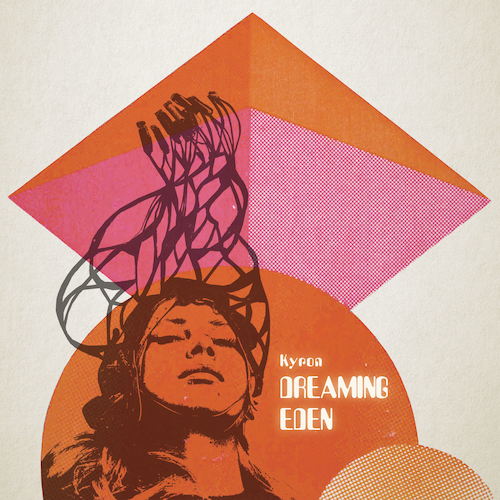
The hypnogogic Fade Into Transparency is taken from the second solo release by João Branco Kyron, the lead singer of Mind De-Coder favourites, Beautify Junkyards. DREAMING EDEN is an electronic reverie inspired by Christopher Priest’s novel ‘A Dream of Wessex’, a late 1970s take on the notion of virtual reality in which participants escape the harsh reality of their world into a kind of consensus utopian future. The album, released earlier this year, is comprised of drifting melodies, melodic psychedelia, dusty archive sounds and synthesized rhythms and feels like the soundtrack to a dream, in that nothing stays fixed, melodies develop then collapse, trident rhythms strike up and then unravel into fragments. Contemporary hauntology at its dreamiest.


THE SOFT HEARTED SCIENTISTS     GADZOOKS!


This year saw the welcome return of Cardiff’s psychedelic collective The Soft Hearted Scientists with the release of their eighth album, the wonderful WALTZ OF THE WEEKEND. It’s an immersive listen, infectiously melodic and stuffed to the eyeballs with vocal and instrumental hooks which invite you to dive in and explore its multi-layered labyrinthine depths. Gadzooks! is an insanely psychedelic listen that gets progressively more insane, featuring a sly echo vocal nod to Bowie’s The Bewlay Brothers, crazed guitars, a string section, an out-of-tune bar room piano, speaking in tongues and an ending FAR more over the top than a Bond theme. Album of the year.


THE TEARDROP EXPLODES     POPPIES


To celebrate the release of CULTURE BUNKER 1978-1982, a massive six CD/7 vinyl retrospective of the Teardrops, replete with lots of rarities, unreleased demos, and live material, I thought I’d include the slick neo-psychedelia of Poppies, initially taken from their debut album KILIMANJARO in 1980. The backwards guitar was added by the mystic Alan Gill, taking a break from his day job in the quirky synth-pop duo Dalek I. The song glides along on a pulsating lysergic groove that never fails to mesmerize. Sublime.


KIKAGAKO MOYO     MEU MAR


This gorgeous track is taken from KUMOYO ISLAND, the fifth and final album by Japan’s hirsute psychedlicists Kikagako Moyo. Released last year, it’s a euphoric mind-trip, taking in ripples of Tropicália, dub, raga rock, new age, English folk, Anatolian psych and every shade of krautrock experimentation - a celebration, in fact, of everything that made Kikagoyo Moyo so very special. For a band that wrote lyrics in an imaginary language of invented syllables in the attempt to make their music universal, it’s worth noting that for Meu Mar, an Erasmo Carlos cover, the original Portuguese lyrics were translated into English, then to Japanese conjuring an image of the protagonist floating among the clouds, looking down upon Tokyo Bay. Best-suited for counting stars, looking at the ocean, and dancing in one’s daydream.


ASTRAL MAGIC     RAINBOW BUTTERFLY


Astral Magic is a new psychedelic solo project started in 2020 by Santtu Laakso, bass and Moog player with the Finnish psychedelic space-rock band Dark Sun. His debut album, MAGICAL KINGDOM, released last year, takes the listener on a psych-prog journey into the land of dreams and fairy tales and is very much at home to the sort of cosmic, ambient excursions into other dimensions inspired by the likes of Hawkwind, Gong, Eloy, or Pink Floyd. The almost synaesthetically titled Rainbow Butterfly puts me in mind of Hawkwind’s Nik Turner’s more spacey improvisations, but there’s nothing wrong with, of course. In fact, that’s something of a recommendation, and I can’t be doing with the saxophone at all, me.


DOROTHY ASHBY     THE MOVING FINGER


I included a track from Dorothy Ashby’s astounding 1970 release THE RUBAIYAT OF DOROTHY ASHBY in my last show, but I’m not finished with exploring its heady grooves just yet. The album closes with its greatest cut, The Moving Finger. Introduced by what seems like an Eastern Buddhist chant, it quickly slips into harp, koto, guitars, drums, and bass bump. Strings are added for drama playing repeating two-note vamps before vibes take the thing into outer space. The slippery guitar groove and alto solo that cut right into the flesh of the blues turn it into a solid late-night groover with plenty of soul. It is exotic, mysterious, laid-back, and full of gentle grooves and soul. An astounding listen.


DONOVAN     OH GOSH


I love Donovan’s A GIFT FROM A FLOWER TO A GARDEN. Released in 1967 it represents the apogee of British flower power - gentle, playful, fey and entirely unironic. In fact, it’s so gentle, so playful, and so fey it’s the sort of thing that makes Donovan a bit of a joke in some circles, and I’ve been guilty of this myself. But the whole album, as exemplified by Oh Gosh is so good natured and free of cynicism, that one would have to be a hard-hearted Shakespearian villain to ignore its charms. 


THE UNEXPLAINED     A WALK DOWN EMILY LANE


Possibly the best thing about this track is the title, but don’t let that put you off. It's a clever play on words and a namecheck for Emily, Syd Barrett's muse, a signifier for British psychedelia in itself, which I think might be the point. This instrumental track originally appeared on the grandaddy of all British psych compilation albums, CHOCOLATE SOUP FOR DIABETICS VOL. 1, released in 1980, sending an army of crate diggers searching for the original recording - all in vain. The title is so arch, so knowing, that it has been suggested that A Walk Down Emily Lane was recorded exclusively for the album by an 80's mystery group, so don't waste your time trying to find the record, I don't think it exists.


FENELLA     HEXAGONAL TABLE


Fenella is Jane Weaver’s experimental side-project developed initially to provide an alternative soundtrack to an obscure Hungarian animated film called Fehérlófia a couple of years ago, and you can tell it’s an experimental side-project because only an experimental side-project would name a track Hexagonal Table. This track is taken from their most recent release THE METALLIC INDEX, inspired by the true story set in the 1920s of a nurse who had psychic powers, and could tell who was lying and telling the truth. It’s an album that takes in atmospheric, ambient, immersive synth soundscapes and ripples of cosmic electronics that shift from the beautifully immersive to the hauntingly eerie - Hexagonal Table’s pitch-bent synth lines conjuring a mood that’s both soothingly pastoral and deeply uncanny.


GORKY’S ZYGOTIC MYNCI     CURSED, COINED, AND CRUCIFIED


Gorky’s Zygotic Mynci’s 1997 release BARAFUNDLE is an album I like to return to time and time again when I’m in the mood for off-kilter psych-folk melodies, erratic time signatures and medieval chamber arrangements (which is all the time, really). Released at the height of Britpop’s coke-fuelled excess, this is an album that owes more to the sort of gentle psilocybin-inspired otherworldliness one associates with Welsh watermeadows and dew-soaked maidens with eyes the size of dinner plates. I was playing it the other day and was enchanted by the sweetly sedate instrumental Cursed, Coined and Crucified and thought I must include it in the next show, so I have.


MOON WIRING CLUB     TIME AS ICE CREAM


For centuries now, the perplexed, restless, enquiring listener - displeased with the musically obvious - has pertinently demanded to know why there is simply no musicke that successfully emulates the texture of slowly melting ice cream (where numerous colours and ingredients seep into each other) whilst simultaneously providing the sensation of divine motion-sickness derived from spending too long reading eerie medieval manuscripts within an over-heated vestry. Ian Hodgson’s Moon Wiring Club can now definitely answer that question with a scoop or two of MEDIEVAL ICE CREAM, released earlier this year.

EMMANUELLE PARRENIN     MAISON ROSE


This is the title track from a magical album released in 1977 by French folk singer, harpist and hurdy-gurdy player Emmanuelle Parrenin who was first active in the late 1960s and 1970s as part of "le mouvement folk". The album is something of a psychedelic, ethereal folk masterpiece that still feels suspended outside time, a real haven of peace with an aura of mystery and spirituality, and gentle songs which seem both ancestral and futurist. She once opened for The Clash and caused a riot.


THE SOFT HEARTED SCIENTISTS     SEA ANEMONE SONG/SEA ANEMONES IN THE BENTHIC ABYSS


I’m so very taken with the new album by The Soft Hearted Scientists I thought I’d include this special mix I segued together of Sea Anenome Song, taken from the album, with a special remix of the track by producer Frank Naughton called Sea Anenomes In The Benthic Abyss which currently is only available to listen to on YouTube. Sea Anemone Song is a huge heartbroken psych ballad, channelling a lot of the awful things that have happened in the last 3 years (not to me, thank God), with an end section that gradually disintegrates on an asteroid belt. Naughton’s remix strips the song to the bone and rebuilds it as a psychological horror movie soundtrack. I’ve mixed the two together in what I hope is a sympathetic manner that won’t upset anyone concerned to create a track some 13 minutes long for your continued listening psychedelic pleasure. Lose yourself in this one.


Sunday, 21 May 2023

SOFT HEARTED SCIENTISTS - WALTZ OF THE WEEKEND


At last! The return of the Soft Hearted Scientists! It’s been three years since we last heard from Cardiff’s cult psychedelic troubadours, and seven years since the release of their last album proper, but this month sees the Scientists return with WALTZ OF THE WEEKEND, their biggest and most ambitious studio album yet.

It’s an album swollen with ambition, and bursting at the seams with inspiration. Clearly the Covid lockdown, however inconvenient, (and I, for one, loved it), has left the band chomping at the bit, bursting with three years’ worth of songs, melodies and other creative impulses to get out of their system. And what a torrent of creativity came gushing forth – we all know lead vocalist Nathan Hall is never short of an idea for a good tune, but this album seems to have brought the best out in everyone. Twelve tracks, crammed with eclectic instrumentation, radio friendly kaleidoscopic pop songs, heartbroken ballads and innovative experimentation, packed onto a single CD with a 75 minute running time – truly, our cup runneth over.

Opening track What Grows Inside the Garden enjoys the same dizzying pop-art dissonance of The Byrds’ Artificial Energy, an apt reference because this is a song that clearly belongs in 1967. Likewise, the title track, a psychedelic waltz inspired by a day trip to Tintern Abbey, is as trippy as anything you’ll find on A SAUCERFUL OF SECRETS. Given that I’m name-dropping reference points here, the glorious Rode My Bike put me in mind of The Dukes Of Stratosphears’ manically inventive 25 O’CLOCK album – none of this is to say that anything on this album is derivative, rather, this is an album that can hold its own alongside these classic psychedelic recordings. If you’re a fan of psychedelic music - and, let’s face it, you’re reading this on the Mind De-Coder blogsite - then this is an album that will satisfy that particularly lysergic itch, and you'll be tapping your foot along to it too.

The credit must be shared with producer Frank Naughton, whose wizardry in the studio gives the songs space to breathe so that they never feel cluttered, despite the sheer variety of instruments the’ve managed to lay their hands on – string sections, harpsichords, broken-down pianos, kitchen sinks, and what sounded like an oud, sitars and quite likely a lot more, are all employed to give the songs colour, but they never dominate or feel used just for the sake of it. In fact, the studio is deployed as one more instrument in their sonic arsenal. When Sea Anemone Song, which starts off life as a slightly plaintive ballad disappears into the K-hole, you actually feel as if you’re floating off into space with it. Elsewhere The Things We Make becomes consumed with a dub-laden expansiveness, and Creepers and Vines transforms halfway through into a series of mind-bending transitions, sections, and sound events that will leave your head spinning, while the eleven-minute Lost Mariners is nothing less than a psychedelic odyssey.

The lyrics are cryptically opaque but there’s usually a line or two that tumble forth from the firmament of surreal wordplay which you can clutch to your heart. My current fave: You and I are drinking wine and staring at the garden, appears to be speaking to me on several levels. In fact, I feel as if the whole album has a multitude of layers that will only be revealed upon repeated listens - melodic excursions, exotic instrumentation, a clever bass line, a production trick, a stumbled-upon lyric, an experimental flourish, an on-the-note percussive embellishment - it will take some time to take in the sheer gleeful inventiveness the Soft Hearted Scientists have brought to the table.

It’s hard to pick a favourite track when so much is on offer, but Gadzooks! delivers a bar-room piano that might have been stolen from the end of Tomorrow Never Knows, and otherwise sounds like the semi-legendary and regrettably short-lived psychedelic group (the aptly named) Tintern Abbey having a go at I Am The Walrus - it’s that good. Once again, I’m not making comparisons, but making the case that WALTZ OF THE WEEKEND is as good as those classic psychedelic recordings I really like and rate.

So, from the top: THE NOTORIOUS BYRD BROTHERS, A SAUCERFUL OF SECRETS, 25 O’CLOCK, Tomorrow Never Knows, Bee-Side/Vacuum Cleaner, WALTZ OF THE WEEKEND…they all belong on the same list.

Mind blown.

Available to order, or download, from their Bandcamp page now.

Sunday, 7 May 2023

MIND DE-CODER 106

MIND DE-CODER 106

 To listen to the show just scroll to the bottom of the page

All day long the door of the subconscious remains just ajar; we slip through to the other side, and return again, as easily and secretly as a cat”.

                                                                     Walter de La Mare


 TOR LUNDVALL     SLOW HUMMING AT DAWN


Tor Lundvall is an American artist and composer whose ghostly, liminal, recordings are essentially paintings with music. Taken from the album INSECT WINGS, LEAF MATTER AND BROKEN TWIGS - EARLY AMBIENT RECORDINGS 1991-1994, released in 2016, these minimalist recordings, which incorporate found sound, droning synthesizers, and spectral piano are a celebration of stillness and solitude. Slow Humming At Dawn inspires a moment of deep reflection which, it is to be hoped, will carry you through the show like a balm to the senses.


There’s a lot going on through the beginning of the show with voices and sitar coming in and out of focus - whilst all of that is going on, I include…


ALISON COTTON     MURMURATIONS OVER THE MOOR


 Alison Cotton once played viola in Mind De-Coder favourites The Eighteenth Day Of May and still performs in The Left Outsides, whose atmospheric, hypnotic songs inhabit a certain pastoral psychedelia reminiscent of chilly English fields at dawn. Her most recent solo release, THE PORTRAIT YOU PAINTED OF ME, released last year, is a study in exquisite melancholy. Murmurations Over The Moor is a wordless piece of layered vocals that drifts like an eerie lament across the foggy moors of Northern England, a siren to lure the unwary traveller - as is so often the case with your atmospheric goings-on, it sounds beguilingly lovely.


DOROTHY ASHBY     MYSELF WHEN YOUNG


Every now and then you unexpectedly come across a piece of music that simply has no precedent, that takes you on a journey you had no idea you were waiting to go on, and blows your mind along the way. Such was my reaction upon discovering THE RUBAIYAT OF DOROTHY ASHBY, an album by jazz harpist Dorothy Ashby, released in 1970. For a start, I didn’t even know that there was such a thing as a jazz harpist, but Dorothy Ashby not only occupied that particular niche, but made it her own, in a genre not generally interested in a black woman playing the harp, classically or otherwise. Such was her skill, on this album, she was also able to introduce the Japanese koto, a plucked zither instrument, and successfully integrate it into an album that succeeds in taking jazz into new, previously unexplored dimensions - and I mean this in a good way. Myself When Young opens the album, combines an Eastern vibe with a funky soul-jazz groove - Alice Coltrane is a touchstone, but, really, this album is head music for the heart - a transcendent marriage of soul, world music, and free jazz. Spiritual and unique.


KALEIDOSCOPE     FAINTLY BLOWING


If their first album, TANGERINE DREAM, provides a whimsical showcase of where playful British psychedelia was at in 1967, their second album, FAINTLY BLOWING, released in 1969, is an altogether more experimental affair, and here, in accordance with the times, the monitors have been turned up to nine. The result is a record just as pretty as their debut but a little punchier and more exploratory - the title track is one of the more beautiful psychedelic recordings from that period, but the world had moved on and psychedelia was, sadly, soon to become passé. That being said, this remains a hugely enjoyable artifact from that time just before a heavier, blues-based period of prog would rear its head and, frankly, is worth the price of admission for the cover alone.


NATHAN HALL AND THE SINISTER LOCALS     CASTLES IN MY HEAD


With the promise of a new album by Soft-Hearted Scientists on its way, I just wanted to include the gorgeous Castles In My Head from SHS’s prodigiously talented Nathan Hall, whose been keeping the halls of psychedelia bedecked with gloriously technicolour tales of bees, ghosts, butterflies, Ferris wheels, stone circles, highwaymen, and righteous revenge fantasies with those Sinister Locals of his, while we await the long-delayed release from Cardiff’s very own magic music realists. Castles In My Head, taken from last year’s GOLDEN FLEECE, contains what is possibly my favourite line in any song ever: “If you can’t evict your demons, make sure they pay their rent.” I’m a huge fan of Soft Hearted Scientists, and I have my pocket money saved for the upcoming release, but seven albums in, it’s these solo affairs that are beginning to look like the day job.


THE LIGHT MUSIC COMPANY     A GARDEN AFTER RAIN


Orchestral loveliness from The Light Music Company, a collaborative project combining the talents of Martin Newell, of Cleaners from Venus, and Rachel Love, formerly of the semi-legendary twee-pop trio Dolly Mixture. A Garden After Rain is taken from the rather marvellous mini-album HOUSEWIVES’ FAVOURITES, which consists of six light-instrumental pieces composed and played on cello and piano, then further augmented by electronic keyboards and field recordings. Released last year, experience has shown that they may be used in a domestic environment, as a background for informal gatherings, or to add atmosphere to otherwise-dull holiday movies, filmed on Super 8 and shown to the neighbours on bank holidays.


KATE BOLLINGER     LADY IN THE DARKEST HOUR


The delicate Lady In The Darkest Hour is taken from the album LOOK AT IT IN THE LIGHT, a six-track EP released by (the lovely) singer-songwriter Kate Bollinger last year. I’ve been fortunate enough to have heard it under what I’m euphemistically referring to as delightful circumstances, and I was absolutely enchanted by it. Bittersweet yet reassuring, the album apparently draws much of its inspiration from old Beatles demos - I’m supposing the Esher Demos which accompanied the recent Giles Martin remix of the White Album because I’ve never come across any other demos by The Beatles. The songs are warm and elegant, folksy and comforting, underscored with light psychedelic flourishes which are absolutely captivating. One of my favourite releases from last year.


KOLUMBO     NUKOI’I


Texas-born Frank LoCrasto has made a career out of creating music that nestles comfortably alongside the dusty grooves of space-age jazz and technicolour tropicalia, but for his first album released under the moniker of Kolumbo, he’s fully embraced the vintage cocktail soundscapes of Exotica. Nukoi’i is taken from the album GUNG HO, released last year, a hugely enjoyable collection of excursions into the world of Arthur Lyman, Les Baxter, Esquivel, and Martin Denny - strings, woodwinds, brass, keyboard, and percussion all make an appearance, buoyed by an edge of psychedelia complete with synthesizers and loads of tape echo. Dive right in and enjoy the view.


SPROATLY SMITH     AFON GWY-THE WATER IS WIDE/HIDDEN DEPTHS


These mesmerising tracks are taken from the album RIVER WYE SUITE, an album that Sproatly Smith’s Ian Smith and Matt King have been working on for nearly a decade, originally commissioned for the Hereford River Carnival’s campaign in 2014 to rejuvenate the heavily populated river in Herefordshire. The campaign, however forward-thinking, seems to have failed - these days the river is literally full of shit, not, as one might suppose, the result of water companies pouring raw sewage into England’s waters, but thanks rather to the 1,200,000 tonnes of chicken shit, and nearly 2000 tonnes of nitrogen, which runs off into the river each year, the result of an endless expansion of chicken farms along the Wye Valley. With these tracks, however, taken from last year’s gorgeous release, Sproatly Smith summon up a River Wye of the soul, a dreamy and sometimes dark pastoral psych-folk ambiance that drifts over the mystical countryside of Herefordshire, wending its way from the Cambrian mountains of Wales and moving ever more slowly, down through the landscape from Hay through Hereford to Ross and then Chepstow - where it meets the Severn, and the sea. This journey is captured using samples, field recordings, acoustic instrumentation, and a general lysergic oddness resulting in a cohesive, dreamy, playful folk soundscape. The languid Afon Gwy/The Water Is Wild, which opens the album, paints an evocative picture in sound, whilst Hidden Depths is an altogether stranger affair, featuring the creepy and sinister childhood PIF ‘The Spirit of Dark and Lonely Water’, narrated by Donald Pleasence, which made watching television such a terrifying experience in the 1970s, alongside an ad from the 80s promoting the enjoyment to be found holidaying on the Norfolk Broads, and some sax. Hauntological trippiness at its best.

TEMPLES     EXOTICO


For their fourth album, Temples employed the considerable talents of producer Sean Ono Lennon to enhance their sonic palette. Lennon, of course, as one half of Ghost Of A Sabre Tooth Tiger, is no stranger to your psychedelic excursions but, strangely, for their latest release, EXOTICO, the band chose this moment to pull back from their usual enjoyable mix of psychedelia and krautrock, and, instead, go down the highly polished pop route already occupied by Tame Impala. The band see this album more as an aural voyage through postcard vistas, cascading melodic waterfalls and tropical lagoons, with each track a place to stop off and enjoy the view. The title track,
Exotico, owes less to Martin Denny but enjoys a John Barry stuck on an island in the Pacific Ocean vibe that wouldn’t be out of place on the soundtrack of a goofy sixties spy-pastiche like Our Man Flint.


KARLHEINZ STOCKHAUSEN      GESANG DER JÜNGLINGE (excerpt)


It has been said by better people than I that this recording by the experimental, avant-garde composer Karlheinz Stockhausen had some influence on the creation of The Beatles’ ground-breaking psychedelic onslaught Tomorrow Never Knows. Recorded in 1956, Gesang der Jünglinge (Song of the Youths) was conceived as the final part of an electronic music Mass written by Stockhausen, a devout Catholic, to be performed as an actual service in the famous Cologne Cathedral, a proposal formally rejected by the church, it must be said. Using the prerecorded voice of a boy named Josef Protschka (who went on as an adult to have a successful career as a vocalist), Stockhausen manipulated the recording, making it unintelligible, as well as speeding up the original sound of the boy’s voice to make it sound higher. A few years later, Paul McCartney skips into Abbey Road carrying a bag of 1⁄4-inch audio tape loops he had made at home after listening to this recording, that’s all I’m saying.


SILVER PEOPLE     TORN BETWEEN THE WIZARDS OF MY PAST AND THE DEMONS OF MY PRESENT


Silver People is the nom de plume by which full-time lawyer and part-time bedroom producer Jake Reeves created last year’s GNOME COUNTRY, a pastoral romp through the lysergic fields of psychedelia, taking in enough arcane references to the Lord of The Rings, the Legend of King Arthur, and other fantasy elements (wizards and gnomes for a start) to fill a second-hand book shop in Glastonbury. Psych-folk trippiness combines with trip hop beats, Eastern-tinged guitars, and spy movie keyboards - Torn Between The Wizards Of My Past And The Demons Of My Present (great title) seems to sit somewhere between Mazzy Star and early Massive Attack, but inhabits a world all of its own. Highly recommended.


TWINK     BRAND NEW MORNING


Twink - these days known as Mohammed Abdullah John Alder for reasons best known to himself - is a doyen of British psychedelia, having played in groups such as Mind De-Coder favorites Tomorrow, The Pretty Things, Pink Fairies and the short-lived Stars with Syd Barrett. Brand New Morning was recorded as a single in 2019 with members of Papernut Cambridge, a pop collective centered around the songwriting and production talents of former Death in Vegas member Ian Button, and Picturebox, a lo-fi folk collective channeling the Canterbury Sound. It’s a joyous, surreal celebration of optimism, waking up and feeling inexplicably better, combining an UP THE JUNCTION-era Manfred Mann jazz vibe with Barrett-era Pink Floyd playfulness. It can also be found on last year’s retrospective YOU REACHED FOR THE STARS - THE BEST OF TWINK, a collection of tracks that spans his career featuring iconic songs from the seminal THINK PINK album and beyond, curated by Twink himself. Wonderful.


SHARRON KRAUS     THE WORLD WITHIN THE WORLD


Haunting, spectral, and lovely, The World Within The World is taken from British wyrd-folk artist Sharron Kraus’ most recent album KIN, released last year. Delia Derbyshire-esque synths take the track away from the Appalachian music with which she is often aligned, and instead places the song somewhere on the hauntological axis that runs from Broadcast to Belbury Poly (with whom Kraus recorded a wonderful concept album about Chanctonbury Ring in 2019, alongside the writer Justin Hopper) and the overall effect is spellbinding. The album was mainly written during the Covid pandemic, and many of the songs obliquely reflect themes like isolation, separation, family bonds, and the human need for interaction, but this track pretty much does what it says on the label and creates a world all of its own to inhabit. Mesmerising.


ANONA     MOTH SONG


Anona is the name by which Brighton-based Ella Russell - whose most recent work encompasses vocals with Wax Machine as well as playing flute and drums with her own band The New Eves - records her own bucolic take on the folklore-laced fables cluttering up the garden shed of her mind. I understand this eponymous EP, released earlier this year, was recorded in a makeshift garden studio, so I’m not entirely wrong here. Moth Song takes us out of the shed and into the garden where we spend an enjoyable few moments taking it all in. Lovely.


RAVI SHANKAR     RAGA JOG (excerpt) 

An excerpt from a track that otherwise takes up all of side 1 of Ravi Shankar’s Western debut, THREE RAGAS, recorded in London in 1956. Although Shankar was already an accomplished and well-known musician in India in 1956, he was still almost completely unknown in the West (what with George Harrison only being 13 at the time). The album, considered his best, consists of three ragas, and was meant to be a kind of introduction to Shankar's music for the Western listener. In Sanskrit (he writes authoritatively), a Raga, or Raag, is defined as a composition of sounds that colours your mind. Within Indian classical musical systems, a Raag has the power to create very specific emotions in one’s mind, such as joy, sadness, happiness, romance, yearning, devotion, and more - Raga Jog, an evening Raga, expresses the yearning of a longing soul. So now you know.


SONGS OF GREEN PHEASANT     DEAF SARAH


Songs Of Green Pheasant is the musical sobriquet employed by Sheffield-based musician Duncan Sumpner. The candle-lit folk of Deaf Sarah is taken from his 2012 release SOFT WOUNDS, a melancholy yet uplifting meditation on landscape, loss, and memory best listened to late at night or on a rainy day. This is undeniably lovely, but delightfully narcoleptic. Don’t nod off just yet.


MARK MCDOWELL     BELTANE DEW 

Bristol-based Mark McDowell became obsessed with your acid folk when he was presented with a bootleg of the LAMMAS NIGHT LAMENTS CDs, comprising eleven albums of late 60's and early 70's Acid Folk compiled by Mark Coyle through the now defunct website The Unbroken Circle, which concerned itself with wyrd folk & arcane acoustic music, encompassing all kinds of strange music concerned with landscape, nature, and a shared history of the British Isles (the Bob Stanley curated GATHER IN THE MUSHROOMS had the same effect on me). Since then, his music has explored many of the themes associated with acid-folk - paganism, witchcraft, and British folklore -  although he’s not above producing a psych-pop gem like Beltane Dew. This track is taken from his last year's FREEDOM TAPES, an album of simple riffs recorded into a flatbed cassette recorder and digitised for the studio. Apparently, the poor quality of the cassette recordings were out of time and tune and had to be stretched into place producing extreme tape flutter, but this only adds to the overall warmth of the album.


TIM BURGESS     WHEN I SEE YOU

Well, this is just lovely, and trippy as nobody’s business to boot. Former frontman with The Charlatans, Burgess opens When I See You with a narrated statement of intent (“I wanted to write a song about how I felt when I first saw you …”), and then does exactly that in a near seven-minute exploration of true love and blissful mundanity, written, I’m told, for the uncredited women who provides the backing vocals at the end of the track. It’s taken from his most recent release TYPICAL MUSIC, a sprawling double album that seems to encapsulate everything he’s been listening to these last few years. It rushes headlong through genres and styles, twisting and turning and looping around all the while, often within the same song. When I See You starts off as a cheerful love song that eventually closes with a pulsating, cosmic spaced-out coda. Marvellous.


MOODY BLUES     THE WORD/OM


The two closing tracks from their classic release IN SEARCH OF THE LOST CHORD, released in 1968, is surely the Moody Blues at their pseudiest, but there’s no denying this is top-notch psychedelia from a band who took themselves very seriously indeed. From drummer Graeme Edge’s poem, recited by vocalist Mike Pinder, we learn that the lost chord is, in fact, the mantra Om, after which the rest of the band join in with flutes, sitar, tablas, and cellos, and the whole effect is rather chin-strokingly wonderful. This is one of my key psychedelic releases from the sixties. Absolutely recommended.


JON HOPKINS     TAYOS CAVES, ECUADOR, I (excerpt}


To conclude the show, I include a few moments from electronic producer Jon Hopkins' 2021 release MUSIC FOR PSYCHEDELIC THERAPY, in which he conceptualizes a new genre of music specifically engineered to enhance guided trips. His research took him to a cave in the Amazon rainforest, marveling at nature and thinking about synths. The field recordings from that expedition form the basis of MUSIC FOR PSYCHEDELIC THERAPY, his immersive soundtrack to consciousness exploration that’s timed to the length of a ketamine high. It’s a glacial, continuous, ambient piece that draws on the epic beauty of nature - spacious, delicate, comforting, a pastel mural of sound. I give you about four minutes, and then play around with the ending. Enjoy.

 Facebook